Chawanmushi — Japanese Savory Steamed Egg Custard
An elegant, savoury egg custard from Japan, steamed in a cup and eaten with a spoon: dashi whisked with egg into a silky, just-set custard hiding little treasures — a piece of chicken, a prawn, a slice of shiitake, ginkgo nuts, a sliver of kamaboko — finished with fragrant mitsuba. Chawanmushi (literally 'tea-cup steamed') is unique among custards for being umami-rich and unsweetened, served warm as a starter or alongside a Japanese meal. Smooth as silk when done right, it's all about the ratio of dashi to egg and a gentle, low steam.
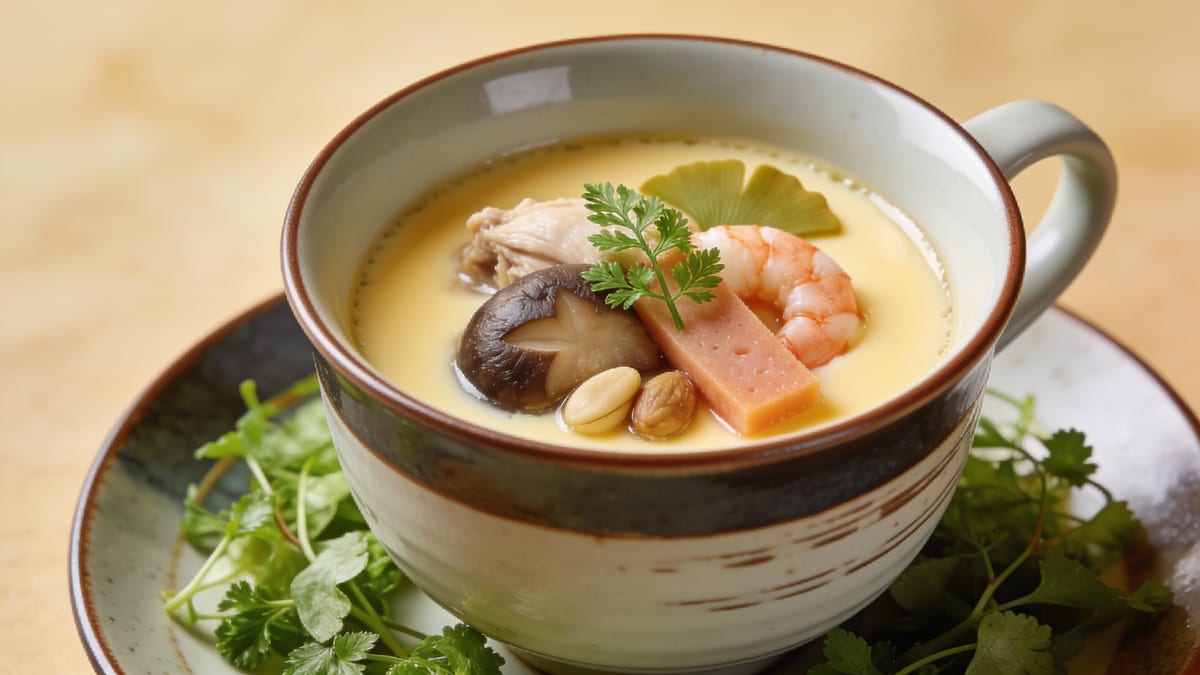
Make a well-seasoned dashi and let it cool, then season it with a little soy sauce, mirin and salt. Whisk eggs gently (without making bubbles) and combine with the dashi at roughly one part beaten egg to three parts dashi — this ratio is what gives the silky, just-set texture. Strain the mixture for smoothness. Put a few small fillings — chicken, prawn, shiitake, ginkgo, kamaboko — in the bottom of each cup and pour the egg mixture over. Steam gently over low heat (with the lid slightly ajar so it doesn't boil) until just set with a soft wobble, about 12–15 minutes. Overheating makes it bubbly and curdled, so keep the steam low. Garnish with mitsuba and serve warm.
- Use roughly 3 parts dashi to 1 part beaten egg, and strain the mixture — that's the secret to a silky custard.
- Steam gently over low heat with the lid ajar; high heat makes it bubble, curdle and weep.
- Whisk the egg without frothing, and the custard sets smooth and glossy, not foamy.
Equipment
- Steamer
- 4 chawanmushi cups or ramekins
- Fine sieve
วัตถุดิบ
Custard
- 3 eggs, lightly beaten
- 480 ml dashi, cooled
- 1 tsp soy sauce; 1 tsp mirin; ¼ tsp salt
Fillings (per cup)
- A piece of chicken thigh; a peeled prawn
- A slice of shiitake; ginkgo nuts; kamaboko
- Mitsuba or spring onion, to garnish
วิธีทำ
- ขั้น01
Make a flavourful dashi and let it cool to lukewarm (hot dashi would cook the egg). Stir in the soy sauce, mirin and salt — taste it; it should be savoury and lightly seasoned.
- ขั้น02
Whisk the eggs gently without creating foam, then mix in the seasoned dashi (about 1 part egg to 3 parts dashi). Pour the mixture through a fine sieve for a perfectly smooth custard, and skim off any bubbles.
- ขั้น03
Place a few small fillings — a piece of chicken, a prawn, a slice of shiitake, ginkgo and kamaboko — in the bottom of each cup. Gently pour the strained egg mixture over them, filling each cup, and prick any surface bubbles.
- ขั้น04
Steam over low heat with the steamer lid slightly ajar (so the temperature stays gentle) until the custard is just set with a soft wobble and a clear liquid rises when pricked, about 12–15 minutes. Keep the heat low — high heat makes it bubble and curdle.
- ขั้น05
Lay a sprig of mitsuba on top and serve the chawanmushi warm, in the cup, with a spoon. It can also be served chilled in summer.
Make ahead
Make the dashi ahead — it's the flavour base and keeps for days refrigerated (or freezes), so the custard itself comes together quickly. You can also prep the fillings in advance. Steam the custards near serving time for the best texture, though they hold for a day or two and can be served chilled. If reheating, do it gently to avoid overcooking the set custard.
Storage
Chawanmushi is best fresh and warm, but it keeps 1–2 days refrigerated and is also lovely served cold in summer. Reheat very gently — a brief, low steam or a careful warm — since high heat will overcook and split the delicate custard. Don't freeze it (the custard turns watery and weepy on thawing). The dashi can be made well ahead, which is the main prep; assemble and steam the custards close to serving for the silkiest texture.
Variations
Seasonal fillings
Vary with crab, gingko in autumn, lily bulb, mochi (odamaki-mushi with udon), or just shiitake for a simple version.
Vegetarian
Use a kombu-and-shiitake dashi and vegetable fillings for a vegetarian chawanmushi.
Chilled
Serve it cold in summer, sometimes with a delicate ankake (thickened dashi) sauce on top.
Serve with
Nutrition per serving
Nutrition values are estimates based on the metric measurements. Adjust as needed.
คำถามพบบ่อย
What is chawanmushi?
Chawanmushi is a Japanese savoury egg custard, steamed gently in a cup and eaten with a spoon. Beaten egg is combined with seasoned dashi and steamed until just set into a silky, delicate custard, with small fillings like chicken, prawn, shiitake mushroom, ginkgo nuts and kamaboko (fish cake) hidden inside. Unlike sweet custards, it's umami-rich and unsweetened, served warm (or chilled in summer) as a starter or part of a Japanese meal. Its name means 'tea-cup steamed'.
What's the right ratio of egg to dashi?
The classic ratio is roughly 1 part beaten egg to 3 parts dashi (by volume) — this gives the signature silky, barely-set, custardy texture. More egg makes it firmer and more like a solid omelette; more dashi makes it too soft to set. Measure with the same cup for accuracy, whisk the egg gently to avoid bubbles, and strain the mixture. Getting this ratio right, plus gentle steaming, is the whole secret to smooth chawanmushi.
Why did my chawanmushi turn out bubbly or curdled?
That's almost always from steaming too hot. Egg custard sets smooth only with gentle, low heat; if the steam is too vigorous, the custard boils, forming bubbles, holes (su) and a curdled, weepy texture. Keep the heat low and prop the steamer lid slightly ajar to moderate the temperature, and don't oversteam. Straining the mixture and popping surface bubbles before steaming also helps you get that glassy, smooth top.
Can I make chawanmushi without dashi?
Dashi is the soul of chawanmushi — its umami is what makes the savoury custard taste right — so it's strongly recommended. You can make dashi from kombu and bonito, use instant dashi powder, or for a vegetarian version use a kombu-and-dried-shiitake dashi. A light, well-seasoned chicken or vegetable stock can stand in at a pinch, but the result will taste less authentically Japanese. Whatever you use, it should be flavourful but cooled before mixing with the egg.
What fillings go in chawanmushi?
Traditional fillings are small and varied: a piece of chicken thigh, a prawn, a slice of shiitake mushroom, ginkgo nuts, a slice of kamaboko (fish cake), and a sprig of mitsuba (Japanese parsley) on top. The idea is little treasures hidden in the custard. You can adapt freely — crab, fish, lily bulb, gingko, or even udon noodles (making odamaki-mushi) — or keep it simple with just mushroom. Use cooked or quick-cooking fillings, since the gentle steam won't cook raw meat much.
Cooked this? Rate it.
Real ratings from real cooks. We only show a score once enough of you have weighed in — no fabricated stars.