Rösti — Swiss Crispy Fried Potato Cake
Switzerland's beloved potato cake and unofficial national dish: coarsely grated potatoes pressed into a pan and fried slowly in butter until they bind into a single golden cake, shatteringly crisp outside and tender within. Originally a farmer's breakfast in the Bern region, rösti is now eaten across Switzerland as a side or, loaded with cheese, egg or bacon, a meal in itself. The art is simple but exacting: the right potatoes, plenty of butter, patience, and a confident flip. Few things are as satisfying as a perfectly crisp, buttery rösti.
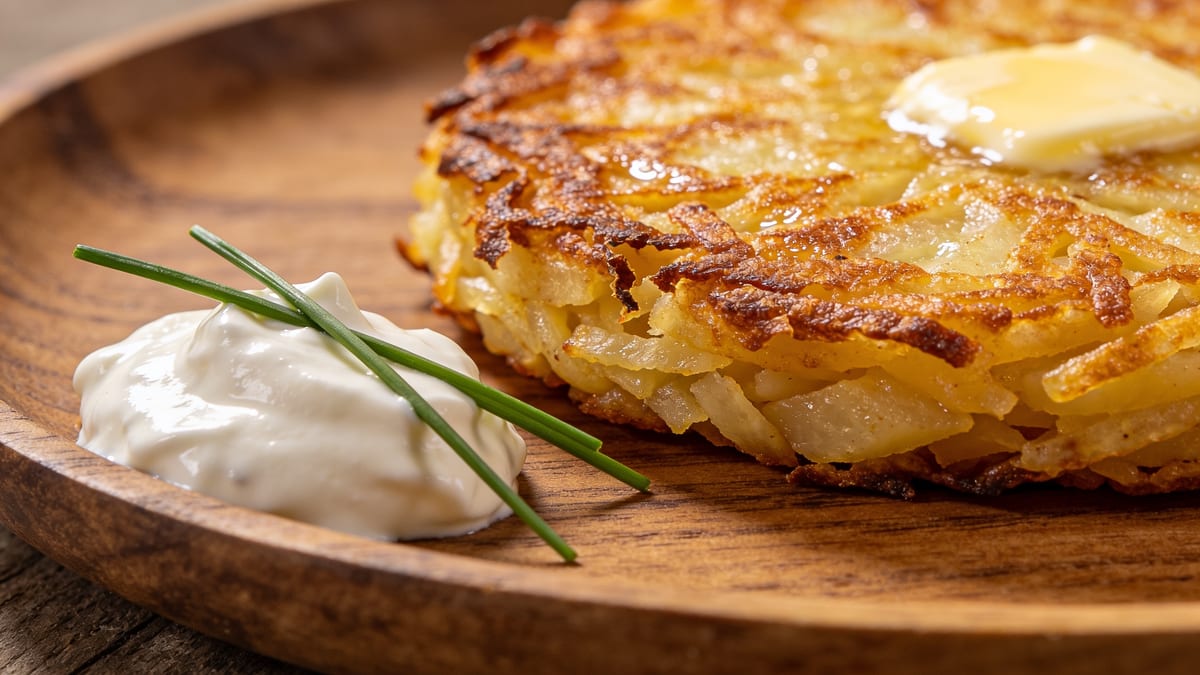
Use firm, waxy potatoes. Many cooks par-boil them whole the day before, then chill, peel and coarsely grate them (Bern-style); you can also grate them raw, in which case squeeze out the water well. Season the grated potato simply with salt. Heat a good amount of butter (and a little oil) in a non-stick or well-seasoned pan, add the potato and press it into an even cake, and fry over medium heat, undisturbed, until the underside is deep golden and crisp. Then the moment of truth: slide it onto a plate and flip it back (or invert the pan over a plate and slide it back in) to crisp the other side, adding more butter. Cook until both sides are golden and crunchy, and serve immediately.
- Use waxy potatoes — ideally par-boiled the day before and chilled, which gives the best texture (or squeeze raw grated potato dry).
- Be generous with butter and fry over patient medium heat so it turns deep golden and binds into one cake.
- Press it into an even layer and don't fuss with it; flip it confidently to crisp both sides.
Equipment
- Non-stick or cast-iron frying pan
- Box grater
- A plate (for flipping)
วัตถุดิบ
Rösti
- 800 g firm/waxy potatoes (ideally par-boiled and chilled)
- 3–4 tbsp butter (plus a little oil)
- Salt; pepper
Optional add-ins
- Grated cheese, bacon/lardons, or a fried egg on top
วิธีทำ
- ขั้น01
For the best texture, boil the potatoes whole in their skins until almost tender the day before, then refrigerate overnight, peel and coarsely grate them. (Alternatively, grate raw peeled potatoes and squeeze out as much water as you can in a towel.) Season with salt.
- ขั้น02
Heat a generous amount of butter with a little oil in a non-stick or well-seasoned pan over medium heat until foaming.
- ขั้น03
Add the grated potato and gently press it into an even cake that fills the pan, without packing it too densely. Let it fry undisturbed so a crust forms.
- ขั้น04
Cook over medium heat, undisturbed, until the underside is deep golden brown and crisp, about 10–12 minutes. Shake the pan occasionally to check it's loose and not sticking.
- ขั้น05
Slide the rösti onto a plate, then flip it back into the pan (or invert the pan over the plate and slide it back) to cook the other side, adding a little more butter. Fry until the second side is golden and crisp too, then slide onto a plate and serve immediately, cut into wedges.
Make ahead
The classic make-ahead step is the potatoes: boil them whole the day before and refrigerate overnight, which firms them up and gives a better, less gluey rösti — many Swiss cooks insist on this. Grate and fry close to serving for maximum crispness. You can keep a cooked rösti warm in a low oven briefly, but it's best served straight away while shatteringly crisp.
Storage
Rösti is at its best straight from the pan, crisp and hot — it softens as it sits. Leftovers keep a day refrigerated and are best re-crisped in a hot pan or oven rather than the microwave (which makes them soft). You can also par-cook and reheat to crisp later. The potatoes themselves benefit from being cooked and chilled ahead, so that prep step is genuinely worth doing the day before.
Variations
Rösti with cheese
Scatter grated cheese (or lay slices) over the top to melt, or fold it through — a rich, popular version.
Berner Rösti
The Bern style adds bacon/lardons and sometimes onion; top with a fried egg for a full meal.
Toppings
Serve under a fried egg, with Alpine cheese, with apple sauce, or alongside Zürcher Geschnetzeltes (creamy veal).
Serve with
Nutrition per serving
Nutrition values are estimates based on the metric measurements. Adjust as needed.
คำถามพบบ่อย
What is rösti?
Rösti is a Swiss dish of coarsely grated potatoes fried in butter into a flat, golden cake that's crisp outside and tender inside. It began as a farmers' breakfast in the canton of Bern and is now eaten throughout Switzerland — as a side dish, or topped with cheese, bacon, onions or a fried egg as a main. It's considered an unofficial national dish, so iconic that the cultural divide between German- and French-speaking Switzerland is nicknamed the 'Röstigraben' (the rösti ditch).
Should I use raw or cooked potatoes?
Both work, but the traditional and arguably best method uses potatoes that were boiled whole the day before and chilled overnight, then peeled and grated — this firms them up, reduces excess starch and moisture, and gives a rösti that binds well and crisps beautifully without being gluey. If you use raw grated potato, squeeze out as much water as possible first or it can turn dense and soggy. Either way, use firm waxy potatoes.
Why does my rösti fall apart or stick?
Rösti binds together from the potato's own starch as it fries, so it needs patience — press it into an even cake, fry undisturbed over medium heat until a real golden crust forms before you try to move or flip it, and use plenty of butter in a good non-stick or well-seasoned pan. Flipping too early, too little fat, or a sticky pan are the usual culprits. The plate-flip method (slide out, invert, slide back) makes turning the whole cake much easier.
What potatoes are best for rösti?
Firm, waxy potatoes (the kind that hold their shape when boiled) are best — they grate into distinct strands and crisp up without turning to mush. In Switzerland, special 'Gschwellti' (boiled-in-skin) waxy potatoes are used. Avoid very floury baking potatoes, which fall apart and go gluey. Par-boiling waxy potatoes and chilling them before grating gives the ideal texture, but good firm potatoes grated raw (and squeezed dry) will also make a fine rösti.
Is rösti a breakfast or a main dish?
Both, depending on how it's served. Plain rösti is a classic side dish (famously served with Zürcher Geschnetzeltes, creamy sliced veal) and was originally a hearty farmers' breakfast. But loaded up — with melted cheese, bacon and onions, or topped with a fried egg — it becomes a satisfying main course in its own right. It's versatile comfort food, equally at home at breakfast, lunch or dinner.
Cooked this? Rate it.
Real ratings from real cooks. We only show a score once enough of you have weighed in — no fabricated stars.