Stracciatella Soup
Stracciatella is Rome's answer to egg drop soup: golden chicken broth laced with tender shreds of Parmigiano-enriched egg, warmed with nutmeg and a whisper of lemon zest. The "little rags" (stracciatella means exactly that) form because you stream the egg mixture into barely simmering broth and let it set for a moment before stirring — pour into boiling broth and you get cloudy wisps instead. A spoonful of semolina in the eggs is the old Roman trick that gives the rags body, so they stay silky rather than dissolving.
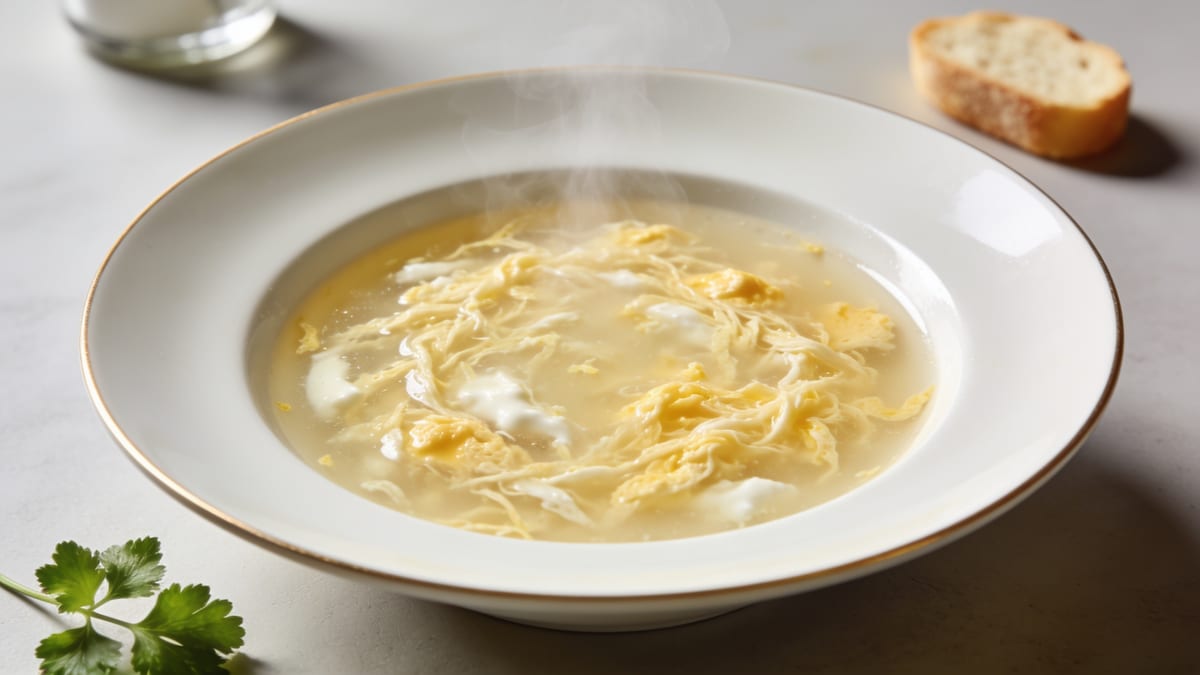
Bring 1.4 L (6 cups) of good chicken broth to a gentle simmer in a 3–4 L saucepan and season it well. Meanwhile, whisk 3 large eggs with 45 g (1/2 cup) finely grated Parmigiano-Reggiano, 20 g (2 tbsp) fine semolina, 1/4 tsp freshly grated nutmeg, 1 tsp lemon zest, and a pinch of salt, then loosen the mixture with a ladleful (about 120 ml / 1/2 cup) of the warm broth. Drop the heat so the broth's surface barely trembles, stir it in a slow circle with a fork, and pour the egg mixture in a thin, steady stream. Leave it completely undisturbed for 45 seconds so the eggs set into sheets, then stir gently to break them into ragged shreds and simmer 2 more minutes to cook the semolina. Taste, season with black pepper, and serve immediately with chopped parsley and extra cheese.
- Keep the broth at a bare tremble, never a boil — a rolling boil shatters the eggs into cloudy specks instead of tender rags.
- Temper the egg mixture with a ladle of warm broth before pouring; it thins the eggs so they stream evenly and set in wide, silky ribbons.
- Resist stirring for the first 45 seconds after pouring — the rags need that pause to set before you break them apart.
Equipment
- 3–4 L (3–4 qt) saucepan or small Dutch oven
- Medium mixing bowl
- Whisk
- Dinner fork (for swirling the broth)
- Ladle
- Microplane or fine grater
วัตถุดิบ
Egg Mixture
- large eggs
- 45 g Parmigiano-Reggiano, finely grated, plus extra for serving
- 20 g fine semolina, the Roman trick for silkier rags; see variations for gluten-free
- 1.25 ml freshly grated nutmeg
- 5 ml finely grated lemon zest, from about 1/2 lemon
- 1.25 ml fine sea salt
Broth
- 1.4 L chicken broth, homemade or low-sodium, the soup is only as good as the broth
- fine sea salt, amount depends on your broth
To Serve
- 8 g flat-leaf parsley, finely chopped
- 15 g Parmigiano-Reggiano, finely grated
- freshly ground black pepper
วิธีทำ
- ขั้น01
Pour the chicken broth into a 3–4 L saucepan and bring it to a gentle simmer over medium heat. Taste and season with salt now — the egg rags will only be as flavorful as the liquid they cook in. Ladle out about 120 ml (1/2 cup) and set it aside to cool slightly for tempering the eggs.
- ขั้น02
In a medium bowl, whisk the eggs until no streaks of white remain. Whisk in the grated Parmigiano, semolina, nutmeg, lemon zest, and 1/4 tsp salt. Slowly whisk in the reserved warm broth until the mixture is smooth and pourable, about the consistency of heavy cream.
- ขั้น03
Reduce the heat under the broth until the surface just shivers, with only a few lazy bubbles breaking at the edges. This is the single most important moment: if the broth is boiling, the eggs will shatter into cloudy specks instead of forming tender rags.
- ขั้น04
Stir the broth in a slow, steady circle with a fork. Pour the egg mixture into the moving broth in a thin, continuous stream, moving the bowl around the pan as you pour so the eggs land in different spots.
- ขั้น05
Stop stirring and let the pot sit completely undisturbed for about 45 seconds so the eggs set into soft sheets. Then stir gently with the fork to break the sheets into ragged shreds, and simmer 2 minutes more so the semolina loses any raw taste and the rags firm up.
- ขั้น06
Taste the soup one last time and adjust the salt. Ladle into warmed bowls and finish each with chopped parsley, a shower of extra Parmigiano, and plenty of freshly ground black pepper. Stracciatella waits for no one — the rags are at their silkiest in the first few minutes.
Make ahead
This is a last-minute soup by nature, but you can do all the real work ahead. Make and season the broth up to 3 days in advance and refrigerate it. The egg mixture (without the tempering broth) can be whisked, covered, and refrigerated up to 4 hours ahead — give it a fresh whisk, temper it with warm broth, and stream it in just before serving. From a pot of hot broth, the finished soup is 5 minutes away.
Storage
Refrigerate leftovers in an airtight container for up to 3 days. Reheat gently over medium-low heat until steaming but not boiling — a hard boil turns the egg rags rubbery. Freezing is not recommended: the cooked egg shreds turn spongy and weep water as they thaw.
Variations
Gluten-Free Stracciatella
Simply omit the semolina — plenty of Roman cooks skip it — or replace it with 1 tbsp (10 g) fine cornmeal for a touch of body. The rags will be slightly more delicate, so be extra gentle with the heat and let them set a full minute before stirring.
Stracciatella with Spinach
Stir 100 g (about 3 packed cups) of baby spinach or thinly sliced escarole into the broth 1 minute before adding the eggs. The greens wilt into ribbons that tangle with the egg rags — this is how many trattorias serve it in spring.
Hearty Dinner Version
Add 60 g (1/3 cup) of pastina or acini di pepe to the simmering broth and cook until al dente (about 6 minutes) before streaming in the eggs, then fold in 150 g (1 cup) of shredded cooked chicken at the end. It turns a first course into a one-bowl supper.
Serve with
Nutrition per serving
Nutrition values are estimates based on the metric measurements. Adjust as needed.
คำถามพบบ่อย
I keep searching for stracciatella soup near me and coming up empty — is it hard to make at home?
Not at all, and honestly you will beat most restaurant versions. Outside of Italian-heavy cities, few menus carry it, which is why searches for stracciatella soup near me so often dead-end. The whole recipe needs six pantry ingredients and about 25 minutes, and the only skill involved is keeping the broth below a boil while you pour in the eggs.
Why did my eggs turn into cloudy wisps instead of tender rags?
Two culprits: the broth was too hot, or you stirred too soon and too fast. The broth should barely tremble — a rolling boil blasts the egg into fine specks. Pour the mixture in a thin stream into slowly swirling broth, then leave it alone for about 45 seconds so sheets can set before you break them into shreds. The semolina and cheese in the mixture also help the rags hold together.
Can I use boxed broth, or does it need to be homemade?
Boxed works, with two upgrades. Choose a low-sodium chicken broth so you control the salt, and simmer it for 10 minutes with a Parmigiano rind, a smashed garlic clove, or a few parsley stems to deepen the flavor. Because the soup has so few components, every improvement to the broth shows up directly in the bowl.
Is stracciatella soup related to stracciatella cheese or the gelato flavor?
They share a name but not a recipe. Stracciatella means 'little rags' or 'little shreds' in Italian, and all three are named for their texture: shredded egg in the Roman soup, pulled curd strands in the Puglian cheese, and chocolate shards in the gelato. If a restaurant that turns up when you look for stracciatella soup near me lists 'stracciatella' under appetizers with burrata, it is almost certainly the cheese.
Can I make stracciatella vegetarian?
Yes — use a well-seasoned vegetable broth, ideally one simmered with a strip of kombu or dried porcini for savoriness. One catch: authentic Parmigiano-Reggiano is made with animal rennet, so strict vegetarians should swap in a vegetarian-rennet hard cheese of similar dryness and saltiness. The technique stays exactly the same.
Cooked this? Rate it.
Real ratings from real cooks. We only show a score once enough of you have weighed in — no fabricated stars.