Tonkotsu Ramen — Rich Pork Bone Ramen
The rich, milky-white ramen of Fukuoka: pork bones boiled hard for hours until the broth turns opaque, collagen-thick and deeply savoury. Served with springy thin noodles, melting chāshū pork, a jammy marinated egg and a tare seasoning base. It's a project — but a bowl of real tonkotsu is one of the great pleasures of the noodle world.
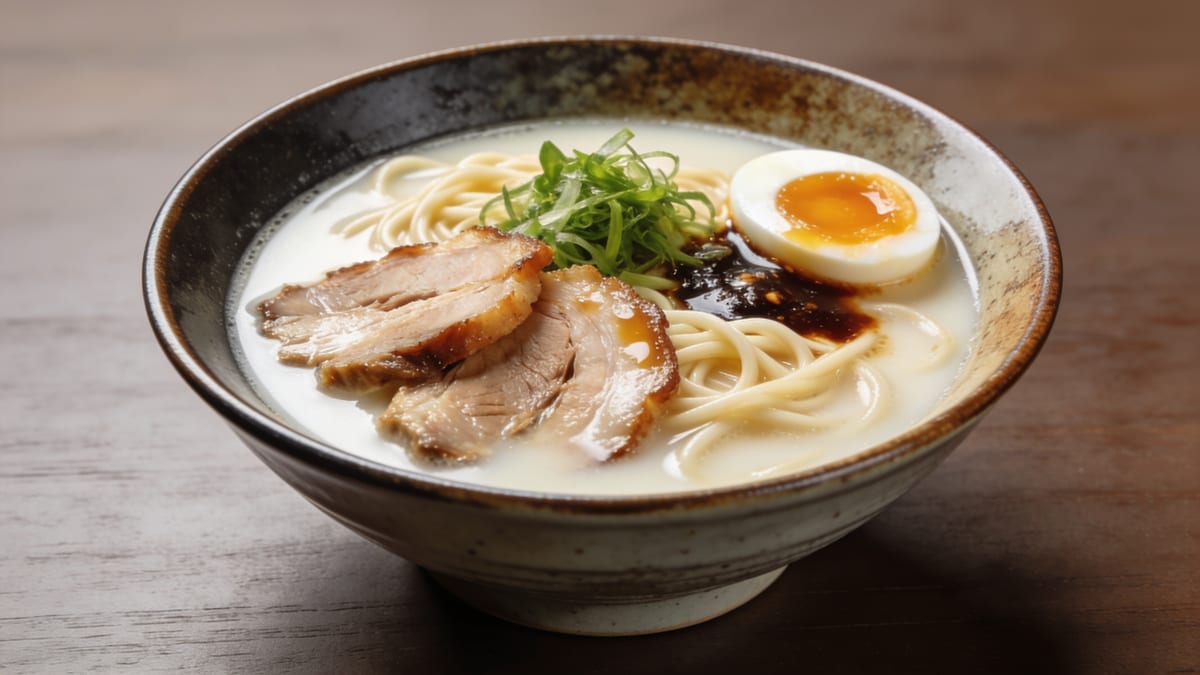
Blanch pork bones (trotters and neck), then boil them hard at a rolling boil for 8–12 hours, topping up with water, until the broth is opaque, white and thick with emulsified collagen. Make a tare (a salt or shoyu seasoning base) and braise chāshū pork; soak soft-boiled eggs in a soy marinade. To serve, put tare in each bowl, fill with the hot broth, add cooked thin ramen noodles, and top with sliced chāshū, ajitama egg, spring onion and nori.
- The opaque, creamy broth comes from a hard, rolling boil over many hours — a gentle simmer won't emulsify the collagen.
- Season each bowl with tare (the salt/shoyu base); the broth itself is unsalted stock.
- Components — chāshū, marinated egg, tare, broth — can all be made ahead and assembled fast to order.
Equipment
- Very large stockpot (or pressure cooker)
- Fine strainer
- Saucepans (tare, chāshū, eggs)
วัตถุดิบ
Broth
- 2 kg pork bones (trotters, neck, backbone)
- 1 onion, 1 head garlic, 1 thumb ginger
- Water to cover (topped up through cooking)
Tare (seasoning base, per bowl)
- 30 ml shoyu or salt tare, soy, mirin, sake, kombu reduced
Chāshū & egg
- 500 g pork belly, rolled
- 200 ml soy, mirin, sake braise
- 4 eggs, soft-boiled and marinated (ajitama)
To serve
- 4 portions thin ramen noodles
- Spring onion, nori, wood-ear mushroom, sesame
วิธีทำ
- ขั้น01
Cover the pork bones with cold water, bring to a boil, boil 10 minutes, then drain and rinse off the scum. This is essential for a clean white broth.
- ขั้น02
Return the bones to a clean pot with the aromatics, cover generously with water, and keep at a rolling boil (not a simmer) for 8–12 hours, topping up the water. The broth turns opaque, white and thick. Strain.
- ขั้น03
Braise the rolled pork belly in the soy-mirin-sake mixture until tender, then chill and slice. Soft-boil the eggs, peel, and steep in the same marinade for the jammy ajitama.
- ขั้น04
Reduce soy, mirin, sake and kombu into a concentrated salty seasoning. Put a spoonful in the base of each bowl.
- ขั้น05
Cook the thin noodles until just done. Pour the screaming-hot broth into the tare bowls, lift in the noodles, and top with chāshū, a halved egg, spring onion, wood-ear and nori. Serve immediately.
Make ahead
Tonkotsu is built for batch prep: make the broth, chāshū, tare and eggs over a weekend and freeze the broth in portions. Then a bowl is minutes away — heat broth, cook noodles, assemble.
Storage
Broth keeps 4 days refrigerated and freezes 3 months (it sets to a jelly — a sign of good collagen). Chāshū and eggs keep 4 days. Cook noodles fresh and assemble to order; soft noodles in stored broth go mushy.
Variations
Pressure-cooker broth
A pressure cooker gets a rich (if slightly less deep) tonkotsu in about 2–3 hours instead of all day.
Hakata style
Serve with very thin, firm noodles and offer kaedama (a noodle refill) into the leftover broth, Fukuoka-style.
Black garlic (mayu)
Drizzle with mayu — charred black garlic oil — for a smoky, bitter-rich finish.
Serve with
Nutrition per serving
Nutrition values are estimates based on the metric measurements. Adjust as needed.
คำถามพบบ่อย
Why is tonkotsu broth white and creamy?
It's an emulsion. Boiling pork bones hard (at a rolling boil, not a gentle simmer) for many hours breaks down collagen and fat and emulsifies them into the water, turning the broth opaque, milky-white and rich. A low simmer gives a clear, thin broth instead — the vigorous boil is the whole point.
Is tonkotsu the same as a soy-sauce ramen?
No — 'tonkotsu' refers to the pork-bone broth, while 'shoyu' refers to a soy-sauce-seasoned ramen (usually with a clearer broth). You actually season a tonkotsu bowl with a tare that can be salt- or shoyu-based; the rich white broth is what makes it tonkotsu.
Can I make it faster?
Yes — a pressure cooker produces a respectable tonkotsu in 2–3 hours rather than 8–12, though purists find the long-boil version deeper. You can also buy good tonkotsu broth concentrate and focus your effort on great chāshū, eggs and noodles.
What is tare?
Tare is the concentrated seasoning base that goes in the bottom of the bowl before the broth — it's what actually salts and flavours the ramen. Tonkotsu broth itself is unsalted stock; the tare (shio/salt or shoyu/soy based) brings it to life.
What noodles for tonkotsu?
Thin, straight, fairly firm wheat ramen noodles are classic for Hakata-style tonkotsu — they suit the rich broth and cook in seconds. Use fresh ramen noodles if you can; cook them just until done so they stay springy.
Cooked this? Rate it.
Real ratings from real cooks. We only show a score once enough of you have weighed in — no fabricated stars.