Kare-Kare — Filipino Oxtail Peanut Stew
The Philippines' grand peanut stew: oxtail (and often tripe) simmered for hours until fall-apart tender, then napped in a thick, savoury peanut sauce coloured golden with annatto, alongside eggplant, string beans, banana heart and bok choy. Kare-Kare is rich and gently sweet-nutty — and, crucially, served with a side of bagoong (salty fermented shrimp paste) that you stir in to taste, the salty-funky counterpoint that makes the dish sing. A centrepiece of Filipino fiestas and family feasts, it's pure celebration food.
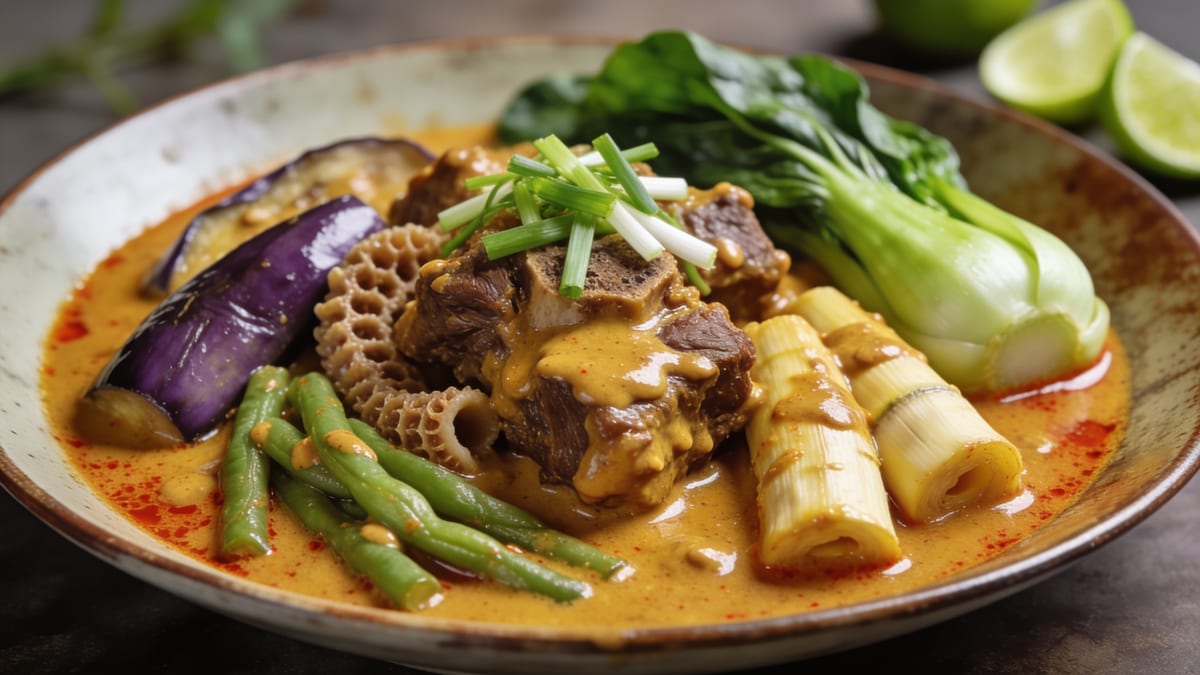
Simmer oxtail (and tripe, if using) with aromatics for 2½–3 hours, or pressure-cook, until completely fall-apart tender, saving the rich broth. Make the sauce by blooming annatto in oil for colour, then building a thick peanut sauce with peanut butter (and/or ground toasted peanuts and toasted rice for body) and the reserved broth, simmered until glossy and thick. Add the tender oxtail and blanch the vegetables — eggplant, string beans, banana heart, bok choy — in the sauce just until crisp-tender. Serve with hot rice and, essential, a side of bagoong (fermented shrimp paste) to stir in to taste.
- Cook the oxtail until truly fall-apart tender — long and slow (or pressure-cooked) — and keep that broth for the sauce.
- Thicken the peanut sauce with peanut butter plus toasted ground rice for the authentic body and sheen.
- Always serve bagoong (fermented shrimp paste) on the side — the stew is mild on its own and you season each bite with it.
Equipment
- Large heavy pot or pressure cooker
- Small pan (for annatto/rice)
Nguyên liệu
Meat
- 1.2 kg oxtail, cut into sections (and/or beef tripe)
- Onion, garlic, peppercorns; water to cover
Peanut sauce
- 150 g peanut butter (or ground toasted peanuts)
- 2 tbsp toasted rice, ground (for thickening)
- 1–2 tbsp annatto (achuete) seeds, bloomed in oil; onion, garlic
Vegetables & to serve
- Eggplant, string beans (sitaw), banana heart (puso ng saging), bok choy (pechay)
- Bagoong (fermented shrimp paste); steamed rice
Cách làm
- BƯỚC01
Simmer the oxtail (and tripe, if using) with onion, garlic and peppercorns in water until completely fall-apart tender, 2½–3 hours on the stovetop or about 45 minutes in a pressure cooker. Skim, and reserve the rich broth.
- BƯỚC02
Heat the annatto seeds in a little oil until the oil turns deep orange, then discard the seeds. Separately, toast raw rice in a dry pan until golden and grind to a powder (this thickens the sauce authentically).
- BƯỚC03
In the annatto oil, sauté onion and garlic, then whisk in the peanut butter and the reserved broth to make a sauce. Stir in the ground toasted rice and simmer until thick, glossy and smooth. Season lightly (it's meant to be mild — bagoong adds the salt later).
- BƯỚC04
Add the tender oxtail to the sauce and warm through. Blanch or simmer the vegetables — eggplant, string beans, banana heart, then bok choy — in the sauce just until crisp-tender and still vibrant, adding them in order of cooking time. Don't overcook them.
- BƯỚC05
Serve the kare-kare hot with steamed rice and a dish of bagoong (sautéed fermented shrimp paste) on the side. Each person stirs in bagoong to taste — that salty, savoury hit is what completes the dish.
Make ahead
Kare-Kare is great for making ahead, which is why it's fiesta food — cook the oxtail and the peanut sauce a day or two before (both improve overnight), then on the day simply reheat, add freshly cooked vegetables, and serve. The long oxtail braise is the time-consuming part, so front-loading it makes the final assembly quick. Toast and grind the rice and prep the bagoong ahead too.
Storage
Kare-Kare keeps 3 days refrigerated and the peanut sauce deepens in flavour, though the vegetables soften — for the best result, store the stew and add freshly cooked vegetables when reheating. The sauce thickens a lot when cold; loosen with a little water or broth and reheat gently, stirring, so the peanut sauce doesn't split or catch. It freezes acceptably (sauce and meat; add vegetables fresh). Bagoong keeps for ages.
Variations
Seafood or vegetable kare-kare
Versions made with seafood, or a vegetarian/vegan kare-kare with tofu and lots of vegetables (use a vegan 'bagoong' substitute).
Beef or pata
Use beef shank, tripe, or pork hock (pata) instead of, or alongside, oxtail.
Kare-Kareng manok
A lighter chicken version for a quicker weeknight take.
Serve with
Nutrition per serving
Nutrition values are estimates based on the metric measurements. Adjust as needed.
Câu hỏi thường gặp
What is kare-kare?
Kare-Kare is a Filipino stew of oxtail (and often tripe) in a thick, savoury peanut sauce coloured with annatto, served with vegetables like eggplant, string beans, banana heart and bok choy. It's a celebration dish, central to fiestas and family gatherings. The stew itself is deliberately mild and gently nutty; it's always served with bagoong (fermented shrimp paste) on the side, which each person stirs in to season their portion. Rich and comforting, it's one of the Philippines' most iconic dishes.
Why is bagoong served on the side?
Because kare-kare's peanut sauce is intentionally mild and only lightly salted — the salty, pungent, umami punch is meant to come from bagoong (sautéed fermented shrimp paste), which everyone adds to their own taste at the table. This lets each person balance the richness of the peanut sauce with as much salty-funky flavour as they like. Eating kare-kare without bagoong tastes incomplete to most Filipinos, so don't skip it (or use a substitute if needed).
How do I thicken the peanut sauce authentically?
Peanut butter (or ground toasted peanuts) gives the base, but the traditional secret to the right body and texture is toasted ground rice (galapong): toast raw rice in a dry pan until golden, grind it to a powder, and stir it into the simmering sauce. It thickens the sauce to that signature glossy, clingy consistency without making it gluey. Some cooks use a little cornstarch as a shortcut, but toasted rice gives the most authentic result.
What gives kare-kare its orange colour?
Annatto (achuete/atsuete) — small red seeds bloomed in oil — gives kare-kare its warm golden-orange hue. You heat the seeds in oil until it turns deep orange, then discard the seeds and use the coloured oil to build the sauce. Annatto adds mostly colour and a subtle earthiness rather than strong flavour. If you only have annatto powder, you can stir that in instead. The peanut sauce and annatto together create the dish's rich, appetising colour.
Can I make kare-kare without oxtail?
Yes — while oxtail (often with tripe) is the classic and most prized choice for its richness and gelatinous texture, you can make kare-kare with beef shank, pork hock (pata), or a quicker chicken version (kare-kareng manok). There are also seafood and fully vegetarian/vegan versions built on tofu and lots of vegetables, using a vegan bagoong substitute for the salty side. The peanut sauce and vegetables stay the same — it's very adaptable to what you have.
Cooked this? Rate it.
Real ratings from real cooks. We only show a score once enough of you have weighed in — no fabricated stars.