Minestrone — Italian Vegetable & Bean Soup
Italy's great soup of the cucina povera: a hearty, ever-changing pot of seasonal vegetables, beans and a little pasta or rice, built on a slow-cooked soffritto and simmered until everything is tender and the broth is rich and savoury. Minestrone has no fixed recipe — it's a celebration of whatever the garden and pantry offer — but the soffritto base, a Parmesan rind in the pot, and a finish of good olive oil and grated cheese turn humble vegetables into something deeply comforting.
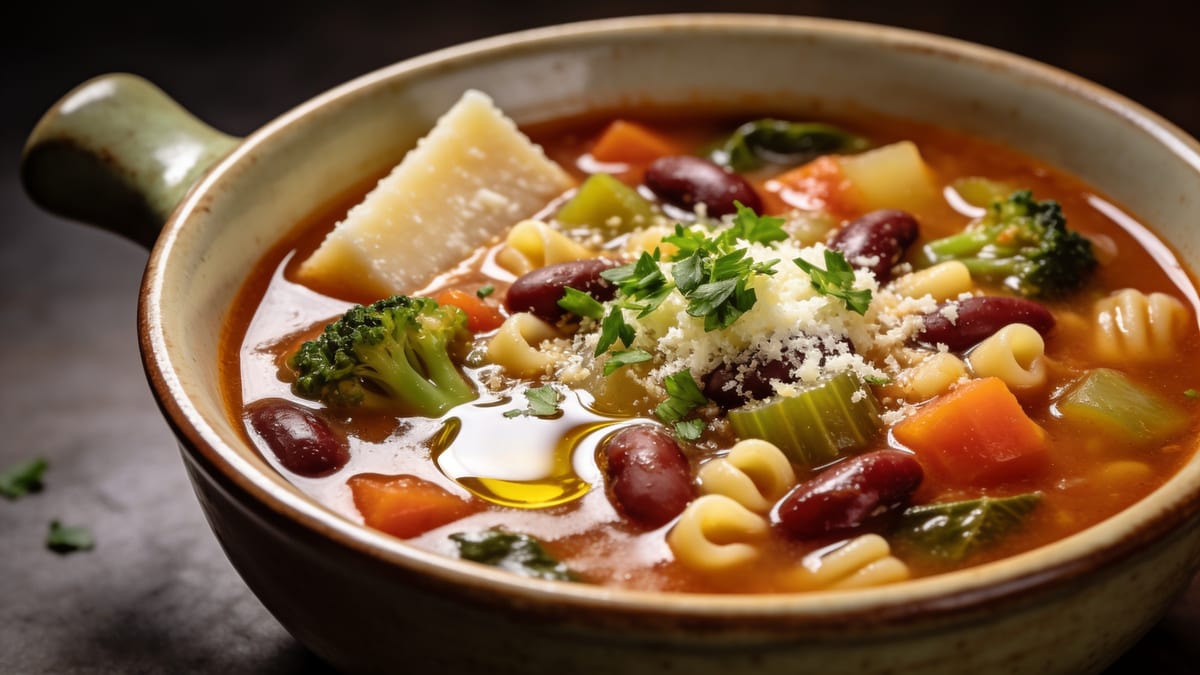
Soften a soffritto of onion, carrot and celery in olive oil, then add garlic and a layering of seasonal vegetables (potato, courgette, green beans, savoy cabbage or spinach, tomatoes) — the longer-cooking ones first. Add beans (cannellini or borlotti), a Parmesan rind, broth or water, and simmer gently until everything is tender and the soup is rich, 30–40 minutes. Add a handful of small pasta (or rice) near the end and cook until done. Season, and serve drizzled with good olive oil and plenty of grated Parmesan — with bread.
- Start with a slow-cooked soffritto (onion, carrot, celery) — it's the flavour base of the whole soup.
- Add vegetables in stages by cooking time, and a Parmesan rind for savoury depth.
- Add the pasta or rice near the end so it doesn't overcook, and finish with olive oil and cheese.
Equipment
- Large pot
- Knife
Nguyên liệu
Base
- Soffritto: 1 onion, 1 carrot, 1 celery stalk, diced; 2 garlic cloves
- Olive oil; salt, pepper
- 1 Parmesan rind (optional but great)
Vegetables & beans
- Seasonal veg: potato, courgette, green beans, savoy cabbage or spinach
- 400 g tinned tomatoes (or fresh)
- 1 can cannellini or borlotti beans
- 1.2 L vegetable broth or water
To finish
- 100 g small pasta (or rice)
- Good olive oil; grated Parmesan; basil or parsley
Cách làm
- BƯỚC01
Gently cook the diced onion, carrot and celery in olive oil until soft and sweet, 8–10 minutes, then add the garlic for a minute. This base builds the flavour.
- BƯỚC02
Add the longer-cooking vegetables first (potato, green beans), then the tomatoes, and stir. Add the courgette and any cabbage.
- BƯỚC03
Add the beans, the Parmesan rind and the broth or water. Season and simmer gently until all the vegetables are tender and the soup is rich, 30–40 minutes. Add leafy greens (spinach/cabbage) for the last 10 minutes.
- BƯỚC04
Stir in the small pasta (or rice) and cook until just done, about 10 minutes, adding a little more liquid if it gets too thick.
- BƯỚC05
Remove the Parmesan rind. Check the seasoning, and serve each bowl drizzled with good olive oil, a handful of grated Parmesan and torn basil or parsley — with crusty bread.
Make ahead
Ideal make-ahead soup — it's even better the next day as the flavours meld. For batches you'll keep or freeze, consider cooking the pasta separately and adding it per serving, since pasta in the soup keeps swelling and softening. The vegetable-and-bean base freezes well. Finish each bowl fresh with olive oil and Parmesan.
Storage
Keeps 3–4 days refrigerated and the flavour deepens beautifully — minestrone is famously better the next day. If made with pasta, the pasta keeps absorbing liquid, so add a splash of broth/water when reheating (or cook the pasta separately and add per bowl if storing). It freezes well (best without the pasta). Add fresh cheese and oil when serving.
Variations
Minestrone alla genovese
Stir a spoonful of pesto into the soup at the end (the Ligurian version).
Seasonal
Vary the vegetables with the season — there's no fixed recipe; use what's good and fresh.
Vegan
Skip the Parmesan rind and cheese (or use vegan alternatives) for a fully plant-based minestrone.
Serve with
Nutrition per serving
Nutrition values are estimates based on the metric measurements. Adjust as needed.
Câu hỏi thường gặp
What goes in minestrone?
There's no single recipe — minestrone is a flexible, seasonal vegetable soup built on a soffritto (onion, carrot, celery) and usually including beans (cannellini or borlotti), tomatoes, and a mix of whatever vegetables are good: potato, courgette, green beans, cabbage, spinach, leek and more. A little pasta or rice is often added for heartiness. Use what's fresh; that adaptability is the whole point of the dish.
Why add a Parmesan rind?
Tossing a leftover Parmesan rind into the pot as the soup simmers adds wonderful savoury, umami depth and richness to the broth — a classic Italian trick for getting more flavour from a humble vegetable soup. Just fish it out before serving (or let everyone find the soft, chewy bit as a treat). Save your rinds in the freezer for exactly this.
Should I put pasta in minestrone?
Often, yes — a handful of small pasta (or rice) makes minestrone more of a meal, and it's traditional in many versions. Add it near the end so it cooks until just tender without turning to mush. The one caveat: pasta keeps absorbing liquid and softening on storage, so if you're making minestrone ahead or to freeze, it's often better to cook the pasta separately and add it to each bowl.
Can I make minestrone ahead or freeze it?
Absolutely — it's famously even better the next day as the flavours meld, and the vegetable-and-bean base freezes well. The main tip is the pasta: since it keeps swelling, either add a splash of liquid when reheating, or cook and add the pasta separately if you're storing or freezing the soup. Finish each bowl with fresh olive oil and grated Parmesan.
Is minestrone healthy?
Very — it's essentially a big pot of vegetables and beans, naturally high in fibre, vitamins and plant protein, and as light or hearty as you make it. Built on olive oil rather than heavy fats and easily made vegetarian or vegan (skip the cheese and rind), it's a nourishing, comforting one-bowl meal. The pasta or rice adds satisfying carbs; load up on the vegetables.
Cooked this? Rate it.
Real ratings from real cooks. We only show a score once enough of you have weighed in — no fabricated stars.