Osso Buco alla Milanese — Braised Veal Shanks
Milan's great braise: thick cross-cut veal shanks browned and slowly simmered with soffritto, white wine and broth until the meat is fork-tender and the marrow in the bone turns silky. Finished with gremolata — a bright hit of raw lemon zest, garlic and parsley — osso buco alla Milanese is traditionally served with saffron risotto (risotto alla Milanese). It's elegant, deeply savoury winter food that rewards a long, gentle cook.
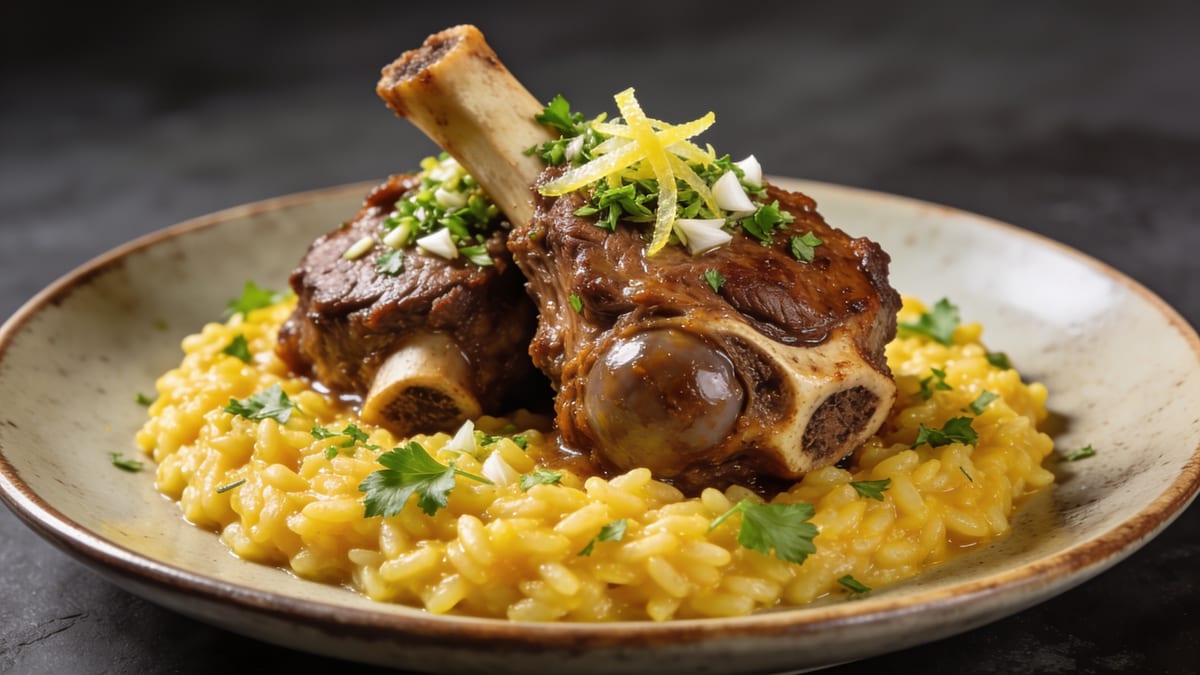
Tie the veal shanks (so they hold shape), dust in flour and brown them well in butter and oil. Soften a soffritto of onion, carrot and celery, return the shanks, add white wine and let it reduce, then broth (and a little tomato, if you like) to come halfway up. Cover and braise very gently — on the hob or in a low oven — for about 2 hours, until the meat is fork-tender and the marrow soft. Stir together a fresh gremolata of lemon zest, garlic and parsley and scatter it over just before serving, classically with saffron risotto.
- Use thick, bone-in cross-cut veal shanks (with the marrow) and tie them so they don't fall apart.
- Brown well, then braise low and slow until fork-tender — rushing it leaves the meat tough.
- Gremolata (raw lemon zest, garlic, parsley) added at the end is essential for brightness.
Equipment
- Heavy braising pot / Dutch oven
- Kitchen string
Nguyên liệu
Veal
- 4 veal shanks, cross-cut (osso buco), tied
- Flour, for dusting; butter + olive oil
Braise
- Soffritto: 1 onion, 1 carrot, 1 celery stalk, finely diced
- 200 ml dry white wine
- 400 ml beef or veal broth
- Optional: a little chopped tomato; bay leaf; salt, pepper
Gremolata
- Zest of 1 lemon
- 1 garlic clove, minced; handful parsley, chopped
Cách làm
- BƯỚC01
Tie each veal shank around its middle with string so it holds shape. Pat dry, dust lightly in flour, and brown well on both sides in butter and oil. Remove and set aside.
- BƯỚC02
In the same pot, gently cook the finely diced onion, carrot and celery until soft and sweet.
- BƯỚC03
Return the shanks, pour in the white wine and let it reduce by half, scraping up the bits. Add the broth (and a little tomato and bay if using) to come about halfway up the shanks. Season.
- BƯỚC04
Cover and braise very gently — barest simmer on the hob, or a 160°C/325°F oven — for about 2 hours, until the meat is fork-tender and pulling from the bone and the marrow is soft. Turn the shanks once or twice; top up with broth if needed.
- BƯỚC05
Mix the lemon zest, minced garlic and chopped parsley into a gremolata. Remove the string from the shanks, spoon the sauce over, and scatter generously with gremolata. Serve with saffron risotto (risotto alla Milanese) or polenta — and a marrow spoon for the bone.
Make ahead
A great make-ahead braise — cook it a day before and reheat gently; the flavour improves. Always make the gremolata fresh and add it just before serving, as its raw, zesty brightness is the point and dulls if cooked or stored. The risotto is best made fresh to serve alongside.
Storage
Keeps 3 days refrigerated and the braise deepens in flavour overnight — it's excellent reheated. Warm gently so the tender meat stays intact. It freezes well (add fresh gremolata after reheating, as its bright flavour fades). Keep the marrow in the bones for serving.
Variations
With tomato (in bianco vs rosso)
The oldest Milanese version is 'in bianco' (no tomato); many modern recipes add a little tomato for a rosso braise.
Beef shanks
Use beef shanks if veal isn't available — braise a bit longer until tender.
Serve with
Classically risotto alla Milanese (saffron risotto); also lovely with polenta or mashed potato.
Serve with
Nutrition per serving
Nutrition values are estimates based on the metric measurements. Adjust as needed.
Câu hỏi thường gặp
What is osso buco?
Osso buco ('bone with a hole') is a Milanese dish of thick cross-cut veal shanks — including the marrow-filled bone — braised slowly with wine, broth and aromatics until meltingly tender. It's finished with gremolata and traditionally served with saffron risotto. The prized marrow in the centre of the bone is scooped out and savoured.
Why tie the veal shanks?
Tying a piece of string around the circumference of each shank holds the meat against the bone so it keeps its round shape during the long braise instead of falling apart and detaching. Remove the string before serving. It's a small step that gives neat, attractive shanks on the plate.
What is gremolata and do I need it?
Gremolata is a raw, finely chopped mix of lemon zest, garlic and parsley scattered over the osso buco just before serving. It's essential — the fresh, zesty, aromatic hit cuts through the rich braise and lifts the whole dish. Don't skip it or cook it; add it fresh at the end for maximum brightness.
Can I use beef instead of veal?
Yes — beef shanks (cross-cut, with marrow) work well and are easier to find and cheaper than veal. They have a more robust flavour and may need a bit longer braising to become equally tender. The method, gremolata and pairing stay the same. Veal is the traditional, more delicate choice.
What do you serve with osso buco?
The classic Milanese pairing is risotto alla Milanese — a creamy saffron risotto whose richness and colour complement the braise (it's one of the few cases where Italians serve risotto under/with a main). Soft polenta or mashed potato also work beautifully to soak up the sauce. And don't forget a small spoon for the marrow.
Cooked this? Rate it.
Real ratings from real cooks. We only show a score once enough of you have weighed in — no fabricated stars.