Schweinebraten — Bavarian Roast Pork with Crackling
طبق شواء الأحد المحبوب في بافاريا: قطعة لحم خنزير (غالبًا من الكتف) بجلد مخطَّط بشقوق، تُشوى ببطء مع البصل والجزر والكراوية وتُدهن مرارًا بالبيرة الداكنة حتى يطرى اللحم ويتحوّل الجلد إلى قشرة مقرمشة زجاجية (كروسته). وتتحوّل عصارات الصينية الغنية بالنكهة إلى مرقة داكنة دسمة. الشفاينه براتن هو نجم مائدة حديقة البيرة والعائلة، ويُقدَّم تقليديًا مع زلابية الخبز أو البطاطس (كنودل) ومخلل الملفوف (ساوركراوت) أو سلطة الملفوف.
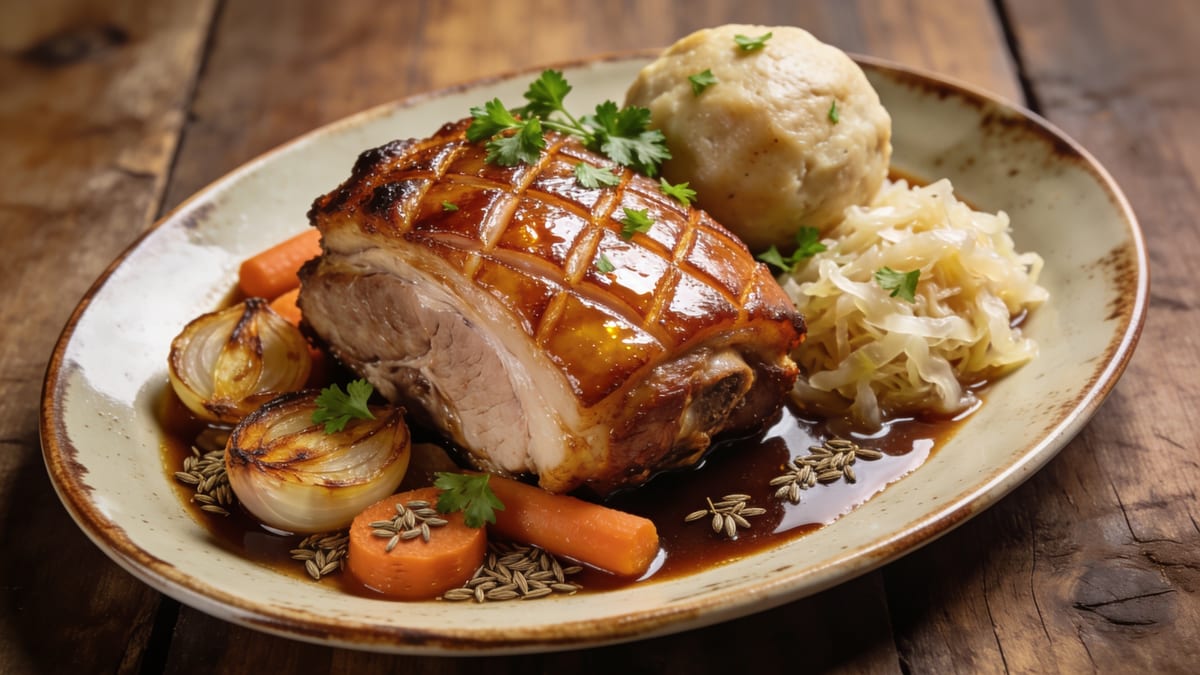
خطّط جلد اللحم بشقوق متقاطعة وافرك اللحم بالملح والفلفل والكراوية. اشوه فوق فرشة من البصل والجزر والكرفس، ووجه اللحم إلى الأسفل أولًا، ثم اقلبه بحيث يصبح الجلد إلى الأعلى وادهنه بانتظام بالبيرة الداكنة وعصارات الصينية وهو يُشوى على حرارة منخفضة وببطء حتى يطرى. قرب النهاية، ارفع الحرارة إلى أقصاها (أو ادهن الجلد ببيرة مملّحة) حتى يتنفّط الجلد ويتقرمش. أرح اللحم، ثم صفِّ عصارات الصينية وكثّفها إلى مرقة داكنة. قدّم مع زلابية البطاطس أو الخبز وساوركراوت.
- خطّط الجلد واشوه في النهاية والجلد إلى الأعلى على حرارة عالية للحصول على قشرة زجاجية مقرمشة حقيقية (كروسته).
- ادهن بالبيرة الداكنة وعصارات الصينية طوال الشوي للنكهة ولمرقة غنية.
- اشوِ على حرارة منخفضة وببطء للحصول على لحم طري، وأرحه، ثم اصنع المرقة الداكنة من العصارات المصفّاة.
Equipment
- صينية شوي
- سكين حادة (للتخطيط)
- مصفاة (للمرقة)
المكونات
لحم الخنزير
- 1.5 kg كتف خنزير (بالجلد)
- ملح وفلفل وبذور كراوية
قاعدة الشوي
- 2 بصلة، 2 جزرة، 1 عود كرفس، مقطّعة قطعًا كبيرة
- ثوم؛ 2 ورقة غار
- 500 ml بيرة داكنة (دونكل)، للدهن
- مرق، حسب الحاجة
للتقديم
- زلابية بطاطس أو خبز (كنودل/زيملكنودل)
- ساوركراوت أو سلطة ملفوف
الطريقة
- خطوة01
خطّط جلد الخنزير بشقوق متقاطعة دقيقة (اقطع الجلد من دون أن تصل إلى اللحم). افرك اللحم من كل الجهات بالملح والفلفل وبذور الكراوية.
- خطوة02
انثر الخضروات المقطّعة والثوم والغار في صينية شوي. ضع اللحم فوقها ووجه اللحم إلى الأسفل، وأضف قليلًا من البيرة/المرق، واشوِ على 160°C/325°F لبدء نضج اللحم وإكساب القاعدة نكهة، نحو 45 دقيقة.
- خطوة03
اقلب اللحم بحيث يصبح الجلد إلى الأعلى. تابع الشوي على حرارة منخفضة وببطء، مع الدهن المنتظم بالبيرة الداكنة وعصارات الصينية، حتى يطرى اللحم، من ساعة إلى ساعة ونصف أخرى. أضف بيرة/مرقًا كي لا تجف القاعدة.
- خطوة04
ارفع حرارة الفرن إلى أقصاها (أو استخدم الشوّاية العلوية) في آخر 15–20 دقيقة، مع دهن الجلد بقليل من البيرة المملّحة، حتى يتنفّط الجلد ويتقرمش إلى «كروسته» ذهبية داكنة — وانتبه ألا يحترق.
- خطوة05
أرح اللحم المشوي 15 دقيقة. صفِّ عصارات الصينية (مع عصر الخضروات)، وانزع الدهن الطافي، وركّز/كثّف السائل إلى مرقة داكنة غنية، مع تعديلها بالمرق. قطّع اللحم شرائح (مع شظايا القشرة المقرمشة) وقدّمه مع الزلابية وساوركراوت والمرقة.
Make ahead
يمكنك شوي اللحم وصنع المرقة قبل يوم وإعادة التسخين برفق في المرقة — فالنكهة رائعة، وإن كانت القشرة المقرمشة أفضل طازجة (أعد تقريشها في فرن ساخن). للضيافة، اشوِ مسبقًا حتى مرحلة الطراوة، ثم قرمش الجلد بدفعة حرارة وسخّن اللحم قبل التقديم. ويمكن تحضير الزلابية وساوركراوت مسبقًا أيضًا.
Storage
يُحفَظ 3 أيام في الثلاجة؛ ويعاد تسخين اللحم جيدًا في المرقة (تلين القشرة المقرمشة عند التخزين — والأفضل تناولها طازجة). المرقة تُحفَظ وتتجمّد جيدًا. بقايا اللحم المشوي رائعة في السندويشات أو شرائح باردة. سخّن اللحم برفق في المرقة أو المرق ليبقى رطبًا؛ وأعد تقريش أي جلد في فرن ساخن إن استطعت.
Variations
شفاينسهاكسه
النكهات نفسها على موزة (عرقوب) خنزير كاملة — كلاسيكية قاعات البيرة بجلد فائق القرمشة.
مع الزلابية
قدّمه مع زيملكنودل (زلابية الخبز) أو زلابية البطاطس لتتشرّب المرقة — على الطريقة البافارية.
اختيار البيرة
استخدم دونكل بافارية (لاغر داكنة) للحصول على أكثر مرقة أصالة بنكهة شعير غنية.
Serve with
Nutrition per serving
Nutrition values are estimates based on the metric measurements. Adjust as needed.
الأسئلة الشائعة
كيف أحصل على القشرة المقرمشة (كروسته) في الشفاينه براتن؟
خطّط الجلد بشقوق متقاطعة دقيقة (بقطع الجلد لا اللحم)، وافركه بالملح، و— الأهم — أنهِ الشوي بدفعة حرارة عالية جدًا (أو تحت الشوّاية) والجلد إلى الأعلى، حتى يتنفّط الجلد وينتفخ قشرةً مقرمشة. ودهن الجلد بقليل من البيرة المملّحة أو الماء قبل دفعة الحرارة العالية يساعد. الجلد الجاف يتقرمش أفضل، فلا تُبقِ الجلد مغمورًا في السائل.
أي بيرة أستخدم؟
اللاغر البافارية الداكنة (دونكل) هي التقليدية وتمنح المرقة عمقًا شعيريًا لطيفًا يميل قليلًا إلى الحلاوة، لكن أي بيرة داكنة أو كهرمانية جيدة تفي بالغرض. تدهن بها اللحم أثناء الشوي وتشكّل قاعدة المرقة. وإن كنت تفضّل عدم استخدام البيرة، فالمرق يصلح للطهي، وإن كانت البيرة جزءًا من النكهة الكلاسيكية. تجنّب البيرة شديدة المرارة عالية الجنجل، فقد تجعل المرقة مرّة.
ما أفضل قطعية من لحم الخنزير؟
كتف الخنزير (بجلده) هو الخيار الكلاسيكي — ففيه من الدهن والنسيج الضام ما يكفي ليبقى عصيريًا وطريًا خلال شوي طويل، ويتقرمش جلده بشكل رائع. ورقبة الخنزير أو الموزة الكاملة (للشفاينسهاكسه) تقليديتان أيضًا. تأكد من تخطيط الجلد جيدًا. القطع الأهبر كقطعية المتن قد تجف، لذا يبقى الكتف الخيار الآمن الغني بالنكهة.
ماذا يُقدَّم مع الشفاينه براتن؟
الكلاسيكيات البافارية: زلابية البطاطس أو زلابية الخبز (كنودل / زيملكنودل) لتتشرّب المرقة الداكنة، وساوركراوت أو سلطة ملفوف (كراوتسالات) للحموضة والانتعاش. وتجمع كل ذلك مرقة بيرة غنية، وتبقى البيرة البافارية الباردة الشراب الطبيعي معه. إنه طعام دسم احتفالي لغداء الأحد وحدائق البيرة.
هل يمكن صنع المرقة من دون عوامل تكثيف؟
نعم — خضروات الشوي وعصارات الصينية المركَّزة تصنع طبيعيًا مرقة غنية النكهة. صفِّ واعصر البصل والجزر والكرفس الطري (فهي تضيف قوامًا)، وانزع الدهن الزائد، وركّز السائل بالتقليل. وإن أردتها أثخن، يمكنك خفق قليل من الدقيق أو محلول نشا الذرة، أو قطعة خبز داكن (حيلة تقليدية)، لكن تركيزًا جيدًا لعصارات الصينية بالبيرة غالبًا ما يكون غنيًا كافيًا وحده.
Cooked this? Rate it.
Real ratings from real cooks. We only show a score once enough of you have weighed in — no fabricated stars.