بيسك الطماطم
This tomato bisque is the silky, restaurant-style upgrade to classic tomato soup: deeply savory from slow-cooked onion and caramelized tomato paste, then blended velvet-smooth and finished with heavy cream. Building a light butter-and-flour roux right in the pot gives the soup real body, so the cream enriches rather than thins it. Canned whole peeled tomatoes deliver reliable, concentrated flavor any month of the year.
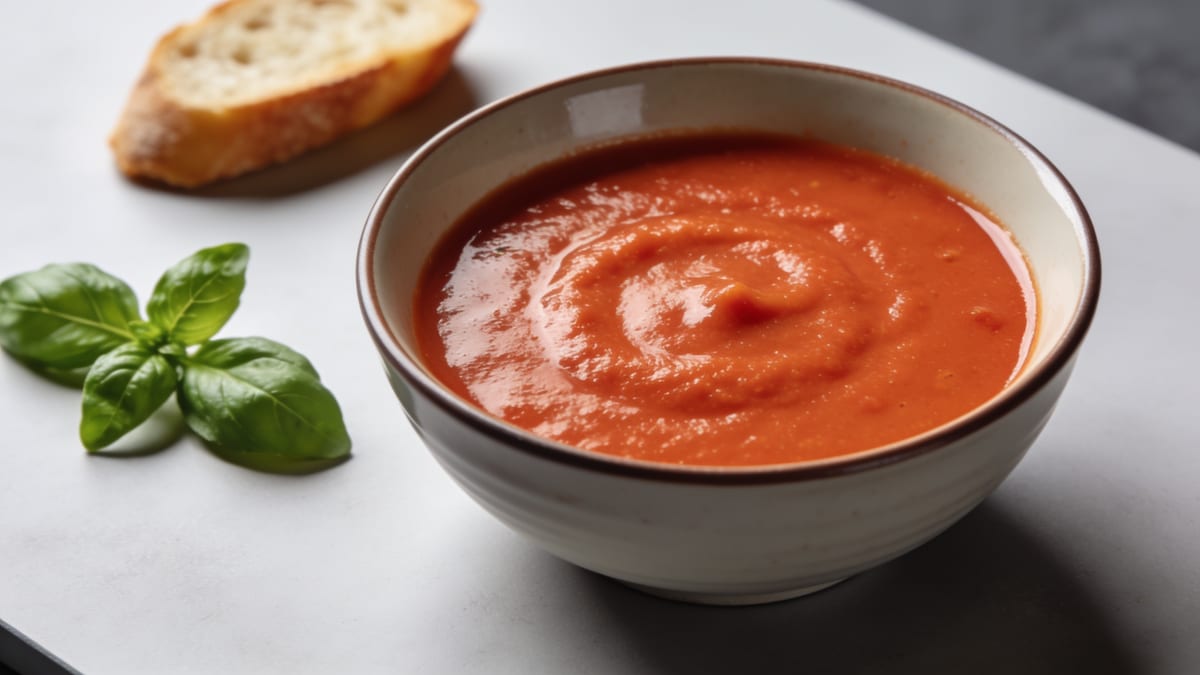
Melt 3 tablespoons butter with 1 tablespoon olive oil in a Dutch oven over medium heat, then cook 1 diced onion, 1 diced carrot, and a pinch of salt until soft, about 8 minutes. Stir in 3 minced garlic cloves and 2 tablespoons tomato paste and cook until the paste darkens to brick red, 2 to 3 minutes, then sprinkle in 3 tablespoons flour and stir for 1 minute. Add one 28-ounce can of whole peeled tomatoes (crushed by hand) with their juices, 3 cups vegetable broth, and 1 teaspoon sugar; simmer uncovered for 25 minutes. Blend until completely smooth, return to the pot, stir in 3/4 cup heavy cream and a handful of torn basil, season with salt and pepper, and warm gently without boiling before serving.
- Caramelize the tomato paste until it turns brick red and sticks slightly to the pot — that browning step is where most of the bisque's depth comes from.
- Blend in batches, filling the blender no more than halfway and venting the lid, or the hot soup can blow the top off; an immersion blender is safer but slightly less silky.
- Add the cream off a boil and keep the soup below a simmer afterward — high heat plus tomato acidity is what makes cream look curdled.
Equipment
- Dutch oven or heavy-bottomed soup pot (4 qt / 4 L or larger)
- Blender or immersion blender
- Chef's knife and cutting board
- Wooden spoon or silicone spatula
- Measuring cups and spoons
- Ladle
المكونات
Soup Base
- 42 g unsalted butter
- 15 ml olive oil, keeps the butter from browning too fast
- medium yellow onion, diced, about 200 g / 1 1/2 cups
- medium carrot, peeled and diced, adds natural sweetness that balances the acidity
- garlic cloves, minced
- 30 g tomato paste
- 24 g all-purpose flour
- 794 g whole peeled tomatoes, with juices, San Marzano or another good-quality brand
- 720 ml low-sodium vegetable broth, or chicken broth if not keeping it vegetarian
- 4 g granulated sugar, adjust to taste depending on your tomatoes
To Finish
- 180 ml heavy cream, plus extra for drizzling
- 6 g fresh basil leaves, torn, plus small leaves for garnish
- fine sea salt, start with 3/4 tsp
- freshly ground black pepper
الطريقة
- خطوة01
Melt the butter with the olive oil in a Dutch oven over medium heat. Add the onion, carrot, and a pinch of salt and cook, stirring occasionally, until the onion is translucent and the carrot has started to soften, about 8 minutes. Don't rush to brown them — gentle sweating keeps the base sweet.
- خطوة02
Stir in the garlic and cook for 30 seconds until fragrant, then add the tomato paste. Cook, stirring constantly and scraping the bottom, until the paste darkens from bright red to brick red and begins to stick to the pot, 2 to 3 minutes. This browning builds the deep, savory backbone of the bisque.
- خطوة03
Sprinkle the flour over the vegetables and stir until no dry streaks remain, about 1 minute. The flour will coat everything in a thin paste — that's the roux that gives the finished soup its body.
- خطوة04
Crush the whole tomatoes into the pot with your hands (or add them and break them up with your spoon), then pour in their juices, the broth, and the sugar. Scrape the bottom of the pot well, bring to a boil, then reduce the heat and simmer uncovered, stirring occasionally, until the carrot is completely tender and the soup has thickened slightly, about 25 minutes.
- خطوة05
Remove the pot from the heat. Working in two batches, blend the soup until completely smooth, filling the blender no more than halfway and removing the lid's center cap (cover the hole with a folded towel) so steam can escape. Alternatively, blend in the pot with an immersion blender for 2 to 3 minutes. Return the soup to the pot.
- خطوة06
Set the pot over low heat and stir in the heavy cream and torn basil. Warm gently for a few minutes, keeping the soup below a simmer so the cream stays smooth. Season with salt and pepper, and taste — if the soup is still sharp, add another pinch of sugar; if it's flat, add a little more salt.
- خطوة07
Ladle into warm bowls and finish with a drizzle of cream, a few small basil leaves, and a crack of black pepper. Serve hot, ideally with something crunchy or cheesy alongside.
Make ahead
Make the soup through the blending step up to 3 days ahead and refrigerate, or freeze the cream-free base flat in zip-top bags for up to 3 months. To serve, reheat the base until steaming, then stir in the cream and basil and season fresh — the basil in particular tastes brightest added the day you eat it.
Storage
Cool completely and refrigerate in an airtight container for up to 4 days; it thickens as it chills, so loosen with a splash of broth or water when reheating. Reheat gently over medium-low heat, stirring often and stopping short of a boil so the cream doesn't break. Freezing the finished bisque works in a pinch (up to 2 months), but the texture is smoothest if you freeze the base before the cream goes in.
Variations
Dairy-Free Vegan Bisque
Swap the butter for 3 tablespoons olive oil and the heavy cream for 180 ml (3/4 cup) full-fat coconut milk or unsweetened cashew cream. To make it gluten-free too, replace the flour with 1 tablespoon cornstarch stirred into the cream substitute before adding. The coconut version has a faint sweetness that plays surprisingly well with tomato.
Roasted Red Pepper Tomato Bisque
Add 150 g (about 1 cup) drained jarred roasted red peppers along with the canned tomatoes. They deepen the color, round out the acidity, and add a subtle smoky-sweet note. A pinch of smoked paprika with the tomato paste pushes it further in that direction.
Spicy Calabrian Chile Bisque
Stir 2 to 3 teaspoons of Calabrian chile paste (or 1/2 teaspoon crushed red pepper flakes) in with the tomato paste. The gentle heat cuts the richness of the cream and makes the bowl feel less heavy — great when you're serving it as a main course.
Serve with
Nutrition per serving
Nutrition values are estimates based on the metric measurements. Adjust as needed.
الأسئلة الشائعة
What's the difference between tomato bisque and tomato soup?
A bisque is defined by its richness and texture: it's blended completely smooth and finished with cream, while plain tomato soup can be brothy, chunky, and dairy-free. Traditional French bisques were shellfish soups thickened with rice, but in American cooking a tomato bisque means a velvety, cream-enriched tomato soup — this version uses a light flour roux for that signature body.
Can I use fresh tomatoes instead of canned?
Yes, when they're in season. Substitute about 1.1 kg (2 1/2 lb) of ripe plum or vine tomatoes, cored and roughly chopped, and extend the simmer by 10 minutes so they fully break down. For the smoothest result, pass the blended soup through a fine-mesh sieve to catch skins and seeds. Off-season, good canned whole peeled tomatoes will honestly make a better tomato bisque than pale supermarket fresh ones.
Why did my cream curdle, and how do I prevent it?
Tomatoes are acidic, and acid plus high heat destabilizes dairy. Three safeguards: use heavy cream rather than milk or half-and-half (its higher fat content resists curdling), stir it in off a boil, and keep the soup below a simmer once the cream is added. If it does separate slightly, a quick re-blend usually brings it back together.
How do I make tomato bisque gluten-free?
Skip the flour and instead whisk 1 tablespoon of cornstarch into the cream before stirring it in, then warm gently until the soup thickens slightly. You can also simmer 50 g (1/4 cup) of white rice in the soup during the 25-minute simmer and blend it in — that's the old-school bisque thickener, and it's naturally gluten-free. Double-check that your broth is certified gluten-free as well.
Can I use milk instead of heavy cream?
It's risky — milk has far less fat, so it's much more likely to curdle in an acidic tomato base. If you want a lighter bowl, use half the cream rather than switching to milk, or stir in whole milk completely off the heat just before serving and don't reheat hard afterward. Evaporated milk is a more stable lighter option because its proteins are already heat-treated.
Cooked this? Rate it.
Real ratings from real cooks. We only show a score once enough of you have weighed in — no fabricated stars.