Knoblauch-Aioli
Knoblauch-Aioli ist eine seidige, knoblauchbetonte emulgierte Sauce aus der französischen und provenzalischen Tradition – man kann sie sich als kräftigeren, gehaltvolleren Verwandten der Mayonnaise vorstellen. Roher, mit Salz zerstoßener Knoblauch wird unter Eigelb gerührt und dann langsam mit Öl aufgeschlagen, bis die Masse dick genug für eine weiche Spitze ist, mit einem frischen Spritzer Zitrone, damit sie nicht zu schwer wirkt. Die Emulsion von Hand aufzubauen und neutrales Öl mit nur einem Schuss Olivenöl zu mischen, ergibt eine glänzende, löffelbare Aioli, die an Pommes und Meeresfrüchten haftet, ohne bitter zu werden.
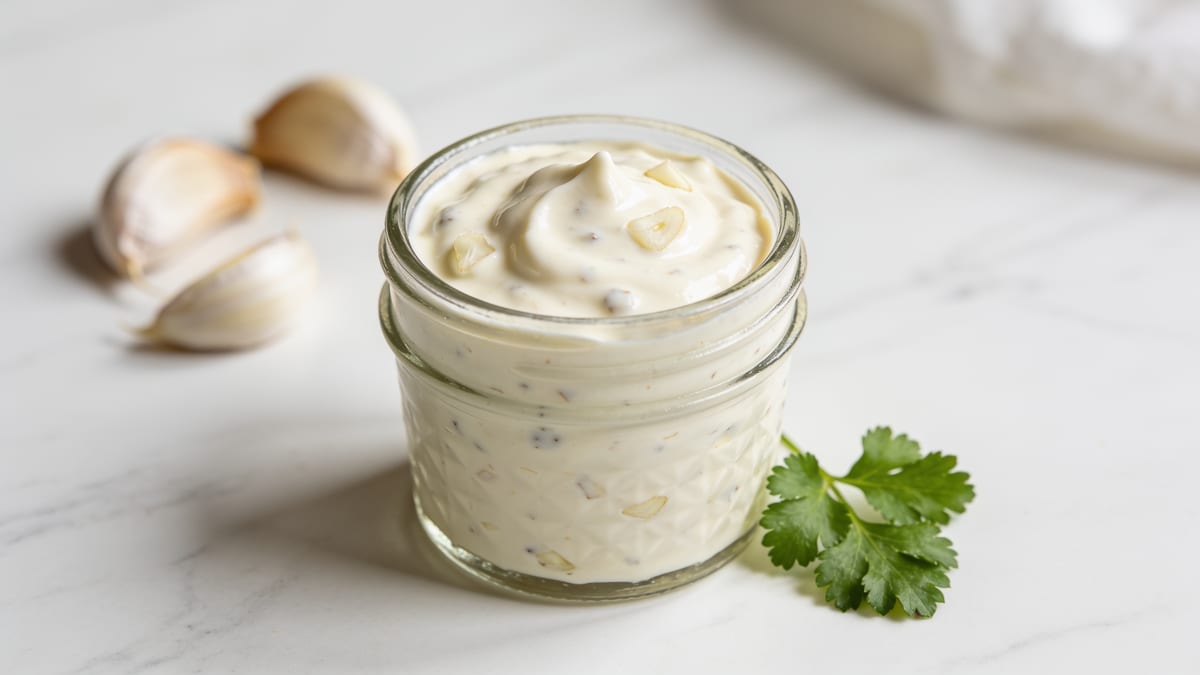
Zerdrücke 4 Knoblauchzehen mit 1/2 Teelöffel feinem Salz zu einer glatten Paste und verrühre sie in einer Schüssel mit 2 Eigelb, 1 Teelöffel Dijon und einem halben Esslöffel Zitronensaft. Stelle die Schüssel auf ein feuchtes Tuch, damit sie nicht rutscht, und beginne, eine Mischung aus 3/4 cup neutralem Öl und 1/4 cup nativem Olivenöl extra buchstäblich Tropfen für Tropfen einzuarbeiten, dabei ständig rühren, bis die Masse sichtbar dicker und heller wird. Sobald die Emulsion greift, gießt du das restliche Öl in einem langsamen, gleichmäßigen Strahl unter ständigem Rühren dazu; zum Schluss den restlichen Zitronensaft, ein bis zwei Teelöffel kaltes Wasser zum Verdünnen und Salz nach Geschmack einrühren, dann vor dem Servieren 30 Minuten kalt stellen.
- Bringe Eigelb, Öl und Zitrone zuerst auf Zimmertemperatur – kalte Zutaten emulgieren schlecht und sind der häufigste Grund für eine geronnene Aioli.
- Gib das erste Drittel des Öls Tropfen für Tropfen dazu; wer hier hastet, bringt die Sauce zum Gerinnen. Werde erst schneller, wenn die Basis sichtbar dick und hell ist.
- Verwende überwiegend neutrales Öl mit nur einem Schuss nativem Olivenöl extra – reines Olivenöl aufzuschlagen macht die Aioli unangenehm bitter.
Equipment
- Mörser und Stößel (oder feine Reibe)
- Mittelgroße Rührschüssel
- Ballon-Schneebesen
- Messbecher und Messlöffel
- Teigschaber
Zutaten
Basis
- Knoblauchzehen, etwa 1 EL zerdrückt
- 3 g feines Meersalz, plus mehr nach Geschmack
- große Eigelb, zimmerwarm, am besten pasteurisiert
- 5 g Dijon-Senf, hilft der Emulsion
- 15 ml frischer Zitronensaft, aufgeteilt
- 10 ml kaltes Wasser, nach Bedarf, zum Verdünnen
Öle
- 180 ml neutrales Öl, Traubenkern-, Raps- oder Sonnenblumenöl
- 60 ml natives Olivenöl extra, am besten ein mildes, fruchtiges
Zubereitung
- SCHRITT01
Schäle die Knoblauchzehen und gib sie mit dem feinen Meersalz in einen Mörser. Zerstoße sie zu einer glatten, feuchten Paste – oder reibe den Knoblauch fein und zerdrücke ihn mit dem Salz mit der flachen Seite eines Messers. Das Salz wirkt wie ein Schleifmittel, das den Knoblauch gleichmäßig zerkleinert und seine rohe Schärfe zähmt.
- SCHRITT02
Stelle eine Rührschüssel auf ein feuchtes Küchentuch, damit sie fest steht, während du mit beiden Händen frei rührst. Gib das Eigelb, die Knoblauchpaste, den Dijon-Senf und die Hälfte des Zitronensafts hinein. Rühre etwa 30 Sekunden, bis alles glatt und leicht aufgehellt ist.
- SCHRITT03
Vermische das neutrale Öl und das Olivenöl in einem Messbecher. Gib das Öl unter ständigem Rühren nur ein paar Tropfen auf einmal dazu und lass jede Zugabe vollständig verschwinden, bevor du mehr hinzufügst. Nach etwa einem Drittel des Öls sollte die Masse deutlich dick, glänzend und hell aussehen – das ist der Moment, in dem die Emulsion greift.
- SCHRITT04
Jetzt, da die Emulsion stabil ist, gießt du das restliche Öl in einem dünnen, gleichmäßigen Strahl unter ständigem Rühren dazu. Mach weiter, bis das gesamte Öl eingearbeitet ist und die Aioli weich am Schneebesen haftet. Wird sie fester, als du möchtest, rührst du einen Teelöffel kaltes Wasser zum Verdünnen ein.
- SCHRITT05
Rühre den restlichen Zitronensaft ein und probiere. Passe mit mehr Salz, etwas zusätzlicher Zitrone für Frische oder ein bis zwei Teelöffeln kaltem Wasser an, bis eine löffel- und dipfähige Konsistenz erreicht ist. Sie sollte kräftig nach Knoblauch schmecken, mit einem klaren, säuerlichen Abgang.
- SCHRITT06
Abdecken und mindestens 30 Minuten kalt stellen, damit sich die Aromen verbinden und die Konsistenz fester wird. Vor dem Servieren kurz umrühren. Kühl zu Pommes, geröstetem Gemüse oder Meeresfrüchten servieren.
Make ahead
Du kannst Knoblauch-Aioli bis zu einen Tag im Voraus zubereiten, und eine halbe Stunde im Kühlschrank verbessert sie sogar, weil sich die Aromen verbinden. Beachte, dass der rohe Knoblauch über Nacht intensiver wird, sodass eine am selben Tag zubereitete Portion milder schmeckt als eine vom Vortag.
Storage
Im Kühlschrank in einem luftdichten Behälter bis zu 3 Tage aufbewahren. Nicht einfrieren – die Emulsion trennt sich beim Auftauen. Da sie rohes Ei enthält, sollte sie nicht länger als 2 Stunden bei Zimmertemperatur stehen.
Variations
Vegane Aioli mit Aquafaba
Ersetze die zwei Eigelb durch 3 Esslöffel Aquafaba (die Flüssigkeit aus einer Dose Kichererbsen). Püriere das Aquafaba mit dem Knoblauch, dem Senf und der Zitrone und lass dann das Öl mit einem Stabmixer einlaufen, bis alles dick ist. Sie ist vollständig pflanzlich und hält die Emulsion erstaunlich gut.
Aioli mit geröstetem Knoblauch
Für eine süße, milde, streichfähige Variante röstest du eine ganze, in Alufolie gewickelte Knoblauchknolle etwa 40 Minuten bei 400°F (200°C), bis sie weich ist, drückst dann die Zehen heraus und zerdrückst sie anstelle des rohen Knoblauchs. Ideal auf Burgern und Sandwiches, wo roher Knoblauch zu dominant wäre.
Rauchige Chipotle-Limetten-Aioli
Rühre 1–2 Teelöffel fein gehackte Chipotle in Adobo plus eine Prise geräuchertes Paprikapulver ein und ersetze die Zitrone durch Limettensaft. Diese rauchige, scharfe Variante passt perfekt zu Süßkartoffelpommes, Tacos und gegrilltem Mais.
Serve with
Nutrition per serving
Nutrition values are estimates based on the metric measurements. Adjust as needed.
Häufige Fragen
Wie mache ich eine Knoblauch-Aioli, die dick bleibt und nicht gerinnt?
Das Geheimnis einer Knoblauch-Aioli, die zusammenhält, sind Temperatur und Geduld: Beginne mit zimmerwarmem Eigelb und gib das Öl Tropfen für Tropfen dazu, bis die Basis dick und hell wird, bevor du den Rest einlaufen lässt. Sollte sie doch gerinnen, verrührst du in einer sauberen Schüssel ein frisches Eigelb (oder einen Teelöffel der geronnenen Sauce) und schlägst die getrennte Masse langsam wieder darunter – sie emulgiert erneut.
Ist Aioli das Gleiche wie Knoblauchmayonnaise?
Sie sind nahe Verwandte. Traditionelle provenzalische Aioli ist nur emulgierter Knoblauch und Olivenöl, manchmal mit einem Eigelb, während Mayonnaise aus Eigelb, neutralem Öl und Säure besteht. Diese Version liegt dazwischen – Eigelb für Stabilität plus reichlich Knoblauch –, sodass sie streng genommen eine Knoblauchmayonnaise ist, aber der ausgeprägte Knoblauch- und Olivenölcharakter verschafft ihr den Namen Aioli.
Kann ich Knoblauch-Aioli mit einem Mixer oder Stabmixer machen?
Ja. Nimm ein ganzes Ei statt zwei Eigelb, gib alle Zutaten und das Öl in einen hohen, schmalen Becher und senke einen Stabmixer bis zum Boden ab. Mixe ihn etwa 10 Sekunden, ohne ihn zu bewegen, bis die Basis emulgiert, und ziehe den Mixer dann langsam nach oben. Das geht schneller und ist nahezu narrensicher, wird aber eine Spur weniger gehaltvoll als die von Hand aufgeschlagene Variante.
Ist das rohe Ei bedenkenlos essbar?
Die Eier sind ungekocht, verwende also möglichst frische Eier und halte die Aioli gekühlt. Für Schwangere, ältere Menschen, sehr kleine Kinder oder Menschen mit geschwächtem Immunsystem nimmst du pasteurisierte Eier (in der Schale oder Eigelb aus der Packung) – sie schalten das Salmonellenrisiko aus, ohne die Konsistenz zu verändern.
Wie lange hält sich selbst gemachte Knoblauch-Aioli?
Bewahre sie in einem luftdichten Behälter bis zu 3 Tage im Kühlschrank auf. Der rohe Knoblauch wird im Lauf des ersten Tages tatsächlich schärfer, sodass eine morgens zubereitete Portion zum Abendessen kräftiger ist; wenn du einen milderen Geschmack bevorzugst, nimm gerösteten Knoblauch. Lass sie nicht länger als 2 Stunden bei Zimmertemperatur stehen.
Cooked this? Rate it.
Real ratings from real cooks. We only show a score once enough of you have weighed in — no fabricated stars.