Bucatini all'Amatriciana — Roman Tomato & Guanciale Pasta
One of Rome's four great pastas: crisp guanciale and a quick tomato sauce sharpened with peperoncino and finished with sharp Pecorino Romano. Born in the town of Amatrice, it's bold, porky and just-spicy — proof that four or five great ingredients beat a long list. Traditionally tossed with bucatini, the thick hollow spaghetti that catches the sauce.
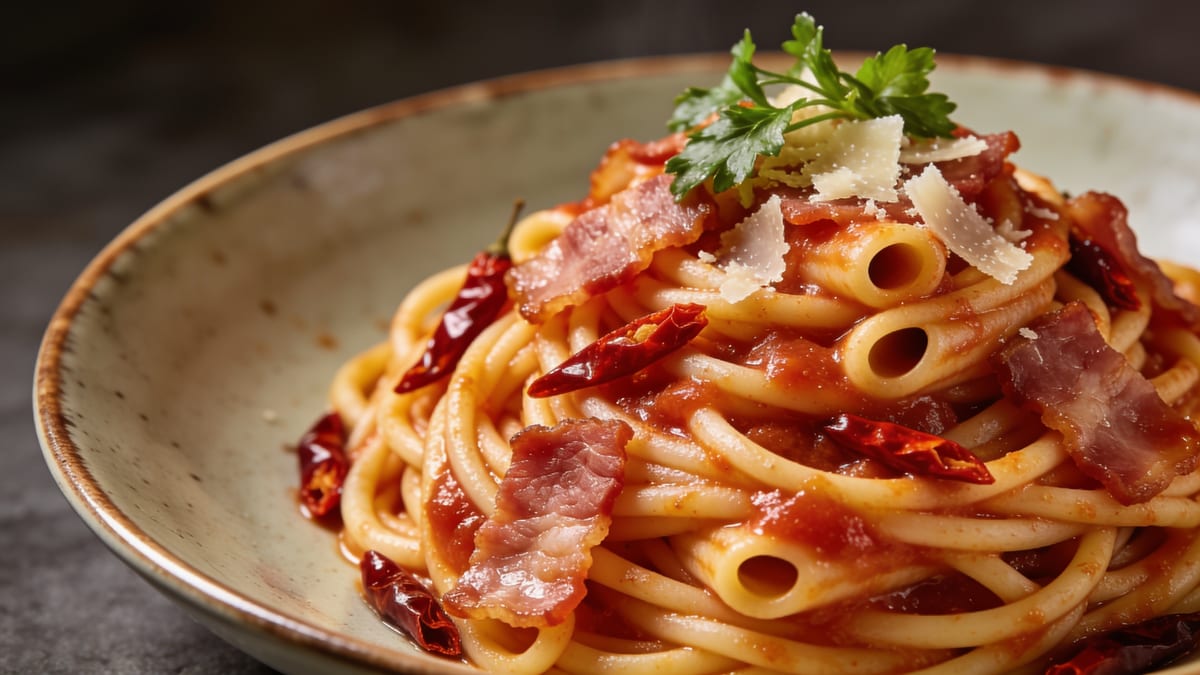
Render diced guanciale in a dry pan until crisp and the fat is rendered, then lift out some of the crisp pieces to keep for the top. Add a little chilli (peperoncino) and tinned tomatoes to the fat and simmer into a rich sauce. Cook bucatini until al dente, toss it through the sauce with a splash of pasta water and most of the guanciale, then finish off the heat with grated Pecorino Romano. Top with the reserved crisp guanciale.
- Render the guanciale until crisp and use its fat as the base of the sauce — no extra oil needed.
- A little peperoncino is traditional; keep the sauce sharp and porky, not heavy.
- Finish with Pecorino Romano off the heat so it melts in without clumping.
Equipment
- Large frying pan
- Pot for pasta
- Tongs
Ingredients
Sauce
- 150 g guanciale, diced, or pancetta
- 1 dried chilli (peperoncino), crumbled
- 400 g peeled tomatoes (San Marzano), crushed
- Splash of dry white wine, optional
- Salt to taste
Pasta & finish
- 400 g bucatini (or spaghetti/rigatoni)
- 60 g Pecorino Romano, grated
Method
- STEP01
Cook the diced guanciale in a dry cold pan over medium heat until it renders its fat and turns crisp and golden, about 6 minutes. Lift out a third of the crispest pieces and set aside for the top.
- STEP02
Add the crumbled chilli to the fat (and a splash of wine, if using, letting it evaporate), then the crushed tomatoes. Simmer 10–12 minutes into a rich sauce. Season with salt.
- STEP03
Cook the bucatini in well-salted water until al dente, reserving a mug of the starchy water before draining.
- STEP04
Add the drained pasta to the sauce with most of the guanciale and a splash of pasta water, tossing over the heat until glossy and coated.
- STEP05
Off the heat, toss through most of the Pecorino until creamy, loosening with more pasta water if needed. Serve topped with the reserved crisp guanciale and the last of the Pecorino.
Make ahead
Make the guanciale-tomato sauce ahead and refrigerate or freeze. Cook the pasta fresh and toss with the reheated sauce and Pecorino to serve — it comes together in minutes.
Storage
Best fresh. Leftovers keep 2 days refrigerated and reheat with a splash of water; the bucatini softens a little. The sauce alone keeps 4 days and freezes — cook fresh pasta to serve.
Variations
Alla gricia
The 'white amatriciana' — leave out the tomato for guanciale, Pecorino and black pepper only.
Pancetta
Outside Italy, pancetta is a common stand-in for guanciale (slightly less rich).
Rigatoni
Short ridged pasta catches the sauce well if you can't find bucatini.
Serve with
Nutrition per serving
Nutrition values are estimates based on the metric measurements. Adjust as needed.
Frequently asked
Does amatriciana have onion or garlic?
Purists from Amatrice say no — the classic is guanciale, tomato, Pecorino Romano and peperoncino, full stop. Roman versions sometimes add a little onion or a splash of white wine. Keep it simple and let the guanciale and tomato carry it.
Guanciale or pancetta or bacon?
Guanciale (cured pork cheek) is the traditional and best choice — fatty, aromatic and rendering into a rich base. Pancetta is the usual substitute. Smoked bacon works in a pinch but adds smokiness that isn't classic. Render whichever until crisp.
What pasta should I use?
Bucatini — thick, hollow spaghetti — is traditional and catches the sauce in its centre. Rigatoni or spaghetti also work well. The sturdy shapes stand up to the rich, porky tomato sauce.
What's the difference between amatriciana and gricia?
Gricia is essentially amatriciana without tomato — guanciale, Pecorino Romano and black pepper, sometimes called 'white amatriciana'. Add tomato and chilli to gricia and you have amatriciana. Both are part of Rome's quartet of classic pastas, alongside carbonara and cacio e pepe.
How spicy should it be?
Gently — a single dried chilli (peperoncino) gives a warm background heat, not a fierce burn. Adjust to taste, but amatriciana is about the balance of crisp guanciale, sweet-sharp tomato and salty Pecorino, with chilli as a lift rather than the star.
Cooked this? Rate it.
Real ratings from real cooks. We only show a score once enough of you have weighed in — no fabricated stars.