Spaghetti alla Carbonara — Roman Egg & Guanciale Pasta
The real Roman carbonara: no cream, ever. Just crisp guanciale, egg yolks, Pecorino Romano and a storm of black pepper, emulsified with starchy pasta water into a glossy, clinging sauce. Four ingredients, perfect technique — the whole dish lives or dies on not scrambling the eggs.
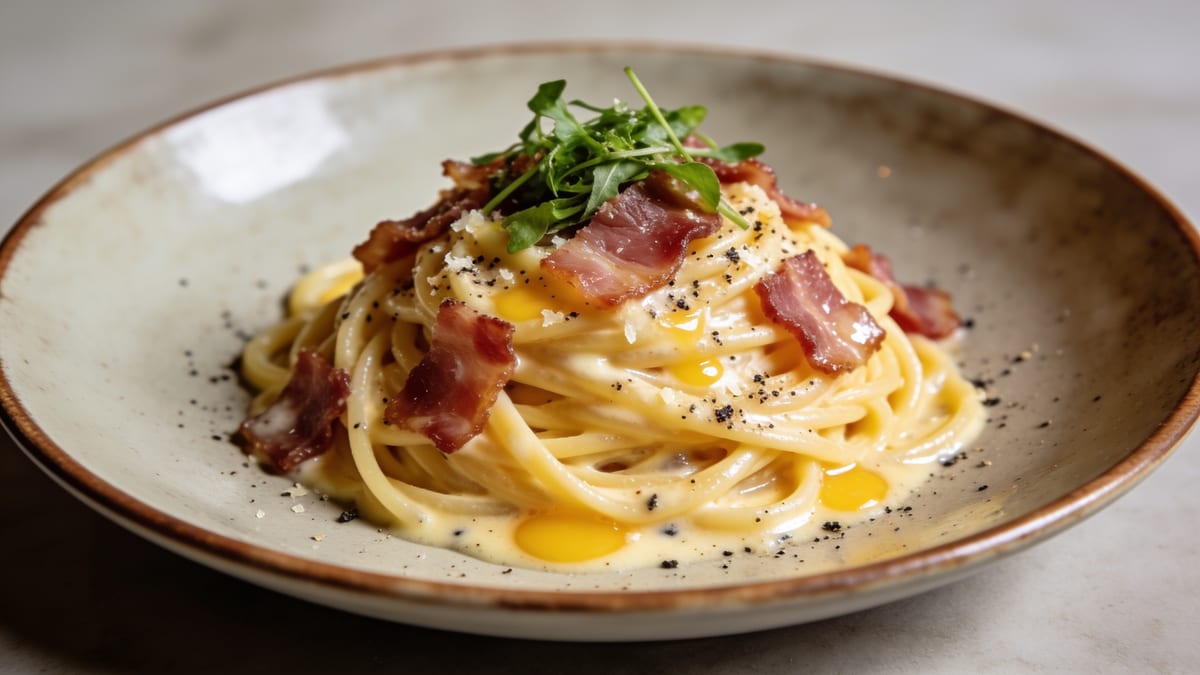
Render diced guanciale until crisp and the fat is rendered. Whisk egg yolks (plus one whole egg) with finely grated Pecorino Romano and lots of black pepper. Cook spaghetti until al dente, reserving the starchy water. Off the heat, toss the drained pasta with the guanciale and its fat, then the egg-cheese mixture, loosening with hot pasta water and tossing fast until it turns into a glossy, creamy sauce — never let it scramble.
- No cream — creaminess comes from the egg and Pecorino emulsified with starchy pasta water.
- Make the sauce off the heat (or over the lowest residual heat) so the eggs thicken, not scramble.
- Guanciale and Pecorino Romano are the authentic pair; pancetta and Parmigiano are common substitutes.
Equipment
- Large pot
- Frying pan
- Mixing bowl
- Tongs
Ingredients
Pasta
- 400 g spaghetti (or rigatoni)
- Salt for the pasta water
Sauce
- 150 g guanciale, diced, or pancetta
- 4 egg yolks
- 1 whole egg
- 60 g Pecorino Romano, finely grated, plus more to serve
- 1–2 tsp freshly ground black pepper
Method
- STEP01
Put the diced guanciale in a cold frying pan and cook over medium heat until the fat renders and the pieces are golden and crisp, about 8 minutes. Take off the heat and leave the fat in the pan.
- STEP02
Whisk the egg yolks, whole egg, grated Pecorino and a generous amount of black pepper into a thick paste in a bowl.
- STEP03
Cook the spaghetti in well-salted water until al dente. Just before draining, scoop out a mugful of the starchy cooking water.
- STEP04
Add the drained hot pasta to the pan with the guanciale and toss to coat in the fat. Off the heat, pour in the egg-cheese mixture and toss vigorously, adding splashes of hot pasta water, until the sauce turns glossy and creamy and clings to the strands.
- STEP05
Serve at once with extra Pecorino and more black pepper. Carbonara waits for no one — eat it immediately while it's silky.
Make ahead
Not a make-ahead dish — the magic is in serving it fresh. You can dice the guanciale and grate the cheese ahead, but assemble and emulsify only when ready to eat.
Storage
Carbonara is best eaten the moment it's made. Leftovers keep 1 day refrigerated but the sauce stiffens; reheat very gently with a splash of water, accepting it won't be as silky.
Variations
Pancetta & Parmigiano
Outside Italy, pancetta and Parmigiano-Reggiano are common stand-ins for guanciale and Pecorino — still delicious, slightly less sharp.
Extra peppery (pepe)
Toast the black pepper in the pan with the guanciale fat for a deeper, more aromatic bite.
Rigatoni alla carbonara
Short tube pasta catches the sauce beautifully — a very common Roman alternative to spaghetti.
Serve with
Nutrition per serving
Nutrition values are estimates based on the metric measurements. Adjust as needed.
Frequently asked
Does real carbonara have cream?
No. Authentic Roman carbonara never contains cream. The creamy texture comes entirely from emulsifying egg yolks and grated Pecorino Romano with the hot, starchy pasta water and rendered guanciale fat. Cream is a non-traditional shortcut that mutes the flavour.
How do I stop the eggs from scrambling?
Take the pan off the heat before adding the egg mixture, and toss continuously while loosening with hot pasta water. The residual heat of the pasta and pan thickens the eggs into a sauce; direct heat overcooks them into scrambled curds.
Guanciale or pancetta or bacon?
Guanciale (cured pork cheek) is the traditional choice — fattier and more aromatic. Pancetta is the usual substitute. Smoked bacon works in a pinch but adds a smokiness that isn't classic. Render whichever you use until crisp.
Pecorino or Parmigiano?
Traditional carbonara uses sharp, salty Pecorino Romano. Many cooks blend in some Parmigiano-Reggiano to soften the sharpness, or use Parmigiano alone if Pecorino is too strong for them. Grate it very finely so it melts smoothly.
Why is my carbonara dry or clumpy?
Not enough pasta water, or the sauce was added to pasta that had cooled too much. Keep the pasta hot, add the egg mixture immediately, and loosen generously with the reserved starchy water, tossing until glossy. It should flow, not clump.
Cooked this? Rate it.
Real ratings from real cooks. We only show a score once enough of you have weighed in — no fabricated stars.