Bœuf Bourguignon — Burgundy Beef Stew
Burgundy's great beef braise: chunks of beef slowly cooked in red wine with lardons, mushrooms and glazed pearl onions until the meat is meltingly tender and the sauce is deep, glossy and rich. Rustic in origin, elegant on the plate, and — like all great braises — even better the next day.
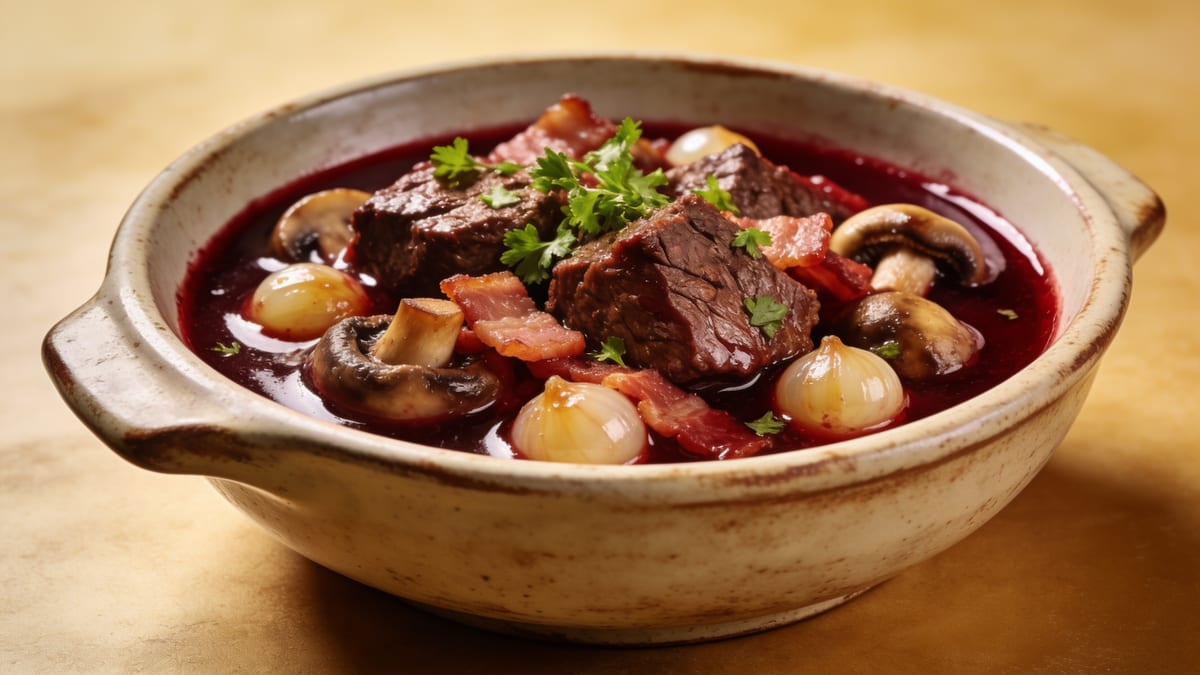
Brown chunks of beef hard in the fat from crisped lardons, in batches. Soften onion and carrot, stir in tomato paste and a little flour, then deglaze with a bottle of red Burgundy and beef stock. Return the beef and lardons with a bouquet garni and braise low for about three hours until fork-tender. Glaze pearl onions and sauté mushrooms separately, fold them in, and reduce the sauce until glossy. Serve with potatoes or bread.
- Brown the beef hard and in batches — that deep colour is the backbone of the sauce.
- Use a wine you'd drink; a red Burgundy (Pinot Noir) is traditional.
- Cook the mushrooms and pearl onions separately and add at the end so they keep their texture.
Equipment
- Dutch oven
- Frying pan
- Tongs
Ingredients
Beef & braise
- 1.5 kg beef chuck or shin, in large chunks
- 150 g smoked lardons or bacon, diced
- 1 onion and 2 carrots, chopped
- 3 garlic cloves, crushed
- 30 g tomato paste
- 30 g plain flour
- 750 ml red Burgundy (Pinot Noir)
- 250 ml beef stock
- Bouquet garni (thyme, bay, parsley), salt and pepper
Garnish
- 250 g button mushrooms, halved
- 200 g pearl onions, peeled
- 30 g butter or oil
- Chopped parsley, to serve
Method
- STEP01
Render the lardons in a Dutch oven until browned; lift out, leaving the fat. Pat the beef very dry and season.
- STEP02
Brown the beef chunks hard in the lardon fat, in batches so they colour rather than steam. Set aside.
- STEP03
Soften the onion and carrot in the pot, stir in the garlic, tomato paste and flour and cook 2 minutes. Pour in the wine and stock, scraping up the browned bits.
- STEP04
Return the beef and lardons with the bouquet garni. Cover and braise low (oven or stovetop) until the beef is fork-tender, about 3 hours.
- STEP05
Meanwhile, sauté the mushrooms in butter until golden; brown and glaze the pearl onions with a splash of water until tender. Fold both into the stew.
- STEP06
Discard the bouquet garni. If the sauce is thin, simmer to reduce until it coats a spoon. Season, scatter with parsley, and serve with mashed or boiled potatoes, buttered noodles or crusty bread.
Make ahead
An ideal make-ahead: cook it a day or two before, cool and refrigerate, then reheat to serve. The flavour deepens overnight and the fat is easy to skim from the top once chilled.
Storage
Keeps 3 days refrigerated and freezes 3 months — and, like most braises, tastes even better the next day. Reheat gently on the stove. Add freshly sautéed mushrooms on reheating if you like them springy.
Variations
With a marinade
Marinate the beef in the wine and aromatics overnight first for even deeper flavour, as in the most traditional recipes.
Beurre manié finish
Skip the flour at the start and thicken the finished sauce with kneaded butter-and-flour instead.
Pressure cooker
Brown as usual, then pressure-cook the braise in about 45 minutes for a weeknight version.
Serve with
Nutrition per serving
Nutrition values are estimates based on the metric measurements. Adjust as needed.
Frequently asked
What cut of beef is best for bœuf bourguignon?
A well-marbled braising cut like chuck (shoulder) or shin, which turns meltingly tender over the long, slow braise. Lean cuts like fillet dry out and won't develop the same richness. Cut it into generous chunks so it stays juicy.
What wine should I use?
A dry red you'd happily drink — traditionally a red Burgundy (Pinot Noir). Avoid heavily oaked or very cheap 'cooking wine'. A whole standard bottle (750 ml) is right for this quantity; the wine is a defining flavour, so choose decently.
How is it different from coq au vin?
They're close cousins from neighbouring traditions — both braise meat in red wine with lardons, mushrooms and pearl onions. Bœuf bourguignon uses beef; coq au vin uses chicken (classically a rooster). The technique and garnish are essentially the same.
Why brown the beef in batches?
Crowding the pan traps steam, so the beef stews grey instead of browning. Browning in batches, with the meat patted dry, gives each piece a deep crust — and that fond (the browned bits) dissolves into the wine to give the sauce its backbone.
Why add the mushrooms and onions at the end?
Cooking them separately and folding them in near the end keeps their texture and flavour distinct, rather than letting them disintegrate into the sauce during the long braise. It's the classic French finishing touch.
Cooked this? Rate it.
Real ratings from real cooks. We only show a score once enough of you have weighed in — no fabricated stars.