Coq au Vin — Chicken Braised in Red Wine
The Burgundian classic: chicken braised slowly in red wine with smoky lardons, mushrooms and glazed pearl onions until the meat is falling-tender and the sauce is deep, glossy and rich. Rustic peasant origins, bistro elegance — and even better the next day.
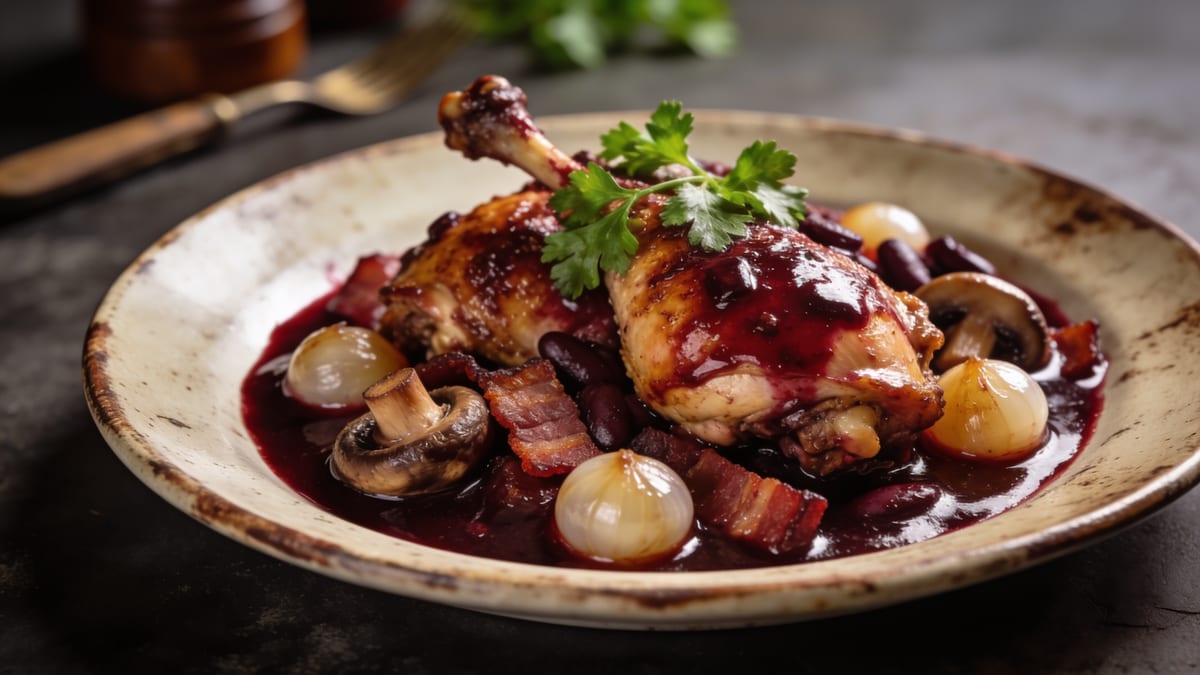
Brown chicken pieces in the fat from crisped lardons, then set aside. Soften aromatics, stir in tomato paste and flour, and deglaze with a bottle of red wine plus stock. Return the chicken and braise gently until tender, about an hour. Meanwhile glaze pearl onions and sauté mushrooms, and fold them in at the end. Reduce the sauce until glossy and serve.
- Brown the chicken well — that fond is the backbone of the sauce's depth.
- Use a wine you'd drink; a young, fruity red (Burgundy/Pinot Noir) is traditional.
- Cook the mushrooms and pearl onions separately and add at the end so they keep their texture.
Equipment
- Dutch oven or heavy casserole
- Frying pan
- Tongs
Ingredients
Chicken & braise
- 1.5 kg bone-in chicken pieces (thighs & legs)
- 150 g smoked lardons or bacon, diced
- 1 onion, diced
- 2 carrots, sliced
- 3 garlic cloves, crushed
- 30 g tomato paste
- 30 g plain flour
- 750 ml dry red wine, Pinot Noir / Burgundy
- 250 ml chicken stock
- Bouquet garni (thyme, bay, parsley)
- Salt and pepper
Garnish
- 250 g button mushrooms, halved
- 200 g pearl onions, peeled
- 30 g butter, or oil for dairy-free
- Chopped parsley, to serve
Method
- STEP01
In a Dutch oven, cook the lardons until browned and the fat is rendered. Lift out with a slotted spoon, leaving the fat behind.
- STEP02
Season the chicken and brown it well in the lardon fat, in batches, until deep golden on all sides. Set aside.
- STEP03
Soften the onion, carrot and garlic in the pan. Stir in the tomato paste and flour and cook 2 minutes, then pour in the wine and stock, scraping up all the browned bits.
- STEP04
Return the chicken and lardons, add the bouquet garni, and bring to a gentle simmer. Cover and cook low until the chicken is very tender, about 1 hour.
- STEP05
Meanwhile, sauté the mushrooms in butter until golden; in the same pan, brown and glaze the pearl onions with a splash of water until tender. Fold both into the braise.
- STEP06
Discard the bouquet garni. If the sauce is thin, simmer to reduce until it coats a spoon. Taste for seasoning, scatter with parsley, and serve with mash, potatoes or crusty bread.
Make ahead
An ideal make-ahead dish. Cook it a day or two before, cool, and refrigerate; reheat gently to serve. Add freshly sautéed mushrooms on reheating if you want them springy.
Storage
Keeps 3 days refrigerated and freezes 3 months. Like most braises, the flavour deepens overnight — it's arguably better the next day. Reheat gently on the stove.
Variations
Coq au vin blanc
Braise in dry white wine (Riesling/Alsace style) for a lighter, paler version popular in eastern France.
With a marinade
Marinate the chicken in the wine and aromatics overnight first for an even deeper flavour, as in the most traditional recipes.
Beurre manié finish
If you skip the flour at the start, thicken the finished sauce with a little beurre manié (kneaded butter and flour) instead.
Serve with
Nutrition per serving
Nutrition values are estimates based on the metric measurements. Adjust as needed.
Frequently asked
What wine should I use for coq au vin?
A dry, fruity red you'd happily drink — traditionally a red Burgundy (Pinot Noir). Avoid heavily oaked or very tannic wines, and never use 'cooking wine'. A whole standard bottle (750 ml) is right for this quantity.
Can I use chicken breasts?
Bone-in thighs and legs are far better — they stay moist and tender through the long braise, while breasts dry out. If you must use breast, add it later and cook just until done.
Why brown the chicken and lardons first?
Browning builds the fond — the caramelised bits stuck to the pan — which dissolves into the wine and gives the sauce its deep, savoury backbone. Skipping it leaves the braise pale and flat.
Do I have to flambé it?
No. Some traditional recipes flambé brandy for aroma, but it's optional and not essential to the dish. The long braise in good wine delivers the flavour either way.
Why add the mushrooms and onions at the end?
Cooking them separately and folding them in near the end keeps their texture and flavour distinct, rather than letting them disintegrate into the sauce during the long braise.
Cooked this? Rate it.
Real ratings from real cooks. We only show a score once enough of you have weighed in — no fabricated stars.