Cafe Latte
A cafe latte is Italy's gentlest espresso drink: a double shot stretched with warm milk and capped with a thin, silky layer of microfoam. Heating the milk to just 55-65°C keeps its natural sweetness intact, so the drink tastes rounder and creamier than the same coffee with cold milk stirred in. You do not need a fancy machine — a moka pot and a French press (or even a lidded jar) get you a genuinely velvety latte at home.
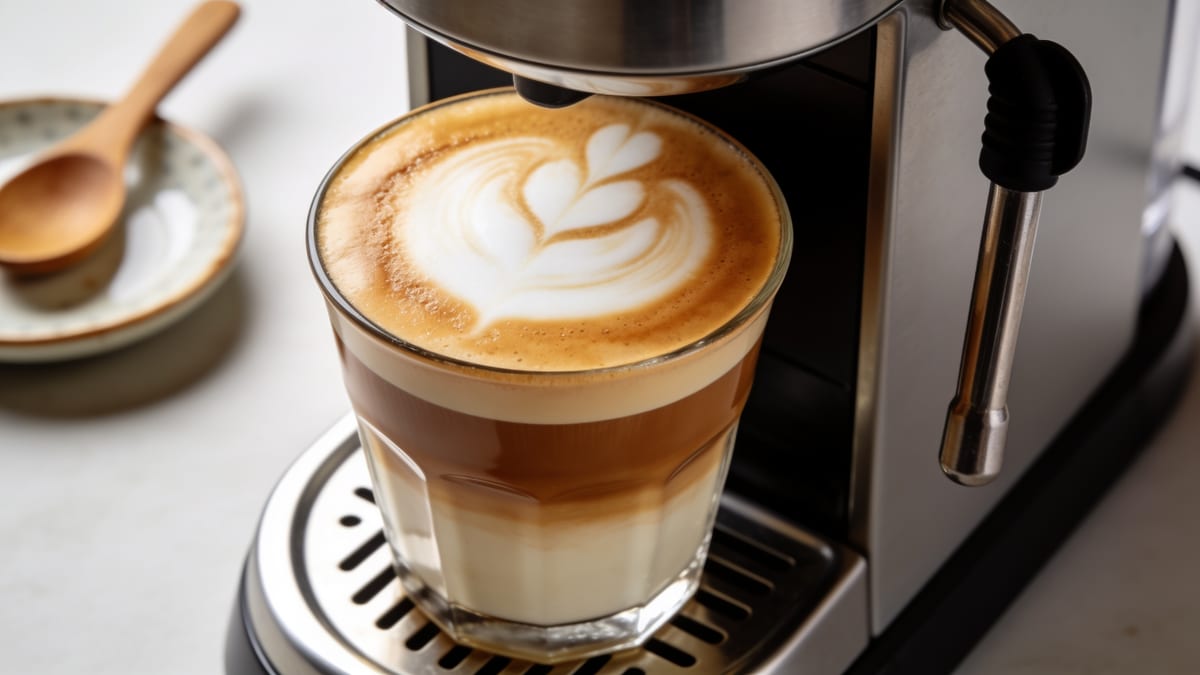
Fill your mug with hot water to warm it while you work. Pull a double espresso shot (18 g finely ground coffee to about 60 ml liquid in 25-30 seconds), or brew the same amount of strong coffee in a moka pot. Heat 240 ml of cold whole milk in a small saucepan or with a steam wand to 55-65°C (130-150°F) — hot to the touch but never boiling — then froth it for 20-30 seconds with a wand, frother, or by pumping the plunger of a French press until the volume grows by about a quarter. Swirl the pitcher and tap it on the counter to knock out big bubbles. Empty the mug, pour in the espresso, then pour the milk steadily from low over the shot, finishing with a spooned cap of about 1 cm of foam. Sweeten to taste and drink right away.
- Stop heating the milk at 55-65°C (130-150°F); past 70°C the sweetness cooks out and the foam turns stiff and dry.
- Cold whole milk froths into the creamiest, most stable microfoam — start with it straight from the fridge.
- After frothing, swirl and tap the pitcher until the milk looks like wet paint; glossy, fine-bubbled milk pours silky instead of foamy.
Equipment
- Espresso machine or moka pot
- Small saucepan or steaming pitcher
- Milk frother, French press, or lidded jar
- 300 ml (10 oz) mug
- Instant-read thermometer (optional but helpful)
- Coffee grinder (if using whole beans)
Ingredients
Espresso
- 18 g espresso-roast coffee, finely ground, enough for a double shot; a moka pot brewed to yield 60 ml strong coffee works too
Milk
- 240 ml cold whole milk, whole milk froths creamiest; barista oat milk is the best non-dairy stand-in
- 8 g sugar or simple syrup, optional, to taste
Method
- STEP01
Fill a 300 ml (10 oz) mug with hot tap water and set it aside. A warm mug keeps the finished latte hot noticeably longer, since a latte is served cooler than drip coffee to begin with.
- STEP02
Grind 18 g (2 tbsp) of espresso-roast coffee finely, tamp it level, and pull a double shot — about 60 ml (2 fl oz) in 25-30 seconds. No machine? Brew a moka pot and measure off 60 ml of the strong coffee, or use 60 ml of concentrated Aeropress brew.
- STEP03
Pour 240 ml (1 cup) of cold whole milk into a small saucepan over medium-low heat (or steam it in a pitcher). Heat to 55-65°C (130-150°F): steam should rise and the pan should feel hot, but the milk must never simmer. Above 70°C milk loses its sweetness and the foam turns coarse.
- STEP04
Froth the hot milk for 20-30 seconds: use a steam wand or handheld frother just under the surface, or pour the milk into a French press and pump the plunger briskly until the volume increases by about one quarter. You want a glossy sheen, not a stiff cap of bubbles.
- STEP05
Swirl the pitcher in circles and give it two or three firm taps on the counter. This pops the large bubbles and folds the foam back into the milk until it looks like wet paint — that texture is what pours smoothly into the espresso.
- STEP06
Empty and dry the warm mug, then add the espresso. Holding back the foam with a spoon, pour the milk into the center in a steady stream from just above the cup. Finish by spooning the remaining foam on top — a classic latte carries about a 1 cm (1/2 in) cap.
- STEP07
Stir in sugar or syrup if you like, and drink immediately while the foam is at its silkiest. A light dusting of cocoa or cinnamon on top is optional but never wrong.
Make ahead
You can pull espresso shots up to a day ahead and chill them for iced lattes, and simple syrup keeps refrigerated for 2 weeks. Milk should always be heated and frothed in the moment; reheated frothed milk turns thin and loses its sheen.
Storage
A latte does not keep — the foam collapses and the milk splits from the coffee within 15-20 minutes, so serve it as soon as it is poured. Leftover brewed espresso, however, can be refrigerated in a sealed jar for up to 24 hours and poured over ice with cold milk for a quick iced latte.
Variations
Dairy-free oat milk latte
Swap the whole milk for an equal amount of barista-edition oat milk, which is formulated with a touch of fat and protein so it froths nearly as well as dairy. Keep it under 60°C (140°F) — oat milk scorches and thins faster than cow's milk. Made with oat milk and no honey-based sweetener, the drink is vegan.
Iced latte
Fill a tall glass with ice, add 240 ml (1 cup) cold milk and the optional syrup, then pour the 60 ml double shot over the top so it cascades through the milk. No frothing needed — just stir and serve with a straw.
Vanilla or caramel latte
Stir 15 ml (1 tbsp) of vanilla or caramel syrup into the espresso before adding the milk so it dissolves evenly. For a from-scratch version, warm the milk with half a split vanilla bean, then remove it before frothing.
Serve with
Nutrition per serving
Nutrition values are estimates based on the metric measurements. Adjust as needed.
Frequently asked
Can I learn how to make a latte at home without an espresso machine?
Absolutely — the machine is convenient, not essential. Brew 60 ml (2 fl oz) of strong coffee in a moka pot or as an Aeropress concentrate, then heat your milk in a saucepan and froth it by pumping it in a French press or shaking it hard in a lidded jar for 30 seconds before microwaving briefly to set the foam. The core of how to make a latte at home is really milk technique: heat to 55-65°C, froth gently, then swirl until glossy.
What is the difference between a latte, a cappuccino, and a flat white?
All three start with espresso; the milk changes everything. A latte is the milkiest — roughly one part espresso to three or four parts steamed milk with a thin 1 cm foam cap. A cappuccino is closer to equal thirds espresso, steamed milk, and a deep layer of airy foam. A flat white sits in between: a smaller, stronger drink with very thin microfoam and no distinct cap.
What milk makes the best latte?
Cold whole milk is the gold standard — its 3-4% fat and casein proteins build a stable, sweet microfoam that pours like velvet. Two-percent works but foams a bit drier; skim makes lots of stiff bubbles with little creaminess. Among non-dairy options, barista-formulated oat milk froths best, followed by soy; almond milk tends to separate in hot coffee.
How hot should the milk be?
Aim for 55-65°C (130-150°F). In that window, lactose tastes noticeably sweeter and the proteins form fine, stable bubbles. Past 70°C (160°F) the milk develops a cooked flavor, the foam turns coarse and dry, and the latte loses the soft sweetness that makes it worth making. If you do not have a thermometer, the pitcher should be hot enough that you can only hold your palm against it for a second or two.
Why is my foam big and bubbly instead of silky?
You are adding too much air, usually for too long or too violently. Froth only until the milk grows by about a quarter in volume, keeping the whisk or wand just below the surface, then stop and polish: swirl the pitcher steadily and tap it on the counter a few times. That folds the bubbles back into the liquid and turns a bubble-bath texture into the wet-paint microfoam that defines a proper latte.
Cooked this? Rate it.
Real ratings from real cooks. We only show a score once enough of you have weighed in — no fabricated stars.