Gyūdon — Japanese Beef Rice Bowl
Japan's fast-food favourite, made at home in 15 minutes: paper-thin beef and sweet onions simmered in a savoury-sweet dashi, soy, mirin and sake sauce, then piled over a bowl of hot rice. Comforting, quick and deeply satisfying — often topped with pickled red ginger and a soft or raw egg. The beloved beef bowl of Yoshinoya and countless home kitchens.
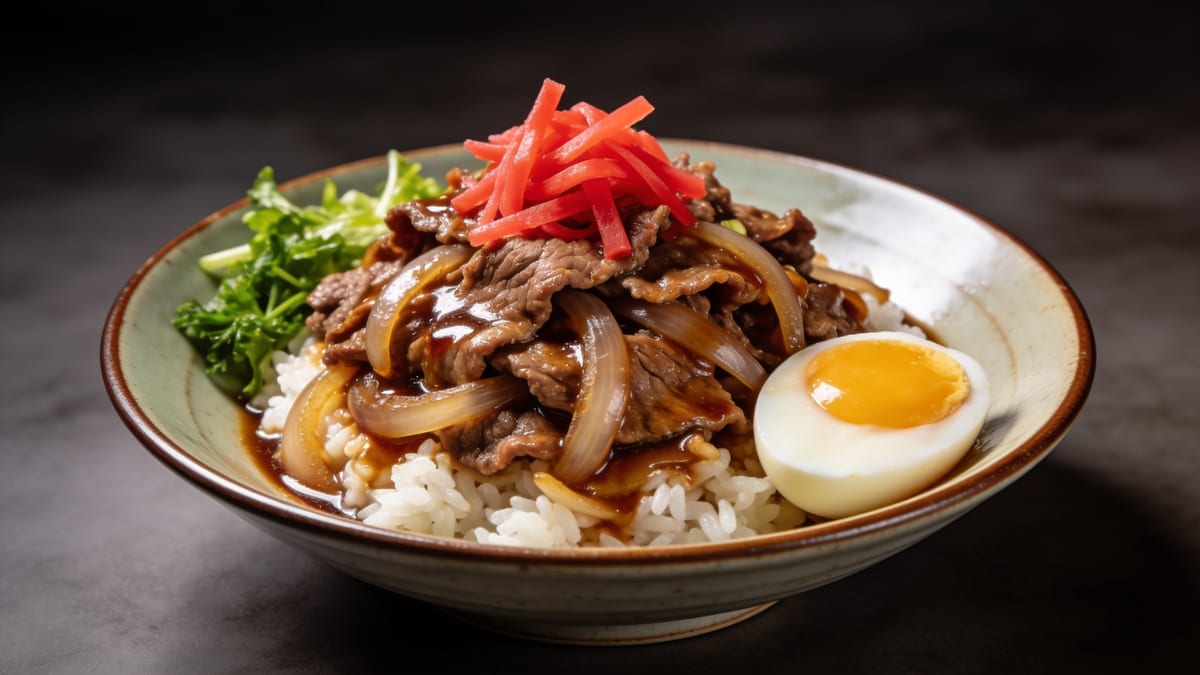
Simmer sliced onion in a sauce of dashi, soy sauce, mirin, sake and a little sugar until soft and sweet. Add paper-thin slices of beef (the kind sold for sukiyaki/shabu-shabu), separating them in the simmering sauce, and cook just until they change colour — a couple of minutes, no more. Spoon the beef, onion and some of the sauce over bowls of hot rice, and top with pickled red ginger and spring onion (and an egg, if you like).
- Use paper-thin beef (sukiyaki/shabu-shabu slices) — it cooks in moments and stays tender.
- Simmer the onions in the dashi-soy-mirin sauce first until sweet, then add the beef briefly.
- Don't overcook the beef — a couple of minutes until it just changes colour keeps it tender.
Equipment
- Frying pan or shallow pot
- Rice cooker or pot
Ingredients
Beef & sauce
- 400 g thinly sliced beef (sukiyaki/shabu-shabu cut)
- 1 large onion, thinly sliced
- 150 ml dashi
- 45 ml soy sauce
- 45 ml mirin
- 30 ml sake
- 15 g sugar
To serve
- Hot steamed Japanese rice
- Pickled red ginger (beni shoga)
- Sliced spring onion; soft or raw egg (optional)
Method
- STEP01
Combine the dashi, soy, mirin, sake and sugar in a pan, add the sliced onion, and simmer until the onion is soft and sweet, about 5 minutes.
- STEP02
Add the thinly sliced beef to the simmering sauce, separating the slices with chopsticks, and cook just until it changes colour, 2–3 minutes. Skim any foam.
- STEP03
Take it off the heat as soon as the beef is cooked but still tender — overcooking toughens thin beef.
- STEP04
Fill bowls with hot rice. Spoon the beef and onion over, ladling some of the sauce onto the rice.
- STEP05
Top each bowl with pickled red ginger and sliced spring onion. Add a soft-boiled, poached or (traditionally) raw egg if you like, and serve immediately.
Make ahead
Make the beef and onion ahead and refrigerate or freeze in portions — then a gyūdon is just hot rice plus a quick reheat. Ideal meal-prep. Add the ginger and egg fresh when serving.
Storage
The cooked beef-and-onion keeps 3 days refrigerated and reheats well — great for fast bowls. Cook rice fresh. It also freezes; reheat and spoon over rice. Add toppings fresh.
Variations
With egg (tamago)
Top with a soft onsen egg or raw yolk, or fold beaten egg through the simmering beef (like a softer, gyūdon-meets-oyakodon).
Negi-dama
Pile on extra spring onion and a soft egg — a popular gyūdon-shop topping.
Pork (butadon)
Use thin pork instead of beef for butadon, the pork-bowl cousin.
Serve with
Nutrition per serving
Nutrition values are estimates based on the metric measurements. Adjust as needed.
Frequently asked
What beef should I use for gyūdon?
Paper-thin slices of beef — the kind sold frozen or fresh for sukiyaki or shabu-shabu (often fatty ribeye or chuck). The thinness is essential: it cooks in moments and stays tender. If you can't buy it pre-sliced, freeze a piece of beef for 30–60 minutes and slice it as thinly as you can.
What is dashi and can I substitute it?
Dashi is the Japanese kombu-and-bonito stock that gives the gyūdon sauce its savoury depth. Make it fresh, use instant dashi granules, or in a pinch use water with a little extra soy and mirin — though the dashi really rounds out the flavour.
Why is my beef tough?
Overcooking. Thin beef needs only a couple of minutes in the simmering sauce, just until it changes colour. Boiling it hard or leaving it too long makes it chewy. Simmer the onions first, then add the beef briefly at the end and pull it off the heat promptly.
Can I put a raw egg on top?
Traditionally yes — a raw egg or yolk stirred into the hot beef and rice is classic in Japan (using eggs safe to eat raw). If you prefer, use a soft-boiled or onsen egg instead. The egg adds richness that ties the bowl together.
Is gyūdon the same as the Yoshinoya beef bowl?
Yes — gyūdon is the beef rice bowl famously served at chains like Yoshinoya and Sukiya, and it's easy to recreate at home. This homemade version uses the same simple dashi-soy-mirin-sugar simmer with thin beef and onion over rice.
Cooked this? Rate it.
Real ratings from real cooks. We only show a score once enough of you have weighed in — no fabricated stars.