Teriyaki Chicken — Glazed Japanese Chicken
The real Japanese teriyaki: chicken thigh pan-seared until the skin is crisp, then glazed in a simple homemade sauce of soy, mirin, sake and sugar that reduces to a glossy, sticky lacquer ('teri' means shine). Far brighter and less cloying than the bottled stuff — and on the table in 20 minutes, sliced over rice with the pan sauce spooned over.
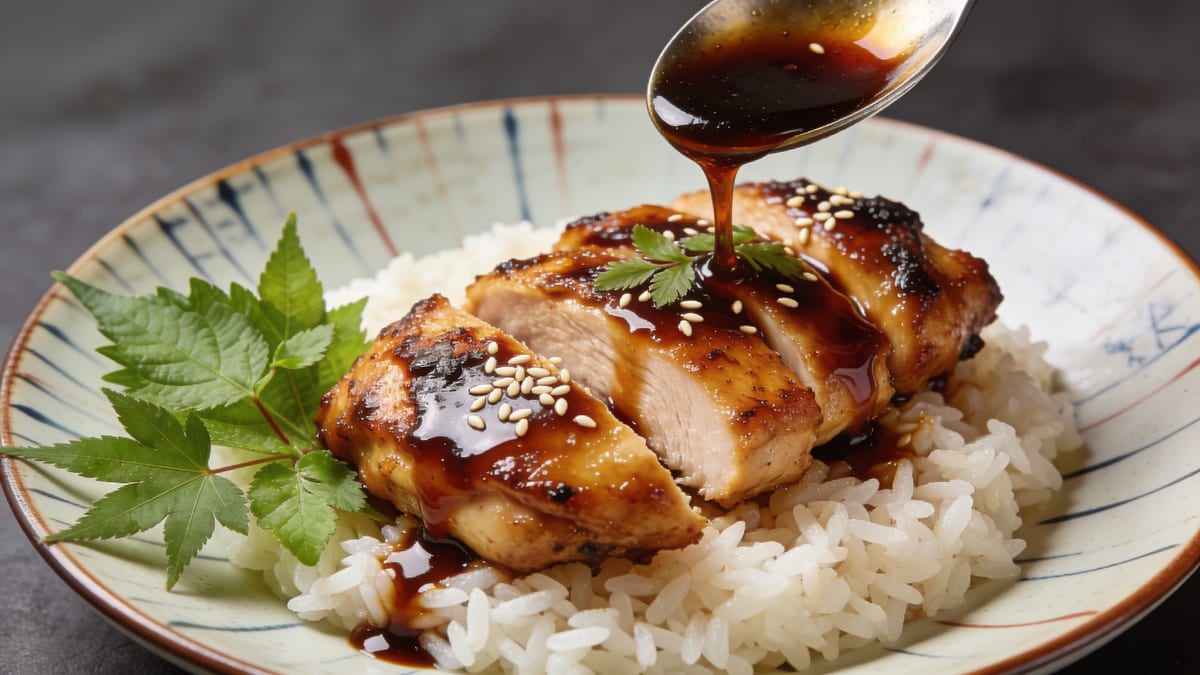
Make the teriyaki sauce by mixing equal parts soy sauce, mirin, sake and a little sugar. Pan-sear bone-in or boneless chicken thigh skin-side down until the skin is deep golden and crisp, then flip and cook through. Pour off excess fat, add the sauce, and simmer until it reduces to a thick, glossy glaze that coats the chicken. Slice and serve over rice with the sauce spooned over and a scatter of sesame and spring onion.
- Make the sauce from scratch — soy, mirin, sake and sugar — it's brighter and less sweet than bottled teriyaki.
- Crisp the chicken skin properly before glazing; render it slowly skin-side down.
- Reduce the sauce until glossy and sticky so it lacquers the chicken (that shine is the 'teri').
Equipment
- Frying pan
- Small bowl (for sauce)
Ingredients
Chicken
- 600 g boneless chicken thighs (skin on)
- 1 tsp oil; pinch of salt
Teriyaki sauce
- 60 ml soy sauce
- 60 ml mirin
- 60 ml sake
- 20 g sugar
To serve
- Steamed Japanese rice
- Toasted sesame seeds, sliced spring onion
Method
- STEP01
Stir the soy sauce, mirin, sake and sugar together until the sugar dissolves.
- STEP02
Pat the chicken dry and season lightly. Lay it skin-side down in a lightly oiled cold pan, then bring to medium heat and cook undisturbed until the skin is deep golden and crisp, 6–8 minutes.
- STEP03
Flip and cook the other side until just done, a few minutes more. Pour off excess fat from the pan.
- STEP04
Pour in the teriyaki sauce and simmer, spooning it over the chicken and turning, until it reduces to a thick, glossy, sticky glaze that coats the chicken, 2–3 minutes.
- STEP05
Rest briefly, then slice the chicken. Serve over rice, spoon over the pan glaze, and scatter with sesame seeds and spring onion.
Make ahead
Mix the sauce ahead (it keeps for weeks). Cook the chicken fresh, or cook it ahead and reheat — the glaze re-melts nicely. Ideal batch protein for bowls and lunchboxes.
Storage
Keeps 3 days refrigerated and reheats well in a pan with a splash of water to loosen the glaze. Great for meal-prep rice bowls and bento; the cooked, glazed chicken also slices cold into salads.
Variations
Chicken breast
Use breast for a leaner version — watch the timing so it doesn't dry out.
Teriyaki salmon
Use the same sauce to glaze pan-seared salmon fillets.
Donburi
Serve over rice as a teriyaki chicken donburi, topped with a soft egg.
Serve with
Nutrition per serving
Nutrition values are estimates based on the metric measurements. Adjust as needed.
Frequently asked
What is teriyaki sauce made of?
Authentic teriyaki sauce is just soy sauce, mirin, sake and sugar, simmered until glossy. 'Teri' means shine and 'yaki' means grilled — the name refers to the lustrous glaze, not a spice mix. Bottled versions are often thicker and sweeter; the homemade four-ingredient sauce is brighter and more balanced.
Chicken thigh or breast?
Thigh is best for teriyaki — it stays juicy and the skin crisps beautifully. Breast works for a leaner dish but dries out more easily, so cook it gently and don't overdo it. Bone-in or boneless thigh both work; boneless is quicker.
How do I get the skin crisp?
Pat the chicken dry, start it skin-side down in a cold (or barely warm) pan, and let the fat render slowly over medium heat without moving it until deep golden and crisp. Pour off the excess fat before adding the sauce so the glaze sticks rather than slides.
Can I substitute the mirin and sake?
Mirin adds sweetness and shine; if you don't have it, use a little extra sugar plus a splash of rice vinegar. Sake can be replaced with dry sherry or just water. The classic balance is roughly equal soy, mirin and sake with a little sugar — adjust to taste.
Why is my glaze not sticky?
It needs to reduce. Once the sauce goes in, keep simmering and spooning it over until the water cooks off and it thickens to a syrupy, glossy coating. Too little reduction leaves it thin and watery; the sugar and reduction are what make it lacquer the chicken.
Cooked this? Rate it.
Real ratings from real cooks. We only show a score once enough of you have weighed in — no fabricated stars.