Holubtsi — Ukrainian Stuffed Cabbage Rolls
The comforting stuffed cabbage rolls of Ukraine: tender cabbage leaves wrapped around a savoury filling of rice and meat (or rice and mushrooms), nestled in a pot and braised slowly in a tomato-and-sour-cream sauce until meltingly soft. Holubtsi — the name comes from 'little pigeons' — are a dish of family Sundays, holidays and Christmas Eve, made by the panful and always better the next day. Patient, homey and deeply satisfying.
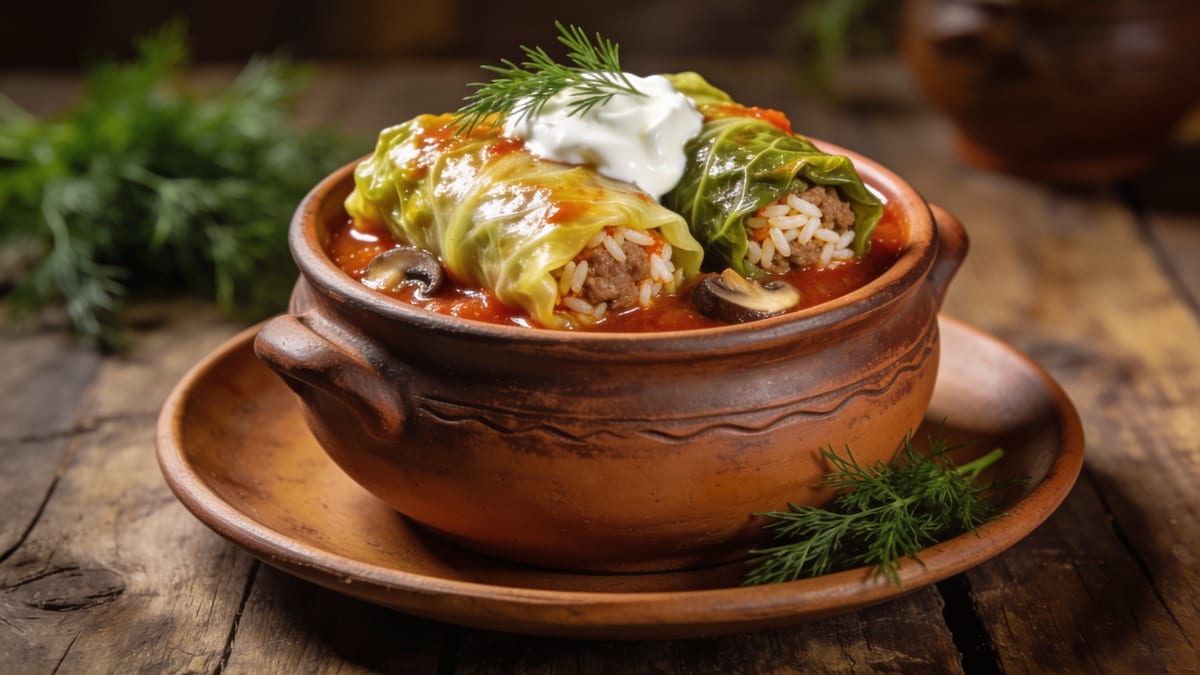
Soften a head of cabbage (core it and blanch it whole, peeling off leaves as they loosen, or freeze and thaw it). Make a filling of partly-cooked rice mixed with sautéed onion and carrot and minced meat (or mushrooms), seasoned well. Put a little filling on each leaf, fold the sides in and roll up. Pack the rolls snugly seam-down in a pot, layering with a tomato sauce (often enriched with sautéed onion-carrot and a little sour cream), add stock to come up the sides, and braise gently — on the hob or in the oven — until the cabbage is very tender and the rice cooked. Serve with sour cream.
- Soften the cabbage leaves first (blanch or freeze-and-thaw) so they roll without cracking.
- Use partly-cooked rice in the filling — it finishes cooking inside the rolls.
- Pack the rolls snugly and braise low and slow in tomato sauce until the cabbage is meltingly tender.
Equipment
- Large pot
- Large pot for blanching cabbage
Ingredients
Cabbage & filling
- 1 head of cabbage
- 200 g rice, partly cooked
- 400 g minced pork/beef (or mushrooms for meatless)
- 1 onion + 1 carrot, grated and sautéed; salt, pepper
Sauce
- 400 g passata or chopped tomatoes
- 1 onion + 1 carrot, sautéed; 2 tbsp sour cream; stock
- Bay leaf; salt, pepper
To serve
- Sour cream (smetana); fresh dill
Method
- STEP01
Core the cabbage and blanch it whole in boiling water, peeling off the leaves as they soften and become pliable (or freeze the whole head and thaw it, which softens the leaves without boiling). Trim the thick central rib of each leaf so it rolls easily.
- STEP02
Mix the partly-cooked rice with the sautéed onion and carrot, the minced meat (or chopped mushrooms), salt and pepper into a well-seasoned filling.
- STEP03
Put a spoon of filling near the stem end of each leaf, fold the sides in over it, and roll up into a neat parcel. Don't overfill — the rice swells.
- STEP04
Spread a little sauce in the pot. Pack the rolls snugly seam-down in layers, spooning tomato sauce (mixed with the sautéed onion-carrot and sour cream) between them. Add stock to come up the sides and tuck in a bay leaf.
- STEP05
Cover and braise gently — barest simmer on the hob or a 160°C/325°F oven — until the cabbage is very tender and the rice is cooked through, about 1–1.5 hours. Serve hot with a dollop of sour cream and fresh dill.
Make ahead
An ideal make-ahead dish — holubtsi taste even better reheated the next day, and they freeze beautifully cooked, so they're traditionally made by the big panful for holidays and Sundays. Assemble and braise ahead, then reheat to serve. You can also roll them ahead and braise closer to the time.
Storage
Keeps 3–4 days refrigerated and is famously even better the next day, as the flavours meld and the cabbage softens further. Reheat gently. Holubtsi freeze very well, cooked — a great make-ahead. Store them in their sauce. They're traditionally made in big batches for exactly this reason.
Variations
Meatless (Lenten)
Fill with rice and mushrooms (and sautéed vegetables) for the meatless version, traditional for Christmas Eve (Sviata Vecheria).
With buckwheat
Use buckwheat (kasha) instead of or with the rice for a nuttier filling.
Small rolls
Some regions make tiny holubtsi (especially Transcarpathian), rolled small and packed tight.
Serve with
Nutrition per serving
Nutrition values are estimates based on the metric measurements. Adjust as needed.
Frequently asked
How do I soften cabbage leaves for rolling?
Two methods: blanch the whole cored head in boiling water, peeling off leaves as they soften and become pliable; or freeze the whole head and then thaw it, which breaks down the leaves so they're soft and bendy without boiling (a handy, less messy trick). Either way, trim or shave down the thick central rib of each leaf so it rolls neatly without cracking.
Should the rice be cooked first?
Partly cooked (par-boiled) is ideal — fully raw rice may not cook through inside the rolls, while fully cooked rice can turn mushy. Cook it about halfway, mix it into the filling, and it finishes cooking as the holubtsi braise, absorbing the sauce. Don't overfill the rolls, since the rice swells as it cooks.
What goes in the filling?
The classic filling is rice with minced meat (pork, beef or a mix) and sautéed onion and carrot, well seasoned. A traditional meatless version (for Christmas Eve and fasting) uses rice with mushrooms and vegetables. Some add buckwheat. The filling is mild and savoury — the tomato-and-sour-cream braising sauce brings much of the flavour.
Can I make holubtsi ahead or freeze them?
Yes — they're one of the best dishes for it. Holubtsi taste even better the next day as the flavours meld, and they freeze very well once cooked, in their sauce. Ukrainian families traditionally make them in large batches for holidays precisely because they keep and reheat so well. Assemble and braise ahead, then gently reheat to serve.
What sauce are cabbage rolls cooked in?
Most commonly a tomato-based sauce, frequently enriched with sautéed onion and carrot and a little sour cream for a tangy, mellow richness — the rolls braise in it until tender. Some versions use a lighter tomato sauce or even just stock. A final dollop of sour cream (smetana) and fresh dill at serving is traditional and ties it together.
Cooked this? Rate it.
Real ratings from real cooks. We only show a score once enough of you have weighed in — no fabricated stars.