Mole Poblano — Mexican Chile & Chocolate Sauce with Chicken
Mexico's most celebrated sauce and a true labour of love: a deep, complex mole built from a dozens-strong cast of dried chiles, nuts, seeds, spices, fruit and a little dark chocolate, toasted, blended and simmered into a velvety, brick-dark sauce that's at once smoky, fruity, spicy, bitter and just faintly sweet. Poured over poached chicken or turkey and dusted with sesame seeds, mole poblano is the dish of fiestas and celebrations across Mexico — an edible monument to patience.
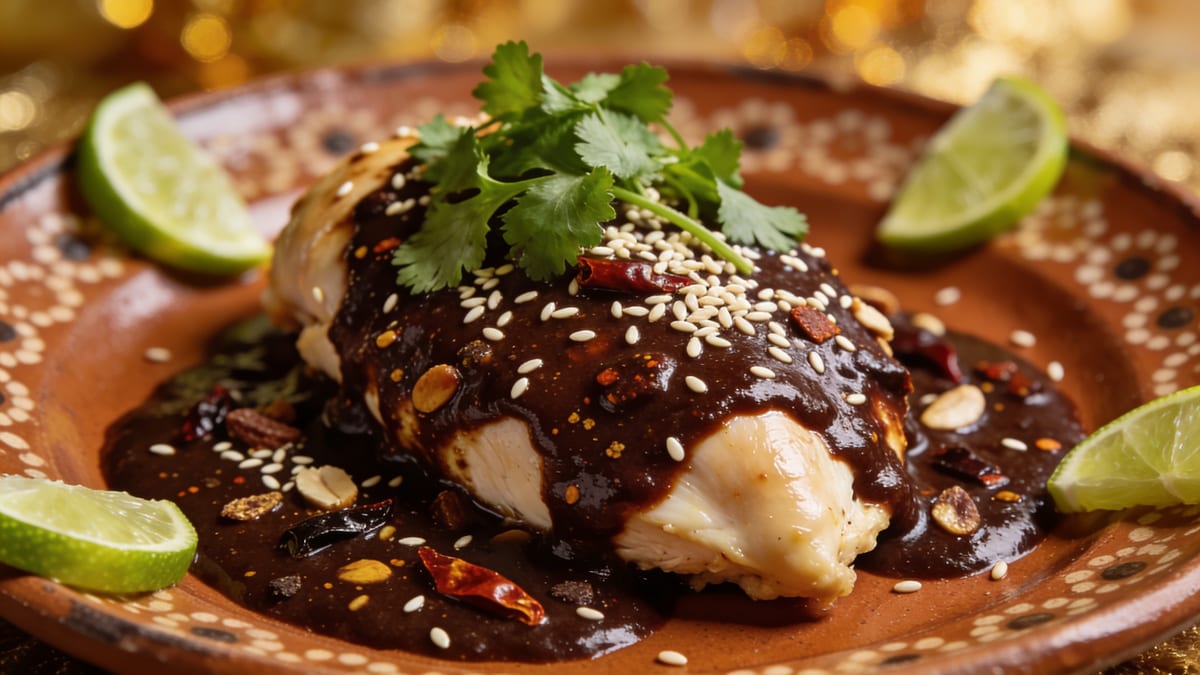
Toast and soak several kinds of dried chiles (ancho, mulato, pasilla, and a fiery chile de árbol or two). Separately toast and fry the supporting cast — almonds, peanuts, sesame, pumpkin seeds, raisins, plantain, tomato, tomatillo, onion, garlic, a tortilla and bread for body, plus warm spices (cinnamon, clove, anise, pepper). Blend everything in batches into a smooth paste, then fry the paste in hot lard, loosen with chicken broth, and simmer for an hour or more until thick, glossy and deeply flavoured, stirring in a little dark chocolate at the end. Serve poured over poached chicken with sesame and rice.
- Mole is built from many toasted components — chiles, nuts, seeds, fruit, spices, chocolate — blended and simmered into one velvety sauce.
- Toast each element carefully (don't burn the chiles, which turns it bitter) and fry the blended paste to deepen it.
- The chocolate is a small, late addition for depth — mole is savoury, not a chocolate sauce.
Equipment
- Blender
- Large heavy pot/cazuela
- Frying pan; sieve
Ingredients
Chiles
- Dried ancho, mulato and pasilla chiles (stemmed, seeded)
- 1–2 chile de árbol (for heat)
The mole cast
- Almonds, peanuts, sesame seeds, pumpkin seeds (pepitas)
- Raisins; ripe plantain; tomato + tomatillo; onion, garlic
- A corn tortilla + a slice of bread (for body); lard
- Cinnamon, clove, anise, black pepper; 30–50 g dark chocolate
To serve
- 1 chicken, poached and jointed (keep the broth)
- Sesame seeds; rice and warm tortillas
Method
- STEP01
Poach the chicken with onion, garlic and salt until cooked; keep the meat and the broth (you'll need plenty of broth for the mole).
- STEP02
Wipe, stem and seed the dried chiles, toast them briefly in a dry pan until fragrant (don't scorch — burnt chiles turn the mole bitter), then soak in hot water until soft.
- STEP03
In batches, toast/fry the nuts, seeds, raisins, plantain, tomato, tomatillo, onion, garlic, the tortilla and bread, and the whole spices, until aromatic and lightly coloured.
- STEP04
Blend the soaked chiles and all the toasted ingredients (with a little soaking water or broth) into a very smooth paste, in batches. Pass through a sieve for a silky mole if you like.
- STEP05
Fry the paste in hot lard in a big pot, stirring, until it darkens and thickens, then loosen with chicken broth. Simmer gently for at least an hour, stirring often so it doesn't catch, until thick and glossy. Stir in the dark chocolate and season (a little sugar/salt) to balance. Pour the warm mole over the chicken, dust with sesame, and serve with rice and tortillas.
Make ahead
Mole is the definition of make-ahead — it's labour-intensive, improves over days, and freezes beautifully, so it's traditionally made in large quantities for celebrations and kept. Make the mole a day or more ahead, then simply poach fresh chicken and reheat the sauce to serve. Some families keep mole paste on hand to loosen with broth anytime.
Storage
Mole keeps brilliantly — 4–5 days refrigerated and the flavour deepens, and it freezes excellently (mole is often made in big batches and frozen in portions). Reheat gently with a splash of broth, stirring, as it thickens. Many cooks say mole is even better the next day. Store the sauce separately from the chicken.
Variations
Mole over turkey
Traditionally served over turkey (guajolote), especially for fiestas.
Enmoladas
Use the mole to sauce rolled tortillas (like enchiladas) with cheese or chicken.
Other moles
Mexico has dozens of moles — negro, verde, amarillo, coloradito — each with a different cast of ingredients.
Serve with
Nutrition per serving
Nutrition values are estimates based on the metric measurements. Adjust as needed.
Frequently asked
Does mole poblano taste like chocolate?
No — though it contains a little dark chocolate, mole poblano is a savoury sauce, not a sweet or chocolatey one. The chocolate is one of dozens of ingredients and adds depth, roundness and a faint bitterness rather than sweetness. The dominant flavours are toasted dried chiles, nuts, seeds, fruit and warm spices — complex, smoky, earthy and only very subtly sweet.
Why does mole have so many ingredients?
That complexity is the whole point — mole poblano famously layers dozens of components (several dried chiles, nuts, seeds, dried fruit, tomato, spices, a thickener like tortilla or bread, and chocolate), each toasted or fried and then blended together. No single ingredient dominates; the magic is in the balance of smoky, spicy, fruity, bitter and faintly sweet. It's why mole is considered a special-occasion labour of love.
Can I use store-bought mole paste?
Yes — good-quality mole paste (sold in jars) is widely used even in Mexican home kitchens and is a huge shortcut. You simply fry the paste, loosen it with chicken broth, simmer to develop the flavour, and adjust the seasoning (and chocolate/sugar) to taste. From-scratch mole is a special project; the paste makes a delicious mole achievable any day.
How do I keep mole from turning bitter?
The main risk is burning the dried chiles or the seeds and nuts when toasting them. Toast everything gently, just until fragrant and lightly coloured, and stop before anything scorches — burnt chiles in particular make the whole mole bitter. Soaking the toasted chiles and balancing at the end with a little sugar and salt also rounds out any sharpness.
What do you serve with mole poblano?
Classically, the warm mole is poured over poached chicken or turkey, dusted with toasted sesame seeds, and served with Mexican rice and warm corn tortillas (and often refried beans). The rice and tortillas soak up the rich sauce. Leftover mole is also used to make enmoladas (mole-sauced rolled tortillas). It's centrepiece, celebratory food.
Cooked this? Rate it.
Real ratings from real cooks. We only show a score once enough of you have weighed in — no fabricated stars.