Perfect Sushi Rice (Shari)
Short-grain Japanese rice cooked firm, then folded through with a warm rice-vinegar seasoning and fanned to a glossy, room-temperature shine. The result is seasoned, separate grains that hold their shape yet melt on the tongue — the foundation every sushi bar is built on.
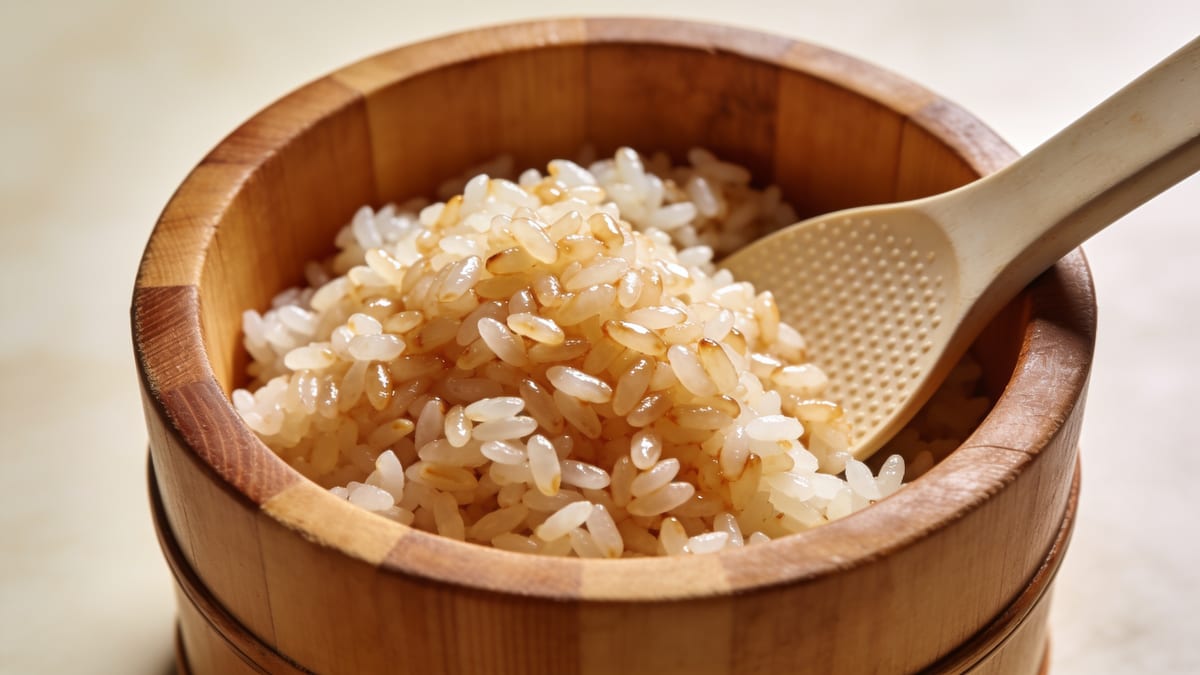
Rinse 2 cups (360 g) Japanese short-grain rice until the water runs nearly clear, then cook it firm with a touch less water than usual (1:1.1 by volume) and let it steam, covered, 10 minutes off the heat. Warm 60 ml rice vinegar with 3 tbsp sugar and 1 tsp salt until dissolved. Turn the hot rice out into a wide bowl, drizzle the vinegar over a paddle to spread it, and fold — never mash — with slicing strokes while fanning it to a glossy shine. Rest to body temperature before shaping.
- Cook the rice firmer than for a rice bowl — seasoned sushi rice must stay separate, not sticky-soft.
- Season while the rice is hot so it drinks the vinegar; fan while you fold so it turns glossy, not gluey.
- Serve at body temperature (around 37 C / 98 F), never fridge-cold — cold rice goes hard and dull.
Equipment
- Fine-mesh sieve or bowl for rinsing
- Rice cooker or heavy lidded pot
- Hangiri or wide non-metal bowl
- Rice paddle (shamoji) or wooden spoon
- Handheld fan or stiff sheet of card
- Damp clean kitchen towel
Ingredients
Rice
- 360 g Japanese short-grain rice, uncooked; Koshihikari or a labelled sushi rice
- 400 ml water, for cooking, for the pot; a rice cooker's sushi line if you have one
- 1 piece (5 cm) kombu, optional, for the pot; adds savoury depth
Sushi vinegar (sushi-zu)
- 60 ml rice vinegar, unseasoned
- 38 g sugar
- 6 g fine sea salt
Method
- STEP01
Put the rice in a bowl, cover with cold water, and swirl briskly with your hand for a few seconds. Pour off the cloudy water and repeat 3–4 times, working quickly so the grains don't sit and absorb the starchy water. Stop when the water is only faintly milky — clear enough to see the grains. Drain well in a sieve for 2–3 minutes. This removes surface starch so the finished rice is separate, not gummy.
- STEP02
Combine the drained rice and 400 ml water (add the kombu now if using). Let it soak 20–30 minutes so the grains hydrate evenly — skip this and the centres cook chalky. Then cook: in a rice cooker, use the plain or sushi setting; in a pot, bring to a boil uncovered, drop to the lowest heat, cover, and cook 12 minutes without lifting the lid. The water ratio is deliberately lean (about 1:1.1) so the rice stays firm enough to season.
- STEP03
While the rice cooks, combine the rice vinegar, sugar, and salt in a small pan or bowl. Warm gently — a low burner for 30 seconds or 20 seconds in the microwave — and stir just until the sugar and salt dissolve. Do not boil; you'll cook off the bright acidity. Set aside to cool slightly. This seasoning is sushi-zu; it's what turns plain rice into sushi rice.
- STEP04
When cooking finishes, leave the lid on and let the rice stand off the heat for 10 minutes. This lets residual steam finish the grains and firm them up. Lift the lid, discard the kombu, and gently loosen the rice from the base with the paddle.
- STEP05
Wipe a wide wooden hangiri or a large non-metal bowl with a damp cloth (a dry wooden bowl steals moisture; metal reacts with the vinegar). Turn the hot rice out in a low mound — do not scrape the pot's crusty bottom in. Speed matters here: the rice must still be hot to drink in the vinegar.
- STEP06
Pour the sushi vinegar over the back of the paddle, held just above the rice, so it scatters over the surface instead of pooling in one spot. Now fold with a slicing, cutting motion — hold the paddle like a knife and slice through the mound, lifting and turning, working from the edges in. Never mash or stir in circles; crushed grains turn to paste. Keep it up for about 2 minutes until every grain is coated and glossy.
- STEP07
As you fold, fan the rice with a handheld fan or sheet of card. Fanning flashes off surface moisture as the vinegar sets, which is exactly what gives sushi rice its signature lacquered shine and separate grains. Do this until the rice cools from hot to just-warm.
- STEP08
Spread the rice level and lay a clean damp cloth directly over the surface. Let it settle to body temperature — around 37 C (98 F), warm to a clean fingertip. It's now ready to shape into nigiri, spread onto nori for maki, or pack into a chirashi bowl. Keep it covered with the damp cloth until the moment you use it.
Make ahead
Mix the sushi vinegar days ahead — it keeps indefinitely in a sealed jar at room temperature, and many cooks keep a standing batch. You can rinse and soak the rice up to an hour before cooking. But season and shape the rice on the same day: once seasoned, the clock starts and the rice is at its best within the first few hours.
Storage
Sushi rice is best the day it's made and does not refrigerate well — the fridge crystallises the starch and turns the grains hard and dry within hours. If you must hold it, keep it covered with a damp cloth at cool room temperature for up to 6 hours; never in the fridge. Leftovers are far better repurposed (see Variations) than eaten cold as sushi.
Variations
Brown rice sushi rice
Use short-grain brown rice with a 1:1.4 rice-to-water ratio and cook 40–45 minutes; season with the same sushi-zu but add an extra ½ tsp sugar to balance the nuttier, chewier grain. Nutty and more filling — excellent for hearty maki.
Kombu-and-yuzu vinegar
Steep a 5 cm strip of kombu in the rice vinegar overnight before making the sushi-zu, and stir a teaspoon of yuzu juice into the finished seasoning. Adds a fragrant, citrus-savoury edge that suits vegetable and salmon sushi.
Yaki onigiri from leftovers
Pack cooled leftover sushi rice into triangles, brush with soy sauce, and grill or pan-sear until crisp and caramelised. The best possible use for rice that's past its sushi prime.
Serve with
Nutrition per serving
Nutrition values are estimates based on the metric measurements. Adjust as needed.
Frequently asked
What kind of rice do I need for sushi rice?
Japanese short-grain rice — look for a bag labelled 'sushi rice' or the variety Koshihikari. Its high amylopectin starch is what makes cooked grains cling together enough to shape while still staying distinct. Long-grain, basmati, or jasmine won't work: they cook up dry and separate and won't hold a nigiri shape. Calrose (medium-grain) is an acceptable substitute if short-grain is unavailable.
What is the correct water ratio for sushi rice?
About 1 part rice to 1.1 parts water by volume — leaner than for everyday rice. Sushi rice needs to be a touch firmer so that once you fold in the vinegar (which adds moisture) the grains stay separate and springy rather than mushy. If your rice cooker has a 'sushi' line, use it; it's calibrated for exactly this.
Why is my sushi rice mushy and sticky?
Three usual culprits: too much cooking water, skipping the rinse (surface starch turns to glue), or stirring the vinegar in with a circular mashing motion. Cook it firm, rinse until the water runs nearly clear, and season with a gentle slicing, cut-and-fold action so the grains stay whole.
Can I make sushi rice without rice vinegar?
Rice vinegar is what defines the flavour, but in a pinch you can substitute a mild vinegar like apple cider or a white wine vinegar cut with a little water, using the same sugar and salt. Avoid harsh distilled white vinegar — it's too aggressive. Pre-mixed 'seasoned' or 'sushi' vinegar already contains sugar and salt, so if you use that, skip adding your own.
How do I keep sushi rice from drying out before I use it?
Keep it at room temperature under a clean, damp cloth laid directly on the surface, and never refrigerate it — cold hardens the starch fast. Seasoned sushi rice is happiest used within a few hours of cooling to body temperature, so time your prep to shape and serve the same session.
Cooked this? Rate it.
Real ratings from real cooks. We only show a score once enough of you have weighed in — no fabricated stars.