Onigiri — Japanese Rice Balls
Japan's perfect handheld snack: warm short-grain rice shaped into a triangle around a savoury filling, wrapped in a strip of crisp nori. From umeboshi to salmon to tuna-mayo, onigiri is the lunchbox, picnic and convenience-store staple of Japan — humble, portable and endlessly comforting. The whole trick is the right rice, lightly salted hands, and a gentle, firm shaping.
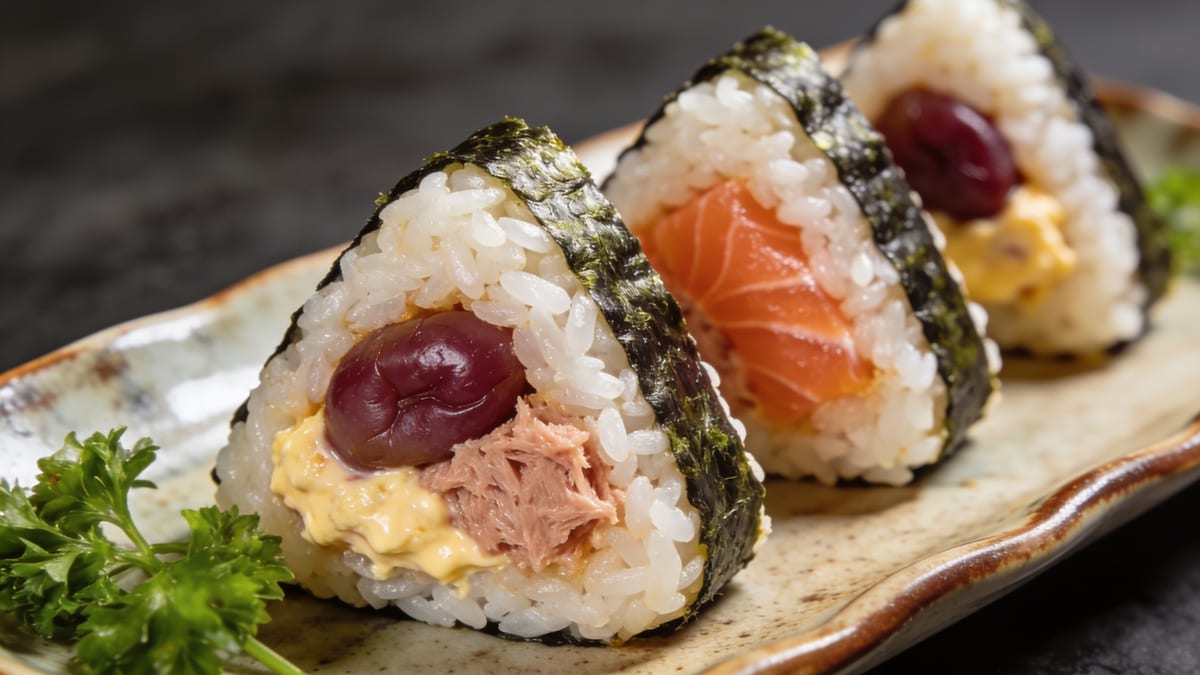
Cook short-grain Japanese rice and let it cool until just warm. Wet your hands and rub them with a little salt. Take a handful of rice, press a dimple, tuck in a small spoon of filling (umeboshi, flaked salted salmon, or tuna with mayo), and mound the rice over to enclose it. Press gently into a triangle, rotating, then wrap with a strip of nori just before eating so it stays crisp.
- Use short-grain (sticky) Japanese rice and shape it while just warm — cold rice won't hold together.
- Wet, lightly salted hands stop the rice sticking and season the outside.
- Add the nori just before eating so it stays crisp, not soggy.
Equipment
- Rice cooker or pot
- Bowl of water (for hands)
Ingredients
Rice
- 400 g cooked short-grain Japanese rice, warm
- Salt (for shaping)
- 3 sheets nori, cut into strips
Fillings (pick)
- Umeboshi (pickled plum), pitted
- Flaked salted/grilled salmon
- Canned tuna mixed with Japanese mayo
- Optional: furikake, to mix through the rice
Method
- STEP01
Cook short-grain rice and let it cool until just warm and comfortable to handle (not hot, not fridge-cold). Stir through furikake now if you like.
- STEP02
Keep a small bowl of water and a little salt nearby. Wet both hands and rub a pinch of salt over your palms before shaping each onigiri.
- STEP03
Scoop about half a cup of rice into one palm, press a dimple in the centre, add a small spoon of filling, and mound more rice over the top to enclose it completely.
- STEP04
Cup the rice and press gently but firmly into a triangle, rotating and pressing each of the three sides in turn, until it holds its shape without being squashed dense.
- STEP05
Wrap a strip of nori around the base (or fully) just before eating so it stays crisp. Repeat with the rest. Eat at room temperature.
Make ahead
Shape onigiri in the morning for a picnic or lunchbox and keep them at cool room temperature, wrapped. Pack the nori separately to wrap on at eating time. The cooked rice can be made ahead and re-warmed slightly before shaping.
Storage
Best the day they're made, at room temperature — don't refrigerate, as cold hardens the rice. Wrap individually and keep cool; eat within several hours. Keep the nori separate and wrap just before eating so it stays crisp.
Variations
Yaki onigiri
Brush plain (unfilled) onigiri with soy sauce and grill or pan-fry until crisp and caramelised.
Classic fillings
Umeboshi, salted salmon, tuna-mayo, okaka (bonito-soy), or kombu are all traditional.
Furikake / mixed
Mix furikake or sesame through the rice for flavour all the way through.
Serve with
Nutrition per serving
Nutrition values are estimates based on the metric measurements. Adjust as needed.
Frequently asked
What rice do I need for onigiri?
Short-grain Japanese (or sushi) rice — it's sticky enough to hold together when pressed. Long-grain or basmati won't bind and the onigiri will fall apart. Don't rinse away all the starch, and shape the rice while it's still warm.
Why won't my onigiri hold together?
Usually the rice is the wrong type (not short-grain/sticky), or it's gone cold and lost its tack. Shape it while just warm, with wet hands, and press firmly enough to compact it (but not so hard it turns into a dense lump). Warm sticky rice and a gentle-firm squeeze are the keys.
When do I add the nori?
Just before eating, if you want it crisp. Some people wrap it on early (at the convenience store there's even clever packaging to keep it separate until you open it) — wrapped early, the nori softens against the rice, which some prefer. Crisp or soft is personal taste.
What are the classic fillings?
Umeboshi (tart pickled plum), salted or grilled salmon flakes, tuna mixed with Japanese mayo, okaka (bonito flakes with soy), and kombu are the traditional favourites. You only need a small spoonful tucked in the centre — the rice is the star.
Is onigiri the same as sushi?
No — onigiri is simply salted rice shaped around a savoury filling, eaten as a snack or light meal. Sushi uses rice seasoned with vinegar and is often paired with raw fish. Onigiri rice is plain (lightly salted), and the fillings are usually cooked or pickled.
Cooked this? Rate it.
Real ratings from real cooks. We only show a score once enough of you have weighed in — no fabricated stars.