Vodka Sauce
Vodka sauce is the Italian-American classic that turns canned tomatoes, a splash of vodka, and a pour of cream into a silky, blush-pink sauce that clings to every ridge of pasta. Caramelizing the tomato paste until it turns brick red builds deep, almost roasted sweetness, while the vodka lifts the tomatoes' brightest aromas and helps the cream and tomato emulsify into one glossy sauce instead of two separate layers. It comes together in one pan in about 45 minutes and tastes like it simmered all afternoon.
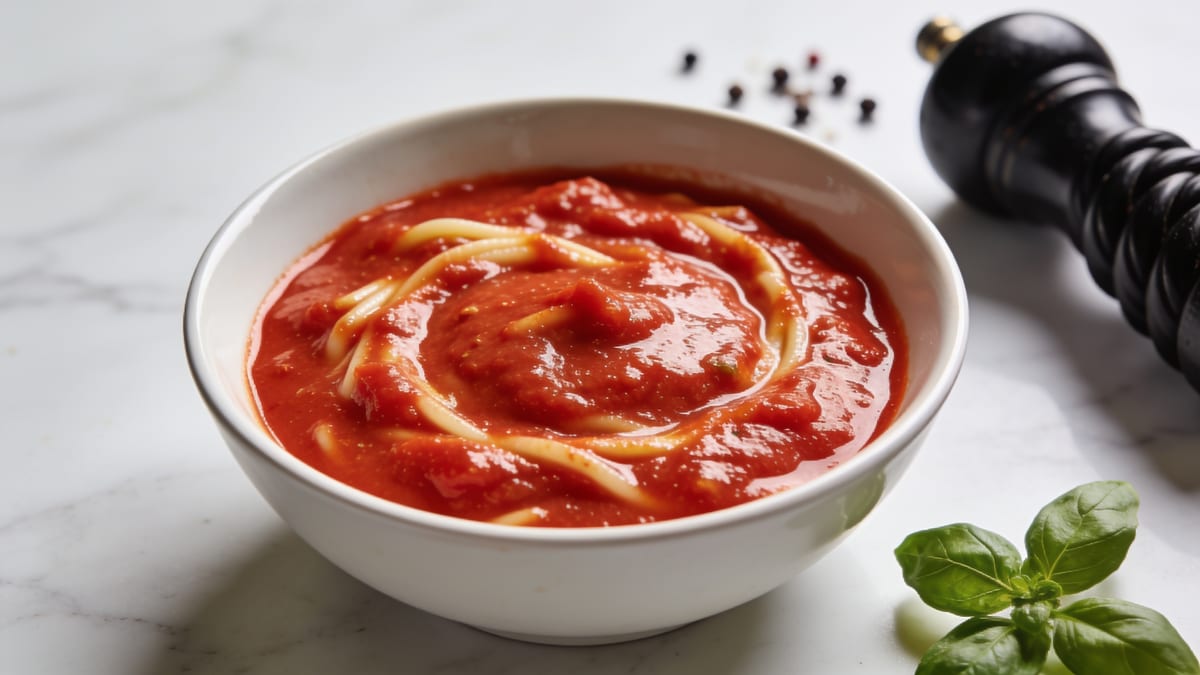
Melt 2 tbsp butter with 2 tbsp olive oil in a deep skillet over medium heat, then soften 1 finely diced onion with 1 tsp salt for about 8 minutes. Stir in 4 sliced garlic cloves, 1/2 tsp red pepper flakes, and 3 tbsp tomato paste, and cook until the paste darkens to brick red, 3 to 4 minutes. Pour in 80 ml (1/3 cup) vodka and let it bubble almost completely away, then add one 28-oz can of crushed tomatoes and simmer gently for 15 minutes. Drop the heat to low, stir in 180 ml (3/4 cup) room-temperature heavy cream and 50 g (1/2 cup) grated Parmigiano-Reggiano, warm through for 3 minutes, season, and toss with hot pasta plus a splash of starchy pasta water.
- Cook the tomato paste until it turns deep brick red and smells sweet — this single step is what separates flat sauce from restaurant-level depth.
- Reduce the vodka until the pan is nearly dry so you keep its aroma-lifting effect without any raw alcohol bite.
- Add room-temperature cream over low heat and never let the finished sauce hard-boil, or it can separate and lose its silky texture.
Equipment
- Large deep skillet or Dutch oven
- Chef's knife
- Cutting board
- Wooden spoon or silicone spatula
- Microplane or box grater
- Measuring cups and spoons
- Immersion blender (optional, for an extra-silky sauce)
Ingredients
Sauce base
- 28 g unsalted butter
- 30 ml extra-virgin olive oil
- medium yellow onion, finely diced
- garlic cloves, thinly sliced
- 50 g tomato paste
- 1 g red pepper flakes, adjust to taste
- 80 ml vodka, any plain, unflavored bottle
- 800 g crushed tomatoes, choose a brand with just tomatoes and salt
- 6 g fine sea salt, plus more to taste
To finish
- 180 ml heavy cream, at room temperature
- 50 g Parmigiano-Reggiano, plus extra for serving
- freshly ground black pepper
- fresh basil leaves, torn; optional
Method
- STEP01
Melt the butter with the olive oil in a large deep skillet or Dutch oven over medium heat. Add the diced onion and salt and cook, stirring often, until the onion is translucent and just starting to turn golden at the edges, 6 to 8 minutes. Don't rush this — the onion's sweetness is the backbone of the sauce.
- STEP02
Stir in the garlic and red pepper flakes and cook for 30 seconds until fragrant. Add the tomato paste and cook, stirring and smearing it across the bottom of the pan, until it darkens from bright red to a rusty brick color and smells sweet and roasted, 3 to 4 minutes. If it starts to catch, lower the heat slightly.
- STEP03
Pour in the vodka and scrape up any browned bits stuck to the pan. Let it bubble briskly until the liquid has almost completely evaporated and the sharp alcohol smell fades, about 2 minutes.
- STEP04
Add the crushed tomatoes, stir well, and bring to a gentle simmer. Reduce the heat to medium-low, partially cover to control splatter, and simmer, stirring occasionally, until the sauce thickens slightly and tastes cohesive rather than raw, about 15 minutes.
- STEP05
For a classic, completely smooth vodka sauce, take the pan off the heat and buzz the sauce with an immersion blender until velvety (or carefully blend in batches in a countertop blender, venting the lid). For a more rustic sauce, skip this step entirely.
- STEP06
Return the pan to low heat. Stir in the room-temperature cream and let the sauce turn a uniform blush pink, then simmer very gently for about 3 minutes — no hard bubbling. Off the heat, stir in the grated Parmigiano-Reggiano until melted. Season with black pepper and more salt to taste.
- STEP07
If serving right away, toss the sauce with just-cooked pasta and a ladleful (about 120 ml / 1/2 cup) of starchy pasta water over low heat for a minute until glossy and clinging. Finish with torn basil and extra cheese at the table.
Make ahead
Make the tomato base (through the simmering step, before any cream goes in) up to 3 days ahead and refrigerate. When you're ready to eat, reheat the base over low heat, then stir in the cream and cheese fresh — the sauce tastes brighter and holds its texture better this way.
Storage
Cool completely, then refrigerate in an airtight container for up to 4 days. It freezes well for up to 2 months; the cream may look slightly separated after thawing, but whisking over low heat with a splash of water or cream brings it right back together. Always reheat gently — a hard boil can break the emulsion.
Variations
Spicy Calabrian-style
Swap the red pepper flakes for 1 to 2 tablespoons of Calabrian chile paste stirred in with the tomato paste. It adds fruity, smoky heat that plays beautifully against the cream. Top servings with toasted breadcrumbs for crunch (skip these to keep it gluten-free).
Vodka sauce with pancetta
Render 85 g (3 oz) of finely diced pancetta in the pan before adding the butter and onion, and reduce the added salt to 1/2 teaspoon. The salty, savory fat deepens the whole sauce. Note this version is no longer vegetarian.
Dairy-free swap
Use all olive oil instead of butter, replace the heavy cream with 180 ml (3/4 cup) of raw cashews blended smooth with 120 ml (1/2 cup) water, and trade the Parmigiano for 2 tablespoons of nutritional yeast. The sauce stays rich and creamy, and with these swaps it's fully vegan — just note the cashews add a tree nut allergen.
Serve with
Nutrition per serving
Nutrition values are estimates based on the metric measurements. Adjust as needed.
Frequently asked
Can you actually taste the vodka in vodka sauce?
No — and that's the point. The vodka reduces until almost nothing is left, so there's no boozy flavor in the finished sauce. What it does is release aroma compounds in the tomatoes that are alcohol-soluble, sharpen the sauce's brightness, and help the cream and tomato bind into one smooth emulsion. A good vodka sauce tastes intensely tomatoey and rich, never like a cocktail.
What can I use instead of vodka?
You can simply leave it out and deglaze the pan with 80 ml (1/3 cup) of water plus a small squeeze of lemon at the end for brightness. The sauce will still be delicious — a touch rounder and less aromatic, but most people won't notice. Dry white wine also works, though it changes the flavor more than vodka does.
Why did my vodka sauce break or look curdled?
Almost always one of two things: the cream went into a furiously bubbling, very acidic sauce, or the finished sauce was boiled hard afterward. Use room-temperature cream, add it over low heat, and keep the sauce at the gentlest simmer once it's in. If it does separate, whisk in a splash of warm water or cream off the heat to bring it back.
What pasta shape is best with vodka sauce?
Penne is the classic — penne alla vodka exists for a reason — but any shape with ridges or a cavity works: rigatoni, ziti, shells, or fusilli. The sauce is thick and creamy, so it needs texture to grip. Always finish the pasta in the sauce with a splash of pasta water so it coats rather than pools.
Is vodka sauce gluten-free?
The sauce itself is: tomatoes, cream, cheese, and aromatics contain no gluten, and distilled vodka is considered gluten-free even when made from wheat, because distillation removes the gluten proteins. Just remember the pasta you serve it with is usually the gluten source, so choose a gluten-free shape if it matters.
Cooked this? Rate it.
Real ratings from real cooks. We only show a score once enough of you have weighed in — no fabricated stars.