Oyakodon — Nasi Mangkuk Ayam Telur
Chicken thigh and onion simmered in dashi-soy-mirin until tender, finished with just-set scrambled egg, spooned over hot short-grain rice. Fifteen minutes, deeply comforting.
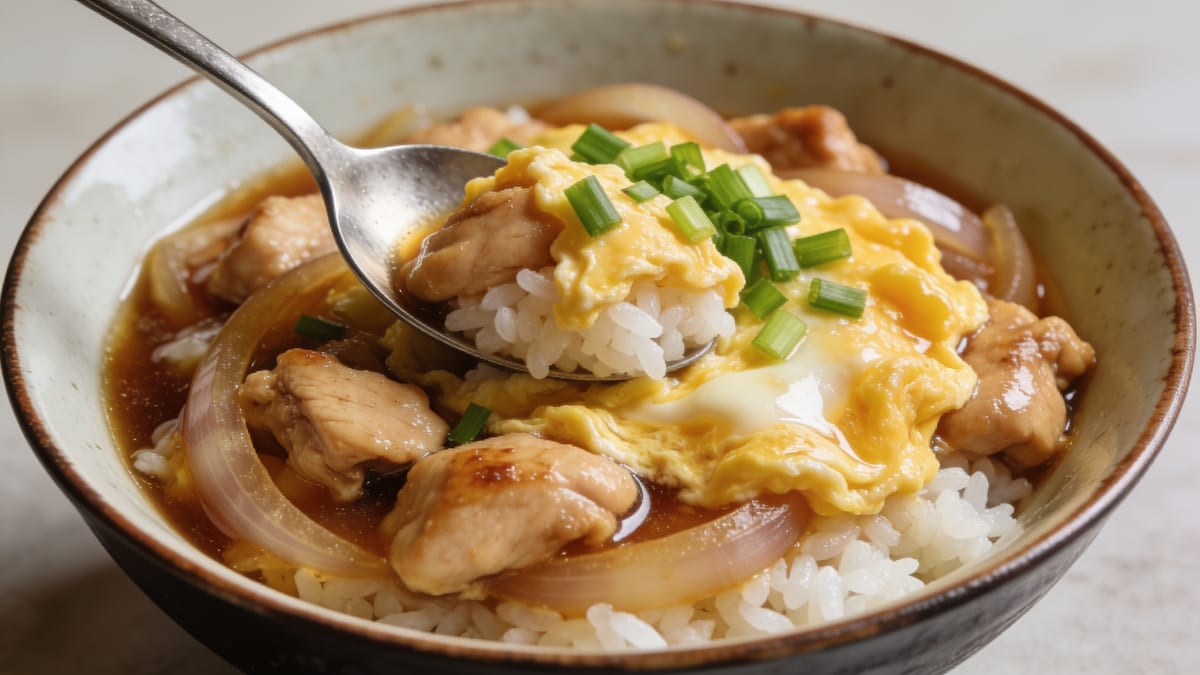
Simmer sliced chicken thigh, onion, dashi, soy, mirin, and sake in a small pan for 5 minutes. Pour beaten egg in a slow spiral, cover briefly so the egg sets at the edges and stays runny in the centre. Slide over hot rice. Garnish with mitsuba or scallion.
- Use a small oyakodon-pan (or any 18 cm pan) — the right diameter is the whole game.
- The egg should be JUST set — there should be a glossy, slightly runny puddle in the middle when you serve it.
- Real dashi (kombu + katsuobushi) makes a different dish than dashi powder. Make it; it takes 5 minutes.
Equipment
- Small frying pan with lid (18–20 cm)
- Wooden chopsticks
- Rice cooker or pot for cooking the rice
Bahan
Bowl
- 150 g boneless skinless chicken thigh, in bite-sized pieces
- ¼ small onion, thinly sliced
- 1 spring onion, sliced (white and green separated)
- 2 large eggs, lightly beaten
- 200 g cooked short-grain rice, hot
Sauce
- 100 ml dashi, see make-ahead
- 20 ml soy sauce
- 20 ml mirin
- 10 ml sake
- 5 g sugar
To finish
- A few sprigs mitsuba or 1 tbsp finely sliced scallion green
- Shichimi tōgarashi (optional)
Cara membuat
- LANGKAH01
In a small frying pan, combine dashi, soy sauce, mirin, sake, and sugar. Add the sliced onion. Bring to a simmer over medium heat.
- LANGKAH02
Slide in the chicken pieces and the white parts of the spring onion. Simmer 4–5 minutes, occasionally turning the chicken, until just cooked through. The liquid should still cover the chicken halfway.
- LANGKAH03
Beat the eggs only just until streaky — overbeaten egg makes a flat omelette. Pour two-thirds of the egg in a slow spiral over the simmering chicken. Cover for 30 seconds.
- LANGKAH04
Uncover. The egg around the edge should be just set; the centre should be slightly liquid. Pour over the remaining one-third of egg in a final spiral. Cover for another 15 seconds. The top will be glossy and barely set — that is the goal.
- LANGKAH05
Tip a large bowl of hot rice. Carefully slide the whole pan contents over the rice in one motion — keep the egg disc intact. Scatter with mitsuba or scallion green. Eat immediately.
Make ahead
Make the dashi up to 5 days ahead and refrigerate. Slice the chicken and onion morning-of. The simmer is 5 minutes once you start.
Storage
None. Oyakodon is a now-food. Leftover egg becomes rubbery and the rice cold and sad.
Variations
Katsudon
Replace raw chicken with breaded, deep-fried pork cutlet (tonkatsu) sliced — drop slices into the simmering sauce just before the egg.
Tsukimi
Top with one extra raw egg yolk in the centre after plating. The 'moon-viewing' bowl.
Tofu oyakodon (vegetarian)
Replace chicken with 200 g firm tofu cubes; use kombu dashi (no katsuobushi).
Serve with
Nutrition per serving
Nutrition values are estimates based on the metric measurements. Adjust as needed.
Pertanyaan umum
What is dashi and can I use powder?
Dashi is the foundational Japanese stock — most commonly kombu (kelp) and katsuobushi (smoked tuna flakes). Powdered (hondashi) is everywhere in Japanese kitchens and works in a pinch, but real dashi takes 5 minutes and tastes cleaner.
Can I use chicken breast?
Yes, but thigh is meaningfully better — the simmer treats thigh better and the flavour is deeper. If using breast, slice thinner and shorten the simmer by 1 minute.
Why does the egg need to stay runny?
Oyakodon literally means 'parent-and-child bowl' — the chicken (parent) and egg (child) in conversation. A fully cooked egg makes it a chicken-and-omelette bowl, which is fine but missing the silky bridge between the two.
What pan should I use?
Ideally a small 18 cm oyakodon-pan (one-portion donburi pan with a small lid). Any small frying pan with a lid works.
Can I cook for 2 in one pan?
Better to make two batches back-to-back. Doubling in one pan changes the surface area and the egg won't set properly.
Cooked this? Rate it.
Real ratings from real cooks. We only show a score once enough of you have weighed in — no fabricated stars.