Glassa di Aceto Balsamico
Balsamic glaze is simply balsamic vinegar simmered down to a glossy, pourable syrup — deeply savory-sweet with a bright tang that softens as it thickens. A whisper of brown sugar rounds out inexpensive supermarket vinegar and helps the glaze cling to whatever you drizzle it over. Because the syrup keeps thickening as it cools, pulling it off the heat while it still looks a little loose is the whole trick.
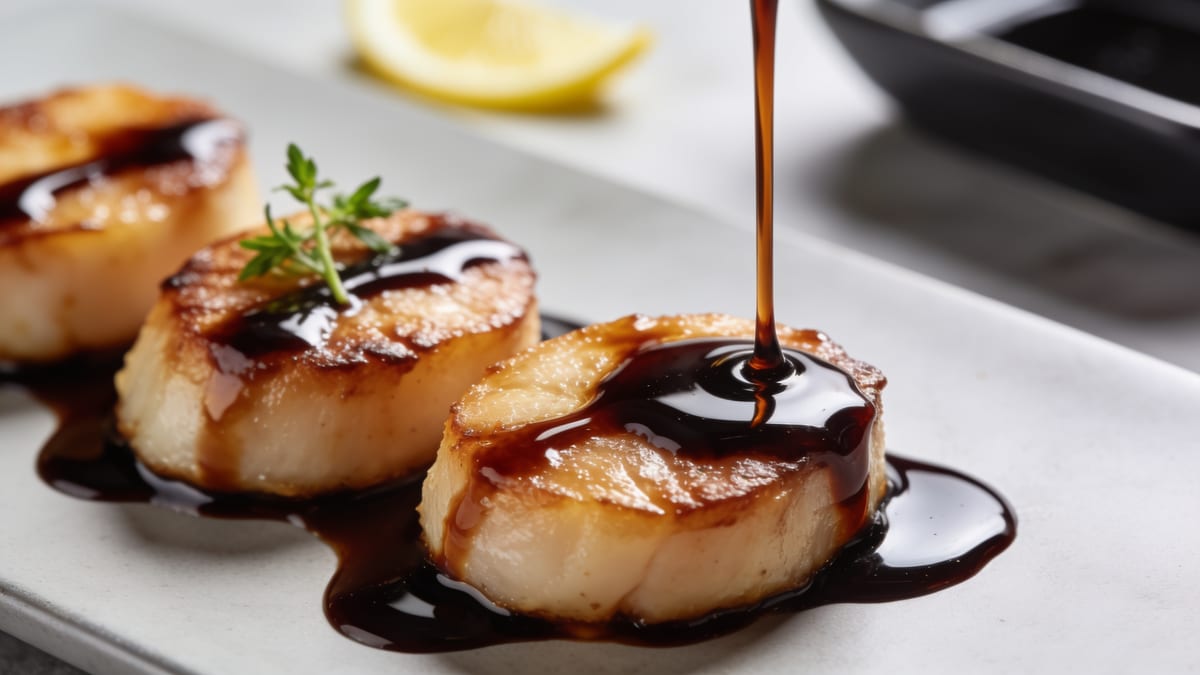
Pour 480 ml (2 cups) balsamic vinegar into a small saucepan with 2 tablespoons brown sugar, bring to a gentle boil over medium heat while stirring to dissolve the sugar, then drop to a low simmer and cook, stirring occasionally, for 15 to 20 minutes until the vinegar has reduced by about half and coats the back of a spoon; it should look slightly thinner than you want because it keeps thickening as it cools, so pull it off the heat once a finger swiped across a chilled spoon leaves a clean trail, let it cool 15 minutes, then transfer to a jar or squeeze bottle.
- Stop cooking while the glaze is still a touch loose — it firms up noticeably as it cools, and over-reducing gives you sticky candy.
- Keep the simmer low and gentle; a hard boil scorches the sugars and turns the glaze bitter.
- Use ordinary supermarket balsamic, not pricey aged DOP vinegar, which is already syrupy and wasted on reduction.
Equipment
- Small heavy-bottomed saucepan
- Wooden spoon or silicone spatula
- Measuring cup and spoons
- Chilled metal spoon for testing
- Glass jar or squeeze bottle for storage
Ingredienti
For the glaze
- 480 ml balsamic vinegar, standard supermarket-grade; save aged DOP balsamic for finishing
- 30 g light brown sugar, optional; omit for a sharper, less sweet glaze
- 1 pinch fine sea salt, optional, to balance the sweetness
Preparazione
- PASSO01
Pour the balsamic vinegar into a small heavy-bottomed saucepan and add the brown sugar and pinch of salt if using. A smaller pan keeps the liquid deep enough to simmer steadily without scorching.
- PASSO02
Set over medium heat and bring just to a boil, stirring with a wooden spoon until the sugar fully dissolves. Expect the kitchen to fill with a sharp vinegar smell — that mellows as it reduces.
- PASSO03
Lower the heat until the surface barely bubbles. A hard, rolling boil cooks the sugars too fast and leaves the glaze bitter, so keep it lazy and slow.
- PASSO04
Simmer, stirring occasionally and scraping the sides, until the vinegar has reduced by roughly half its volume and looks glossy and slightly thickened, about 15 to 20 minutes. Toward the end it thickens quickly, so watch it closely.
- PASSO05
Dip a chilled metal spoon into the glaze, lift it out, and drag a finger across the back. If it leaves a clean trail that holds, it is ready. Remember it should look a little loose in the pan because it firms up as it cools.
- PASSO06
Remove from the heat and let the glaze cool in the pan for about 15 minutes. It will thicken into a pourable, spoon-coating syrup as the temperature drops.
- PASSO07
Transfer the cooled balsamic glaze to a clean jar or squeeze bottle. Drizzle right away or seal for later.
Make ahead
Make it up to a week ahead — the flavor deepens and it pours more evenly after a day. Bring refrigerated glaze back to room temperature, or gently warm it, so it drizzles smoothly instead of clumping.
Storage
Cool completely, then store in an airtight jar or squeeze bottle at room temperature for up to 2 weeks, or in the fridge for up to 1 month. If it firms up when cold, set the jar in a bowl of hot water or microwave it for a few seconds to loosen before drizzling.
Variations
Honey-sweetened
Swap the brown sugar for 1 tablespoon (20 g) honey for a floral, rounded sweetness. This keeps it vegetarian but no longer vegan; maple syrup gives a similar effect while staying plant-based.
Rosemary and garlic infused
Add a sprig of fresh rosemary and a lightly smashed garlic clove at the start of the simmer, then fish them out before bottling. Lovely over roast vegetables, steak, or focaccia.
Pure no-sugar reduction
Skip the sweetener entirely and reduce the vinegar on its own. The result is tangier and thinner, so cook it a few minutes longer and expect a bolder, more acidic finish.
Serve with
Nutrition per serving
Nutrition values are estimates based on the metric measurements. Adjust as needed.
Domande frequenti
What exactly is balsamic glaze?
Balsamic glaze is balsamic vinegar that has been gently simmered until much of its water evaporates, concentrating it into a thick, glossy syrup. The reduction tames the vinegar's sharpness and brings out a savory-sweet depth, so a small drizzle adds far more flavor than the raw vinegar would.
Do I have to add sugar?
No. The sugar is optional — it rounds out inexpensive supermarket vinegar and helps the glaze cling, but a good balsamic reduces to a fine glaze on its own. Leave it out for a sharper, more acidic result, or use honey or maple syrup instead.
Why did my balsamic glaze turn hard or too thick?
It was over-reduced. Balsamic glaze keeps thickening as it cools, so what looks perfectly loose in a hot pan can set into a sticky, candy-like mass at room temperature. Pull it off the heat while it still coats a spoon but pours easily, and if it does firm up, warm it gently with a splash of water to loosen.
How long does homemade balsamic glaze keep?
Stored in a sealed jar, homemade balsamic glaze lasts about 2 weeks at room temperature or up to a month refrigerated. Its high acidity and low water content make it very shelf-stable; just give it a gentle warm-up if it thickens in the cold.
What kind of balsamic vinegar should I use?
Reach for ordinary supermarket balsamic vinegar, not the expensive aged DOP kind. Cheaper vinegar benefits most from reduction, while true aged balsamic is already thick and syrupy, so simmering it down wastes both the money and the character you paid for.
Cooked this? Rate it.
Real ratings from real cooks. We only show a score once enough of you have weighed in — no fabricated stars.