Doro wat — stufato di pollo etiope
Ethiopia's national dish and the centerpiece of every celebration: chicken slow-simmered in a deep, brick-red sauce of caramelized onions and berbere, enriched with spiced niter kibbeh butter, with whole eggs nestled in. Served on injera, scooped by hand.
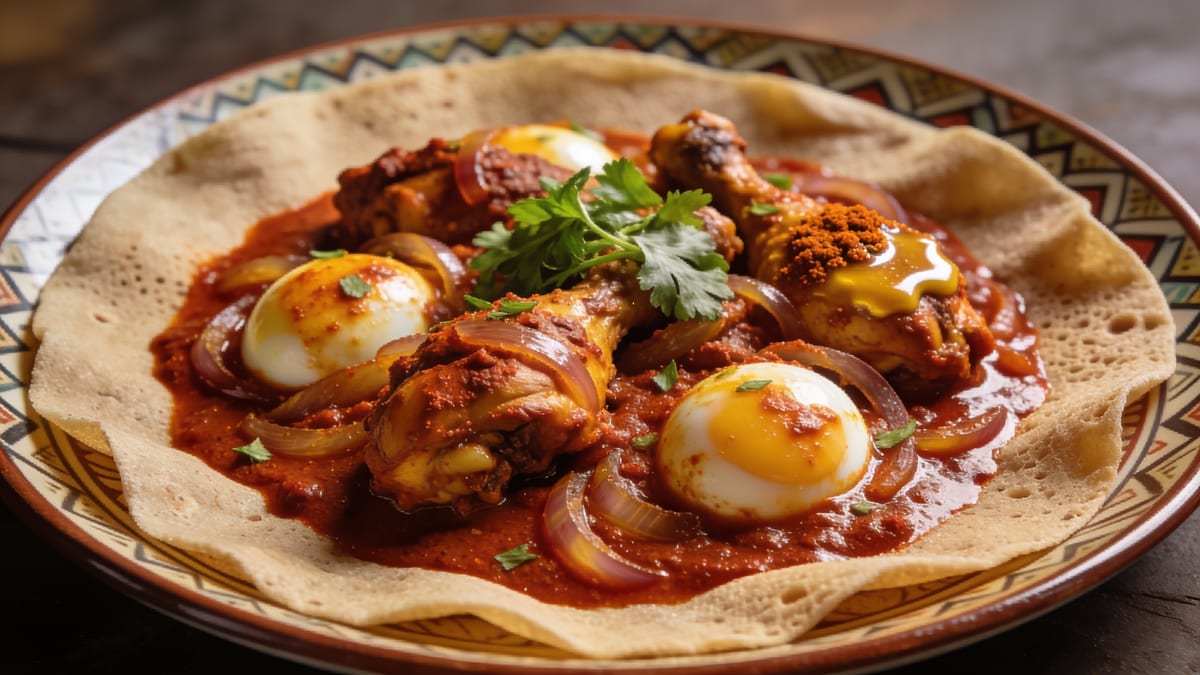
Cook a mountain of finely diced onions dry and slow until they collapse and caramelize — 30–40 minutes, no rushing. Add niter kibbeh (spiced clarified butter), garlic, ginger, and a generous amount of berbere; cook the paste down. Add chicken and a little stock, simmer until tender, nestle in peeled hard-boiled eggs. Serve on injera.
- The onions are everything: a huge quantity, cooked dry and slow until jammy. This is the base — there's no shortcut.
- Berbere (the Ethiopian chili-spice blend) and niter kibbeh (spiced clarified butter) are the two pillars. Buy or make them, but don't skip.
- Traditional doro wat uses a lot of berbere and is properly spicy — scale to your taste.
Equipment
- Heavy pot or Dutch oven
- Wooden spoon
- Small pot (for niter kibbeh if making)
Ingredienti
Base
- 4 large onions (about 1 kg), very finely diced
- 60 g niter kibbeh (spiced clarified butter), or ghee + spices
- 5 garlic cloves, minced
- 20 g fresh ginger, minced
- 45 g berbere spice blend, to taste
- 30 g tomato paste
Stew
- 1 kg bone-in chicken pieces, skin removed
- 30 ml lemon juice, to rub the chicken
- 250 ml chicken stock or water
- 4 hard-boiled eggs, peeled
- Salt to taste
Preparazione
- PASSO01
Rub the skinless chicken pieces with lemon juice and a little salt and set aside — a traditional cleaning step that also seasons.
- PASSO02
Put the finely diced onions in a dry heavy pot (no fat yet) over medium-low heat. Cook, stirring often, 30–40 minutes until they collapse, dry out, and turn deep golden and jammy. This slow base is the foundation of the whole dish — do not rush it.
- PASSO03
Stir in the niter kibbeh, garlic, and ginger. Cook 5 minutes until fragrant and glossy.
- PASSO04
Add the berbere and tomato paste. Cook, stirring constantly, 5–8 minutes — the paste deepens to brick red and the raw spice smell cooks off. Add a splash of stock if it sticks.
- PASSO05
Add the chicken, turning to coat in the sauce. Pour in the stock. Cover and simmer gently 35–40 minutes, until the chicken is tender and the sauce is thick and oil-glossed.
- PASSO06
Lightly score the peeled hard-boiled eggs and nestle them into the sauce to absorb flavor for the last 10 minutes. Season with salt. Rest a few minutes and serve on injera, with extra sauce.
Make ahead
Doro wat is traditionally made ahead for celebrations — the deep onion-and-berbere base rounds out beautifully overnight. Make the niter kibbeh weeks ahead; it keeps refrigerated.
Storage
5 days refrigerated and notably better the next day. Freezes 3 months (add the eggs fresh after reheating). The flavor deepens as it sits.
Variations
Make your own niter kibbeh
Simmer butter gently with ginger, garlic, cardamom, fenugreek, and a cinnamon stick, then strain. It's worth making a batch — it keeps for weeks and defines the flavor.
Milder
Reduce the berbere to 2–3 tbsp and add it gradually, tasting. The onion base stays sweet and rich even with less heat.
Doro wat for a crowd
Scale up — it's a feast dish. Traditionally one whole chicken cut into 12 pieces with 12 eggs for a gursha-style celebration.
Serve with
Nutrition per serving
Nutrition values are estimates based on the metric measurements. Adjust as needed.
Domande frequenti
What is berbere?
Berbere is the foundational Ethiopian spice blend — chili, fenugreek, ginger, garlic, korarima, and warm spices. It's what gives doro wat its color and fire. Sold at Ethiopian and many international groceries, or made from scratch. There's no single substitute.
What is niter kibbeh?
Spiced clarified butter — butter simmered with aromatics (ginger, garlic, cardamom, fenugreek) and strained. It carries flavor into the stew that plain butter or oil can't. Make a batch and it keeps for weeks.
Why cook the onions without fat first?
Doro wat starts with a huge quantity of onions cooked dry and slow until they break down into a jammy base before any fat goes in. This concentrates them and is the technique that gives the stew its body and depth. It takes 30–40 minutes and can't be hurried.
Is it very spicy?
Traditionally, yes — it uses a lot of berbere. But you control it: start with less berbere and add to taste. The caramelized onion base keeps it rich and rounded even at lower heat.
What if I can't get injera?
Injera, the spongy sourdough flatbread, is the traditional and ideal partner — you scoop the stew by hand. If you can't find it, serve over rice. It's less authentic but the stew is still wonderful.
Cooked this? Rate it.
Real ratings from real cooks. We only show a score once enough of you have weighed in — no fabricated stars.