Macarons — French Almond Meringue Cookies
The delicate, temperamental jewel of French pâtisserie: two smooth-domed almond-meringue shells with the signature ruffled 'foot' (pied), crisp outside and chewy within, sandwiched around a ganache, buttercream or jam filling. Macarons are famously finicky — success rides on precise weighing, properly aged egg whites, the all-important macaronage (folding) and a rest before baking — but the reward is a glossy, sophisticated little confection in any flavour and colour you like.
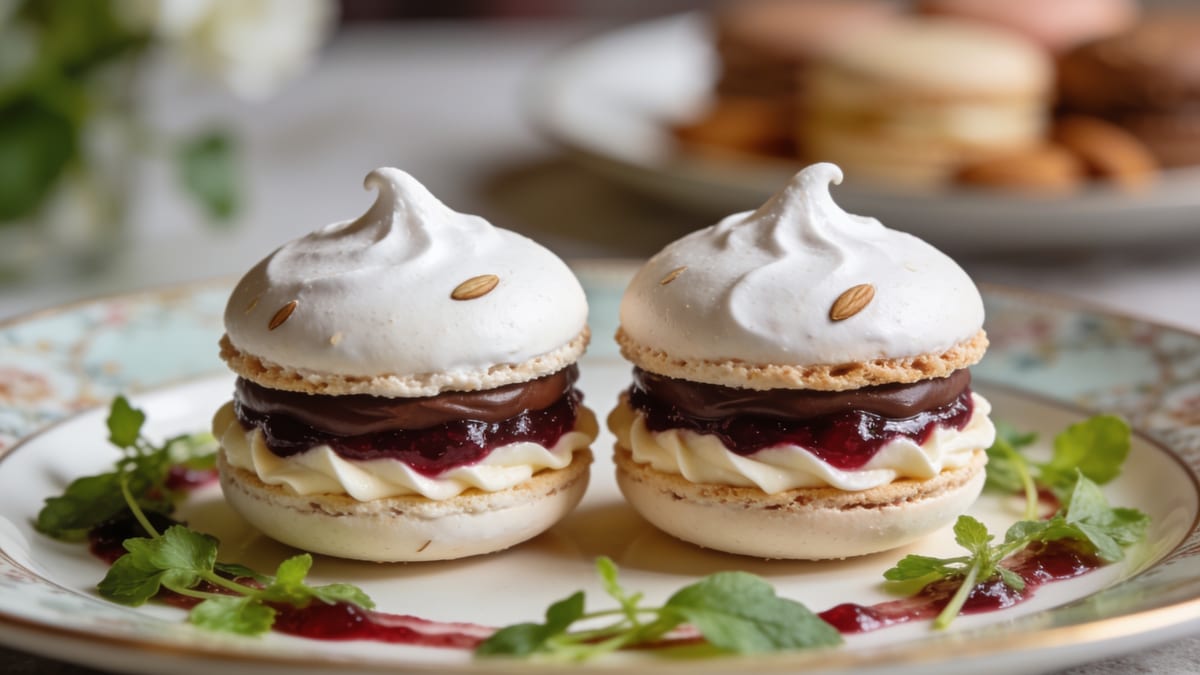
Sift together finely ground almonds and icing sugar. Whip aged egg whites to a stiff, glossy meringue with caster sugar (and colour). Fold the dry mix into the meringue — the crucial macaronage — until the batter flows like slowly-falling lava and ribbons that sink back in about 10 seconds; not over- or under-mixed. Pipe small rounds onto lined trays, rap the trays to release air bubbles, and let them rest until a skin forms and they're no longer tacky. Bake at moderate heat until they have risen 'feet' and lift cleanly. Cool fully, then sandwich with ganache or buttercream and mature in the fridge a day.
- Weigh everything precisely and sift the almond-sugar mix — macarons are unforgiving of guesswork.
- Macaronage (folding) is the make-or-break step: stop when the batter ribbons and melts back in ~10 seconds.
- Rest the piped shells until a skin forms (not tacky) before baking — that's what gives the smooth top and 'feet'.
Equipment
- Kitchen scale
- Stand mixer
- Piping bag + round tip
- Baking trays + parchment/mat
재료
Shells
- 100 g ground almonds (almond flour)
- 100 g icing (powdered) sugar
- 75 g egg whites, aged (room temperature)
- 75 g caster (superfine) sugar; gel food colour (optional)
Filling (e.g. ganache)
- 100 g chocolate, chopped
- 75 ml cream (warm) — or use buttercream/jam
조리법
- 단계01
Weigh and sift the ground almonds with the icing sugar together (twice) to remove lumps and get a fine mix. Discard any coarse bits left in the sieve.
- 단계02
Whip the room-temperature egg whites, gradually adding the caster sugar, to a stiff, glossy meringue that holds firm peaks. Beat in gel colour now if using.
- 단계03
Fold the sifted dry mix into the meringue, deflating it deliberately, until the batter is smooth and flows like lava — a ribbon drizzled from the spatula should sink back into the surface in about 10 seconds. Don't over- or under-fold; this is the critical step.
- 단계04
Pipe small even rounds onto lined trays. Rap the trays firmly on the counter a few times to pop air bubbles. Leave to rest at room temperature until a skin forms and the tops are no longer sticky to a light touch, 20–45 minutes.
- 단계05
Bake at 150°C/300°F until risen with 'feet' and they lift cleanly off the paper, about 13–15 minutes. Cool completely. Make the ganache (pour warm cream over chocolate, stir, cool to pipeable) and sandwich the shells in pairs. Mature in the fridge for a day for the best texture, then bring to room temperature to serve.
Make ahead
Macarons are made to be made ahead — filled ones actually improve after a day's maturing in the fridge, and both shells and filled macarons freeze beautifully, so you can bake in advance for an event. Make the shells and ganache ahead, sandwich, then mature or freeze. Always serve at room temperature for the best chew.
Storage
Filled macarons are best after 'maturing' in the fridge for 24 hours (the shells soften slightly and the flavour melds), and keep 4–5 days refrigerated in an airtight box. They freeze very well (filled or as empty shells) — thaw in the fridge. Bring to room temperature before eating. Unfilled shells keep a few days airtight at room temperature.
Variations
Italian meringue method
Use an Italian meringue (hot sugar syrup) for a more stable, reliable macaron — popular with pros.
Flavours
Colour and flavour the shells and fillings endlessly — pistachio, raspberry, salted caramel, coffee, lemon.
Jam or buttercream
Fill with fruit jam, buttercream or curd instead of ganache.
Serve with
Nutrition per serving
Nutrition values are estimates based on the metric measurements. Adjust as needed.
자주 묻는 질문
Why are macarons so hard to make?
Macarons are sensitive to many variables — accurate weighing, the consistency of the meringue, the macaronage (folding), humidity, resting time and oven temperature all affect the result. Small errors show up as cracked tops, no 'feet', hollow shells or lopsided macarons. They're absolutely achievable at home, but they reward precision and a little practice more than most bakes. Weighing ingredients (not using cups) is essential.
What is macaronage?
Macaronage is the crucial step of folding the sifted almond-and-sugar mixture into the meringue, deliberately knocking some air out, until the batter reaches the right consistency. You're looking for a smooth, glossy batter that flows like lava and where a ribbon falls back into the surface in about 10 seconds. Under-folded batter is stiff (lumpy, peaked tops); over-folded is runny (flat, spreading, footless). Getting it right is the heart of macaron-making.
Why do I need to rest the piped macarons?
Letting the piped shells sit at room temperature until a skin forms (no longer tacky to the touch) is what gives macarons their smooth tops and characteristic ruffled 'feet'. The skin forces the macaron to rise upward through the base as it bakes, creating the foot, rather than cracking on top. Resting time varies with humidity — in a damp kitchen it takes longer (or may not skin at all).
What does 'aged' egg whites mean?
Aging egg whites means separating them a day (or several hours) ahead and leaving them, loosely covered, in the fridge or at room temperature, which lets some moisture evaporate and relaxes the proteins for a more stable meringue. Many macaron bakers swear by it. Whichever you do, use the whites at room temperature, and weigh them — eggs vary in size, and macarons need precise ratios.
Why are my macarons hollow or cracked?
Hollow shells often come from under-mixed batter, an unstable or over-whipped meringue, or oven temperature issues; cracks usually mean the shells weren't rested long enough to form a skin, or the oven was too hot. Macaronage and resting are the two biggest levers. Also bake at a moderate, steady temperature, and let trays cool between batches. Some trial and error with your specific oven is normal.
Cooked this? Rate it.
Real ratings from real cooks. We only show a score once enough of you have weighed in — no fabricated stars.