Yakitori — Japanese Grilled Chicken Skewers
Japan's beloved izakaya skewer: bite-size pieces of chicken (and every part of it — thigh, skin, meatball, liver) threaded onto bamboo and grilled over hot coals, brushed with a glossy sweet-savoury tare glaze or simply seasoned with salt. Yakitori is smoky, charred-at-the-edges, and made for sharing over cold beer. The magic is high, direct heat, repeated dips in the tare, and not overcooking the juicy thigh.
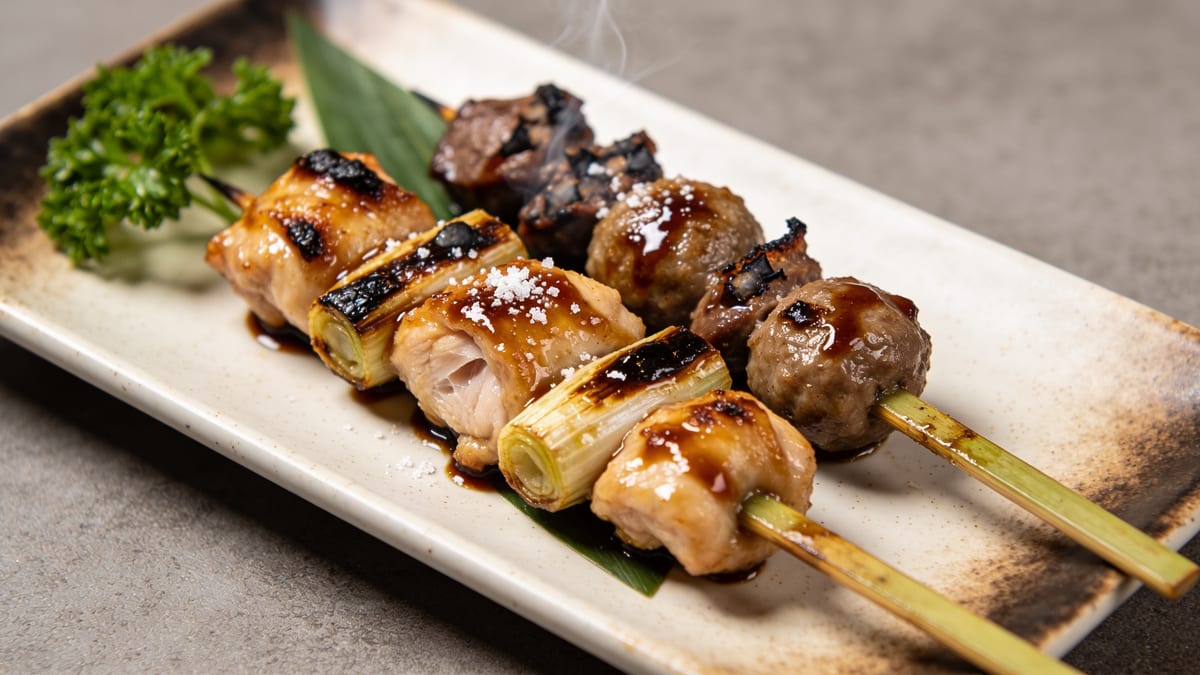
Cut boneless chicken thigh into even bite-size pieces and thread them onto soaked bamboo skewers, often alternating with pieces of spring onion (negima). Make a tare by simmering soy sauce, mirin, sake and a little sugar until slightly syrupy. Grill the skewers over high, direct heat (charcoal is best), turning, until the chicken is cooked and lightly charred — then dip or brush them in the tare and return to the grill a couple of times to build a glossy glaze. Or just season with salt (shio). Serve hot with shichimi or sansho pepper.
- Use boneless chicken thigh in even pieces (alternate with spring onion for negima) so it cooks evenly and stays juicy.
- Grill over high, direct heat for char; charcoal gives the authentic smoky flavour.
- Build the tare glaze with repeated dips, or keep it simple with just salt (shio).
Equipment
- Charcoal grill or grill pan
- Bamboo skewers (soaked)
- Small pan (for tare)
Ingrediënten
Skewers
- 600 g boneless chicken thigh, in bite-size pieces
- Spring onions (negi), cut into lengths (for negima)
- Bamboo skewers, soaked in water
Tare (glaze)
- 120 ml soy sauce
- 120 ml mirin
- 60 ml sake
- 2 tbsp sugar
To serve
- Salt (for shio skewers)
- Shichimi togarashi or sansho pepper
Bereiding
- STAP01
Simmer the soy sauce, mirin, sake and sugar in a small pan until slightly reduced and syrupy. (Traditional shops keep a perpetual tare; yours will deepen each time you use it.)
- STAP02
Cut the chicken thigh into even, bite-size pieces. Thread snugly onto soaked bamboo skewers, alternating with lengths of spring onion for negima skewers if you like.
- STAP03
Grill the skewers over hot charcoal (or a very hot grill pan), turning, until the chicken is cooked through and lightly charred at the edges, about 8–10 minutes. Keep the heat high and direct.
- STAP04
For tare skewers, dip the cooked skewers into the tare (or brush generously) and return to the grill for 30 seconds to set; repeat a couple of times for a glossy glaze. For shio skewers, simply season with salt while grilling.
- STAP05
Serve the yakitori hot off the grill, with shichimi togarashi or sansho pepper to sprinkle — and an ice-cold beer. Eat straight from the skewer.
Make ahead
Make the tare ahead (it keeps and deepens), cut and skewer the chicken in advance, and keep chilled. Grill fresh to serve — yakitori is best straight off the heat. Prepping the skewers ahead makes it easy to cook to order for a gathering.
Storage
Best hot off the grill. Leftovers keep a day and can be reheated, or the meat slipped off and used in donburi or fried rice. The tare keeps for weeks refrigerated and improves with use — keep a jar going. Soak bamboo skewers before grilling so they don't burn through.
Variations
Negima
Alternate chicken thigh with spring onion — the classic combination.
Tsukune
Chicken meatball skewers, often served with a raw egg yolk to dip into.
Shio vs tare
Season simply with salt (shio) to taste the chicken, or glaze with the sweet-savoury tare.
Serve with
Nutrition per serving
Nutrition values are estimates based on the metric measurements. Adjust as needed.
Veelgestelde vragen
What is tare?
Tare is the sweet-savoury yakitori glaze made by simmering soy sauce, mirin, sake and sugar until lightly syrupy. Skewers are dipped in it and returned to the grill several times to build a glossy, caramelised coating. In yakitori shops, the tare is a perpetual sauce, topped up and reused for years so it deepens in flavour — yours will improve every time you cook with it.
What chicken is best for yakitori?
Boneless chicken thigh is ideal — it stays juicy and tender over high heat, where breast would dry out. Cut it into even bite-size pieces so they cook at the same rate. Traditional yakitori uses every part of the bird (skin, liver, hearts, tail), but thigh (often with spring onion, as negima) is the most popular and beginner-friendly.
Do I need charcoal?
Charcoal (ideally binchotan) gives the authentic smoky char that defines great yakitori, but you can get good results on a very hot gas grill, a grill pan, or under a broiler at home. The key is high, direct heat for a good sear and char without overcooking. Soak bamboo skewers first, or shield the exposed ends with foil, so they don't burn.
What's the difference between tare and shio yakitori?
Tare skewers are glazed with the sweet-savoury soy-mirin sauce; shio skewers are simply seasoned with salt. Shio lets the flavour of the chicken (and the char) shine and is often preferred for delicate parts, while tare gives a richer, caramelised, glossy finish. Many people order a mix of both. It's down to taste.
How do I keep the skewers from burning?
Soak bamboo skewers in water for at least 30 minutes before grilling so the exposed wood doesn't catch fire, and/or cover the handle ends with foil. Keep the meat over the heat and the bare skewer ends off to the side if you can. Metal skewers are an alternative. And don't walk away — yakitori cooks fast over high heat.
Cooked this? Rate it.
Real ratings from real cooks. We only show a score once enough of you have weighed in — no fabricated stars.