Badrijani Nigvzit — Georgian Eggplant Walnut Rolls
A jewel of the Georgian supra (feast table): slices of fried eggplant rolled around a vivid, garlicky walnut paste seasoned with the country's signature spices — blue fenugreek, marigold, coriander — and finished with ruby pomegranate seeds. Badrijani nigvzit is rich, savoury and a little tangy, eaten cool as an appetiser. The walnut filling, smooth and intensely flavoured, is the heart of so much Georgian cooking, and here it's at its most elegant.
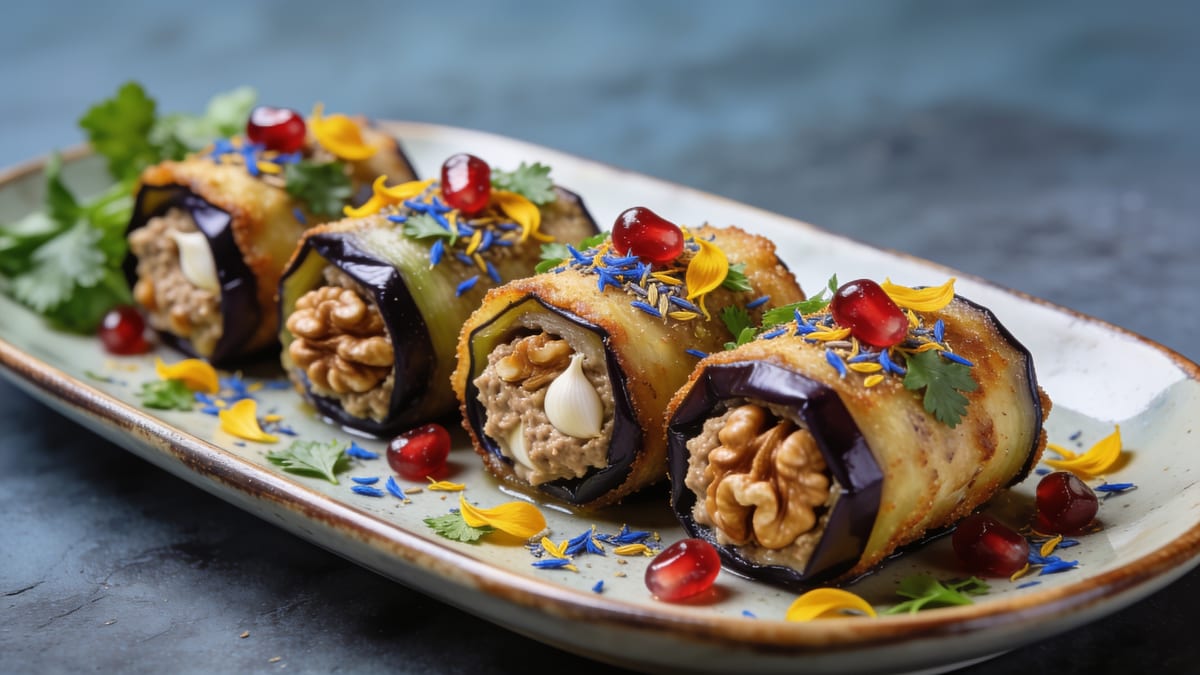
Slice eggplants lengthwise, salt them to draw out bitterness, then fry (or roast) the slices until soft and golden. Make the filling by grinding walnuts to a paste with garlic, a little water or vinegar, and Georgian spices — ground blue fenugreek, marigold (or a pinch of saffron/turmeric), coriander and a hit of chilli — until smooth and spreadable. Spread the walnut paste on each eggplant slice and roll it up. Arrange the rolls, chill briefly, and top with fresh pomegranate seeds and coriander before serving cool.
- Fry or roast the eggplant until really soft and pliable so it rolls without cracking.
- Grind the walnuts with garlic and Georgian spices (blue fenugreek, marigold, coriander) into a smooth, spreadable paste.
- Serve cool, topped with pomegranate seeds — they make it tangy and beautiful.
Equipment
- Frying pan
- Food processor
- Tray
Składniki
Eggplant
- 2 eggplants (aubergines), sliced lengthwise
- Salt (to degorge); oil, for frying
Walnut filling
- 200 g walnuts
- 2 garlic cloves; 2–3 tbsp water or a splash of wine vinegar
- 1 tsp ground blue fenugreek (utskho suneli); 1 tsp dried marigold (or pinch saffron/turmeric)
- ½ tsp ground coriander; pinch chilli; salt
To finish
- Pomegranate seeds
- Fresh coriander (cilantro)
Przygotowanie
- KROK01
Slice the eggplants lengthwise about 5 mm thick. Salt the slices and leave 20–30 minutes to draw out moisture and bitterness, then pat dry. Fry (or roast/grill) the slices until soft, golden and pliable. Drain on paper.
- KROK02
Grind the walnuts with the garlic, blue fenugreek, marigold, coriander, chilli and salt in a food processor, adding a little water or wine vinegar, until you have a smooth, thick, spreadable paste. Taste and adjust the seasoning — it should be garlicky and aromatic.
- KROK03
Spread a generous layer of walnut paste over each cooled eggplant slice and roll it up from the short end into a neat roll. Place seam-down on a tray.
- KROK04
Chill the rolls for 20–30 minutes to firm up and let the flavours settle.
- KROK05
Arrange the badrijani on a plate and scatter generously with pomegranate seeds and fresh coriander. Serve cool, as an appetiser or part of a Georgian spread.
Make ahead
Ideal make-ahead meze — assemble the rolls a day ahead and keep chilled, as they're served cool and the flavours improve. Top with the pomegranate and coriander just before serving. You can also make the walnut paste and fry the eggplant separately in advance, then assemble closer to the time.
Storage
Keeps 3 days refrigerated and the flavours deepen — it's served cool anyway, so it's great make-ahead party food. Add the pomegranate seeds and fresh coriander just before serving so they stay fresh and bright. The walnut paste can be made separately and keeps a few days; bring rolls to cool room temperature to serve for the best flavour.
Variations
Roasted (lighter)
Roast or grill the eggplant instead of frying for a lighter version.
Spice it your way
Adjust the Georgian spices — more blue fenugreek and marigold for authenticity, or chilli for heat.
Part of a spread
Serve alongside other Georgian dishes (lobio, pkhali, khachapuri) for a supra.
Serve with
Nutrition per serving
Nutrition values are estimates based on the metric measurements. Adjust as needed.
Najczęstsze pytania
What is badrijani nigvzit?
Badrijani nigvzit means 'eggplant with walnuts' in Georgian — slices of fried (or roasted) eggplant rolled around a smooth, garlicky walnut paste and topped with pomegranate seeds. It's a classic cold appetiser of the Georgian supra (feast table), rich and savoury with the country's signature walnut-and-spice flavour. It's naturally vegan and a perennial favourite.
What spices make it taste Georgian?
The walnut paste gets its distinctive character from Georgian spices: utskho suneli (ground blue fenugreek), dried marigold (sometimes called 'Imeretian saffron'), ground coriander, garlic and a little chilli. Blue fenugreek and marigold are the most defining and a bit hard to find outside Georgia — you can approximate with regular fenugreek and a pinch of saffron or turmeric, but the real spices give the authentic taste.
How do I stop the eggplant from cracking when I roll it?
Cook it until it's genuinely soft and pliable — fried or roasted slices should be fully tender, not firm, so they bend easily around the filling. Salting the slices first draws out moisture and helps them cook to a supple texture. If a slice is still a bit firm, it'll crack; give it longer until soft and floppy before rolling.
Can I make badrijani healthier without frying?
Yes — roast or grill the salted eggplant slices brushed with a little oil instead of frying them. They'll be lighter and less oily, and still soft enough to roll. Frying gives the richest, most traditional flavour, but roasting is a perfectly good, lighter alternative that keeps the dish vegan and delicious.
What is the walnut paste used for in Georgian cooking?
The garlicky, spiced ground-walnut paste at the heart of badrijani is a cornerstone of Georgian cuisine, appearing in many dishes — pkhali (vegetable-and-walnut pâtés), satsivi (walnut sauce for chicken), lobio (bean dishes) and more. Mastering it opens up a whole repertoire. Here it's spread on eggplant, but the same base flavours run through Georgian cooking.
Cooked this? Rate it.
Real ratings from real cooks. We only show a score once enough of you have weighed in — no fabricated stars.