Elote (Mexican Street Corn)
Elote is Mexico's beloved street-cart snack: corn on the cob charred over open flame, slathered in a tangy mayo-crema, then rolled in salty crumbled cotija, chile powder, and lime. The kernels stay juicy and sweet while the outside picks up smoky blisters that grip the creamy coating. Grilling the corn naked (no husk) is the key move — direct contact with the grates builds the caramelized, lightly charred spots that make real elote taste like the street version.
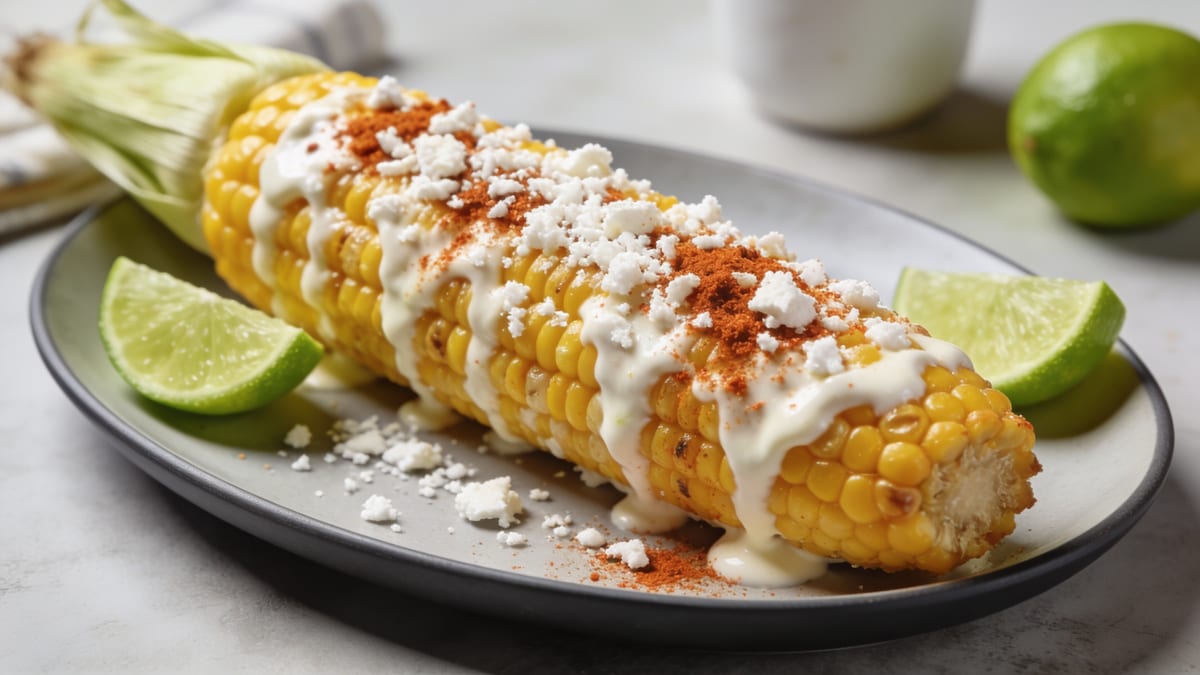
Husk 6 ears of corn, rub them lightly with oil, and grill over direct medium-high heat (about 200°C/400°F) for 10–12 minutes, turning every 2–3 minutes until kernels are tender with charred spots on all sides. While the corn cooks, stir together 75 g (1/3 cup) mayonnaise, 60 ml (1/4 cup) Mexican crema or sour cream, 1 grated garlic clove, the zest and juice of half a lime, and a pinch of salt. Brush each hot ear generously with the crema mixture, roll or shower it with 100 g (1 cup) crumbled cotija, dust with chile powder or Tajín, scatter with chopped cilantro, and serve immediately with lime wedges for squeezing.
- Grill the corn fully husked and dry-charred — the blistered spots are the flavor, and a smooth surface won't hold the crema as well.
- Sauce the corn while it's piping hot so the mayo-crema melts into the kernels instead of sitting on top.
- Crumble the cotija onto a plate first and roll the sauced ear through it — far more even coverage than sprinkling by hand.
Equipment
- Gas or charcoal grill (or cast-iron grill pan)
- Tongs
- Small mixing bowl
- Silicone brush or spoon for saucing
- Shallow plate or tray for the cotija
- Microplane or fine grater
Składniki
Corn
- ears of sweet corn, husks and silk removed, fresh, in season if possible
- 15 ml neutral oil, for rubbing the ears
Crema coating
- 75 g mayonnaise
- 60 ml Mexican crema or sour cream
- garlic clove, finely grated
- lime, zested and halved, zest plus 1 tbsp (15 ml) juice for the sauce
- 1.5 g fine salt
To finish
- 100 g cotija cheese, finely crumbled, queso fresco or feta work in a pinch
- 5 g chile powder or Tajín, ancho or chile piquín; Tajín adds a citrusy tang
- 10 g fresh cilantro, finely chopped, optional but classic
- lime, cut into wedges, for serving
Przygotowanie
- KROK01
Preheat a gas or charcoal grill to medium-high, about 200°C (400°F), with the grates set for direct heat. Indoors, set a cast-iron grill pan over medium-high heat until a drop of water skitters and evaporates instantly. Clean the grates well so the corn chars instead of sticking.
- KROK02
While the grill heats, stir together the mayonnaise, crema, grated garlic, lime zest, 1 tablespoon (15 ml) lime juice, and salt in a small bowl until smooth. It should be thick enough to cling to a spoon; if it's stiff, loosen it with a teaspoon more lime juice.
- KROK03
Spread the crumbled cotija over a shallow plate or small rimmed tray. Put the chile powder and chopped cilantro within reach, along with the lime wedges. Elote comes together in seconds once the corn is off the grill, so having everything staged matters.
- KROK04
Rub the husked ears lightly all over with the oil and lay them directly on the grates. Grill, turning a quarter turn with tongs every 2–3 minutes, until the kernels are tender and deeply blistered with charred spots on all sides, 10–12 minutes total. A few blackened kernels are exactly what you want — that's the smoky backbone of the dish.
- KROK05
Working with one ear at a time straight off the grill, brush or spoon a generous layer of the crema mixture over the entire surface. The heat loosens the sauce so it seeps between the kernels rather than sitting on top.
- KROK06
Immediately roll each sauced ear through the plate of cotija, pressing gently so the cheese sticks everywhere, then dust with chile powder and scatter with cilantro. Repeat with the remaining ears, saucing and rolling one at a time.
- KROK07
Spear each ear with a wooden skewer or corn holder if you like, pile onto a platter, and serve right away with lime wedges for squeezing over the top.
Make ahead
The crema coating can be mixed and refrigerated up to 3 days ahead; stir before using. Corn can be husked, silked, and kept covered in the fridge for a day, and the cotija station can be set up a few hours in advance. Grill and assemble just before serving — this is not a dish that waits.
Storage
Elote is at its best the moment it's assembled — the coating softens as it sits. If you have leftovers, slice the kernels off the cob, scrape the coating in with them, and refrigerate in an airtight container for up to 3 days. Reheat gently in a skillet and eat it with a spoon, esquites-style; avoid the microwave at full power, which turns the crema greasy.
Variations
Esquites (street corn in a cup)
Cut the raw kernels off the cobs and char them in a dry cast-iron skillet over high heat, 6–8 minutes, stirring only occasionally so they blister. Toss with the crema mixture, spoon into cups, and top each with cotija, chile powder, cilantro, and a squeeze of lime. Easier to eat and just as satisfying.
Vegan elote
Swap in vegan mayonnaise, replace the crema with more vegan mayo thinned with 2 teaspoons lime juice, and use a crumbled almond-based feta or 3 tablespoons nutritional yeast mixed with 1/4 teaspoon salt in place of the cotija. The char, chile, and lime still carry the dish.
Torched or broiler elote
No grill? Boil the ears for 5 minutes until just tender, pat completely dry, then char under a broiler set to high for 8–10 minutes, turning twice — or run a kitchen torch over the surface until spotted black. Finish exactly as written.
Serve with
Nutrition per serving
Nutrition values are estimates based on the metric measurements. Adjust as needed.
Najczęstsze pytania
What's the difference between elote and esquites?
They're the same flavor profile in two formats. Elote is the whole ear on a stick or in the husk handle, coated and eaten off the cob; esquites (sometimes sold as corn in a cup or elote en vaso) is the kernels cut off, charred or simmered, and tossed with the same crema, cotija, chile, and lime, eaten with a spoon. If you're serving a crowd or want less mess, esquites is the move — see the variation above.
Can I make elote without a grill?
Yes. The goal is char, not smoke specifically. A ripping-hot cast-iron grill pan or skillet works well, as does the broiler: parboil the ears 5 minutes, dry them thoroughly, then broil on high, turning a couple of times, until spotted with black. A kitchen torch also does a beautiful job on boiled corn.
What can I substitute for cotija cheese?
Cotija is a dry, salty, crumbly Mexican cheese that doesn't melt, which is why it clings to the sauced ear in distinct crumbs. Crumbled feta is the closest widely available stand-in (rinse it briefly if yours is very briny). Finely grated Parmesan works too, and queso fresco gives a milder, softer result.
Do I have to use mayonnaise?
Traditional street vendors use mayo because it clings to hot corn and carries the lime and garlic without breaking. If mayo isn't your thing, use all crema or sour cream stiffened with a little extra lime zest — it will be looser, so spoon rather than brush it on. Softened salted butter under the crema layer is another vendor-style option.
Is Tajín the same as the chile powder on elote?
Not exactly, but both are authentic choices. Tajín is a commercial blend of mild chiles, dehydrated lime, and salt, so it adds tang along with gentle heat. Pure ground chile — piquín for real heat, ancho for smoky-sweet mildness — is what many carts use. Taste yours first and adjust the amount; the lime wedges at the end balance either one.
Cooked this? Rate it.
Real ratings from real cooks. We only show a score once enough of you have weighed in — no fabricated stars.