Homemade Italian Sausage
Bulk Italian sausage made from scratch: cold ground pork kneaded with toasted fennel, garlic, paprika, and a splash of red wine vinegar until it turns springy and tacky. A short cure in the fridge lets the salt and spices penetrate, so every bite tastes like good salumeria sausage instead of seasoned ground meat. No casings, no stuffer — just a bowl, your hands, and a hot skillet.
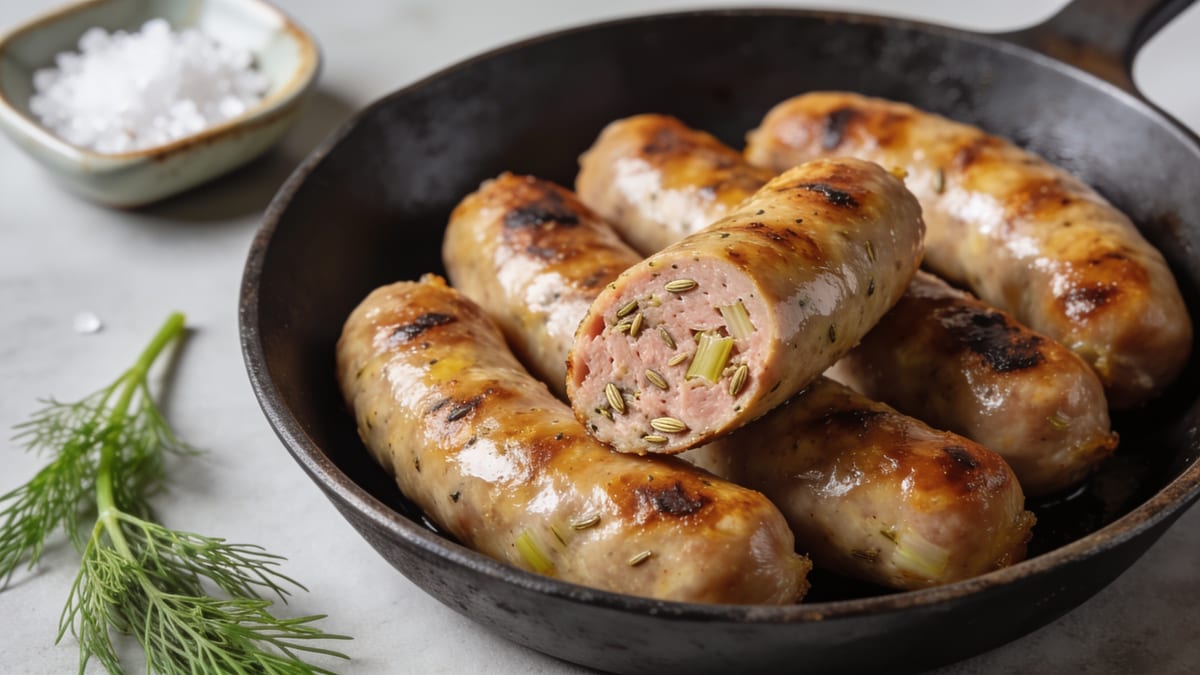
Toast 1 tablespoon of fennel seeds in a dry skillet, crack them coarsely, and stir together with 14 g fine sea salt, 2 tsp sweet paprika, 1 1/2 tsp black pepper, 1 tsp each red pepper flakes and dried oregano, 1 tsp sugar, and 3 grated garlic cloves. Sprinkle the mix over 900 g cold ground pork, add 2 tbsp each chilled red wine vinegar and ice water, and knead 60-90 seconds until the meat turns sticky and tacky. Refrigerate at least 1 hour (overnight is better), fry a spoonful to taste and adjust seasoning, then shape 8 patties and pan-fry in olive oil over medium heat 4-5 minutes per side to 71°C/160°F.
- Keep everything cold — pork straight from the fridge, ice water, chilled vinegar — so the fat stays in distinct flecks instead of smearing into a greasy paste.
- Knead only until the meat gets visibly sticky; that brief mixing develops myosin, which binds the sausage and gives it a snappy, springy bite.
- Always fry a small test piece before shaping the batch so you can correct salt and heat while it's still fixable.
Equipment
- Small dry skillet
- Mortar and pestle or spice grinder
- Large mixing bowl
- Kitchen scale
- Large cast-iron or heavy skillet
- Instant-read thermometer
Składniki
Pork base
- 900 g ground pork (about 20% fat), or coarsely ground pork shoulder, well chilled
- 30 ml red wine vinegar, chilled
- 30 ml ice-cold water
Seasoning blend
- 6 g fennel seeds, toasted and coarsely cracked
- 14 g fine sea salt
- 4 g sweet paprika
- 3 g freshly ground black pepper
- 2 g red pepper flakes, use 1/2 tsp for a milder sausage
- 1 g dried oregano
- 4 g granulated sugar, optional; rounds out the spice
- garlic cloves, finely grated
For cooking
- 15 ml olive oil, for pan-frying
Przygotowanie
- KROK01
Toast the fennel seeds in a small dry skillet over medium heat, shaking the pan, until fragrant and a shade darker, 1-2 minutes. Tip them into a mortar or spice grinder and crush coarsely — you want cracked pieces, not powder, so the sausage gets those signature bursts of anise flavor.
- KROK02
Stir the cracked fennel together with the salt, paprika, black pepper, red pepper flakes, oregano, and sugar in a small bowl. Grate the garlic straight in and mix to a damp, rubbly paste. Pre-mixing everything guarantees even distribution through the meat.
- KROK03
Spread the cold ground pork in a shallow layer in a large bowl and sprinkle the seasoning evenly over the whole surface. Drizzle on the chilled vinegar and ice water. With cold hands, fold and knead for 60-90 seconds, just until the meat turns noticeably sticky and holds together when you press it — that tackiness is the protein bind that gives real sausage its springy texture. Stop there; overmixing makes it dense.
- KROK04
Press the mixture flat, cover the bowl, and refrigerate for at least 1 hour — overnight if you can wait. The salt penetrates, the fennel and garlic bloom, and the mixture firms up, which makes the difference between seasoned ground pork and true Italian sausage.
- KROK05
Pinch off a teaspoon of the mixture, flatten it, and fry it in a lightly oiled skillet until cooked through, about 2 minutes. Taste and adjust the main batch: more salt if it's flat, more red pepper flakes if you want heat. Mix any additions in briefly.
- KROK06
Divide the mixture into 8 portions (about 120 g each) with damp hands and pat into patties roughly 2 cm / 3/4 inch thick. Press a shallow dimple in the center of each so they stay flat instead of doming. For crumbles or stuffed recipes, skip shaping and use the sausage in bulk.
- KROK07
Heat the olive oil in a large cast-iron or heavy skillet over medium heat until shimmering. Cook the patties in two batches without crowding, 4-5 minutes per side, until deeply browned and an instant-read thermometer inserted sideways reads 71°C / 160°F.
- KROK08
Transfer the patties to a plate and rest for 3 minutes so the juices settle back into the meat. Serve hot, or cool completely for meal prep.
Make ahead
Mix the sausage up to 2 days ahead and keep it refrigerated; the fennel and garlic deepen as it sits. You can also shape the patties and freeze them raw between squares of parchment, then cook straight from frozen over medium-low heat, adding 2-3 minutes per side.
Storage
Raw bulk sausage keeps 2 days in an airtight container in the refrigerator — thanks to the salt, the flavor actually improves overnight. Cooked patties keep up to 4 days refrigerated. For longer storage, freeze raw portions flat in freezer bags for up to 3 months and thaw overnight in the fridge.
Variations
Hot Italian sausage
Increase the red pepper flakes to 1 tablespoon, add 1/2 teaspoon cayenne, and skip the sugar. A pinch of smoked paprika in place of the sweet paprika adds a chili-oil depth that stands up in spicy vodka pasta or arrabbiata.
Turkey or chicken sausage
Swap the pork for 900 g ground dark-meat turkey or chicken thigh and knead in 2 tablespoons of olive oil to compensate for the leaner meat. Cook to 74°C / 165°F. The fennel-garlic seasoning translates perfectly and the result is noticeably lighter.
Wine-scented links
Replace the vinegar with 60 ml (1/4 cup) cold dry red wine for the classic salsiccia al vino flavor. If you own a stuffer, this version is excellent piped into hog casings, twisted into 12 cm links, and grilled over medium coals.
Serve with
Nutrition per serving
Nutrition values are estimates based on the metric measurements. Adjust as needed.
Najczęstsze pytania
What's the best cut of pork for homemade Italian sausage?
Pork shoulder (also sold as pork butt) is ideal because it naturally runs 25-30% fat, which keeps the sausage juicy. If you're not grinding your own, buy ground pork labeled around 80/20. Avoid lean ground pork or loin — without enough fat the sausage cooks up dry and crumbly no matter how well you season it.
Do I need casings or a sausage stuffer?
No. This is a bulk sausage, and most Italian sausage recipes — for pasta sauces, pizza, stuffed peppers, soups, and meatball-style patties — actually call for the meat out of the casing anyway. Making it in bulk skips the equipment entirely; if you later want links, the same mixture stuffs beautifully into hog casings.
What's the difference between sweet and hot Italian sausage?
Both are built on the same fennel-garlic-black pepper base. "Sweet" (sometimes called mild) means little to no chili, occasionally with a touch of sugar or wine; "hot" adds a generous dose of red pepper flakes and often cayenne. This recipe sits in the middle — drop the flakes to 1/2 teaspoon for sweet, or see the hot variation to push it the other way.
How do I know when the sausage is fully cooked?
Use an instant-read thermometer: pork sausage is safe and still juicy at 71°C / 160°F in the center. Insert the probe sideways through the edge of a patty for an accurate reading. Visual cues — no pink in the middle, juices running clear — work in a pinch, but a thermometer prevents both undercooking and the dry, overcooked patties that come from guessing.
Can I use this in recipes that call for store-bought Italian sausage?
Yes, gram for gram. Anywhere Italian sausage recipes list "sausage, casings removed," use this mixture directly — brown the crumbles for ragù, lasagna, or sausage-and-kale soup. Because you control the salt and spice, taste your finished dish before adding more salt; homemade is often better seasoned than commercial sausage.
Cooked this? Rate it.
Real ratings from real cooks. We only show a score once enough of you have weighed in — no fabricated stars.