Kimchi-jjigae — Korean Kimchi Stew
The everyday Korean stew that turns a jar of well-fermented kimchi into dinner: tangy, spicy kimchi simmered with pork belly and tofu into a deep, comforting red broth. The secret is sour, mature kimchi — the more fermented, the better the stew. Served bubbling with a bowl of rice, it's the taste of a Korean home kitchen.
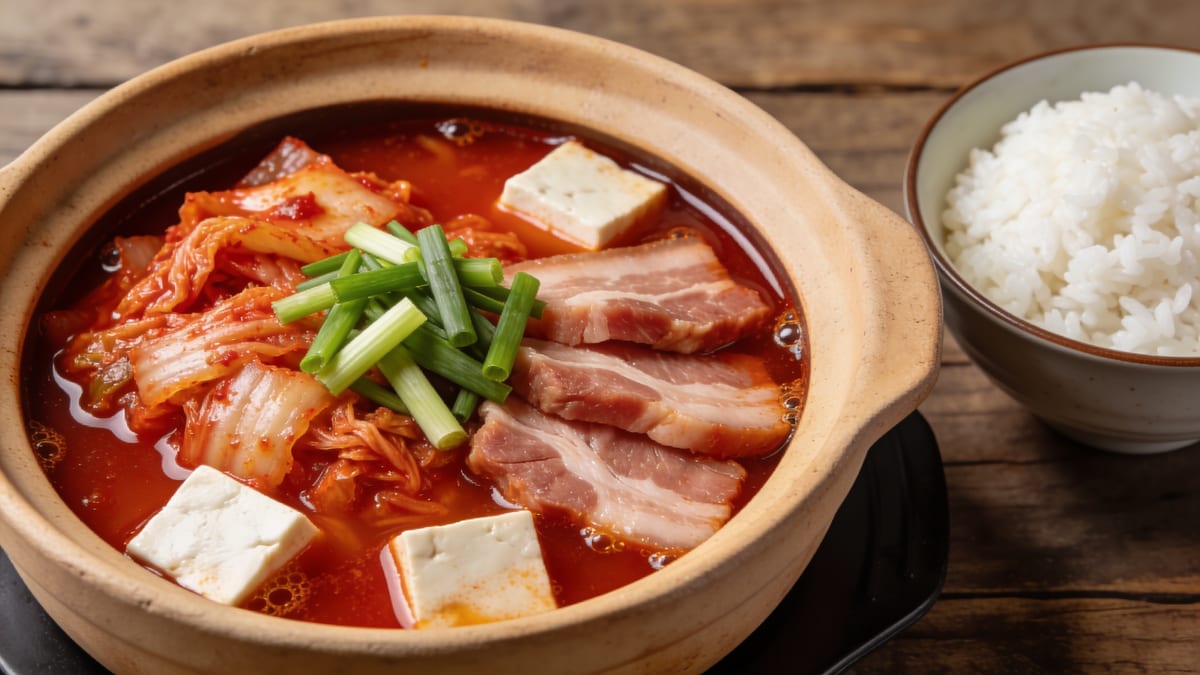
Sauté chopped pork belly with sour, well-fermented kimchi until the kimchi softens and deepens in colour. Add a little gochugaru and gochujang, then pour in water or stock (and the kimchi brine) and simmer until rich, 20 minutes. Add cubes of tofu and sliced spring onion near the end, season with soy and a pinch of sugar to balance, and serve bubbling with rice.
- Use sour, well-fermented (older) kimchi — it makes a far deeper, tastier stew than fresh kimchi.
- Fry the kimchi and pork first to build flavour before adding liquid.
- Add the kimchi brine for extra tang, and balance with a little sugar.
Equipment
- Pot or stone pot (ttukbaegi)
Składniki
Stew
- 300 g well-fermented (sour) kimchi, chopped
- 200 g pork belly, sliced
- 10 g gochugaru (Korean chilli flakes)
- 15 g gochujang, optional
- 500 ml water or stock, plus kimchi brine
- 1 tsp sugar; soy sauce to taste
To finish
- 200 g medium-firm tofu, cubed
- 2 spring onions, sliced
- 1 tsp sesame oil
Przygotowanie
- KROK01
In a pot, sauté the sliced pork belly until it renders some fat, then add the chopped kimchi and fry together until the kimchi softens and turns a deeper red, about 5 minutes.
- KROK02
Stir in the gochugaru (and gochujang, if using) and cook 1 minute to bloom the chilli.
- KROK03
Pour in the water or stock and a splash of the kimchi brine. Bring to a simmer and cook 20 minutes until rich and the pork is tender.
- KROK04
Add the cubed tofu and most of the spring onion and simmer gently 5 more minutes. Season with soy sauce and a pinch of sugar to balance the sourness.
- KROK05
Finish with a drizzle of sesame oil and the rest of the spring onion. Serve bubbling hot with a bowl of steamed rice.
Make ahead
An easy make-ahead that tastes even better the next day. Make the stew base ahead; add fresh tofu and spring onion when reheating to serve. A great way to use up a jar of over-fermented kimchi.
Storage
Keeps 3 days refrigerated and reheats beautifully — kimchi-jjigae, like the kimchi in it, deepens with time. Reheat gently. It freezes reasonably (the tofu texture changes slightly).
Variations
Tuna (chamchi) kimchi-jjigae
Use canned tuna instead of pork for a quick, popular version.
Vegetarian
Skip the pork, use a kelp-mushroom stock, and add extra tofu and mushrooms.
With spam
Add sliced spam or sausage for a hearty, retro-style stew.
Serve with
Nutrition per serving
Nutrition values are estimates based on the metric measurements. Adjust as needed.
Najczęstsze pytania
What kimchi is best for kimchi-jjigae?
Sour, well-fermented (older) kimchi — the kind that's gone tangy and a little fizzy in the back of the fridge. Its deeper acidity makes a far richer, more flavourful stew. Fresh, crunchy kimchi makes a flatter jjigae; this dish is the perfect home for over-fermented kimchi.
What cut of pork should I use?
Pork belly is classic — its fat enriches the broth as it renders. Pork shoulder also works. For a lighter stew use less pork, or try the popular canned-tuna (chamchi) version instead.
How do I build the flavour?
Fry the pork and kimchi together first, before adding any liquid — this caramelises the kimchi and renders the pork fat, building a deep base. Adding the kimchi brine and a touch of gochujang/gochugaru reinforces the tangy, spicy backbone.
Is kimchi-jjigae very spicy?
Moderately — the heat comes from the kimchi plus gochugaru and optional gochujang, and you control it. The dish is more about deep, sour-savoury kimchi flavour than pure heat. Balance the tang with a pinch of sugar and adjust the chilli to taste.
Do I need a stone pot (ttukbaegi)?
No, any pot works. A ttukbaegi holds heat and brings the stew to the table still bubbling, which is traditional and nice, but a regular saucepan makes exactly the same stew. Serve it as hot as possible with rice.
Cooked this? Rate it.
Real ratings from real cooks. We only show a score once enough of you have weighed in — no fabricated stars.