Lechon — Filipino Crispy Roast Pork Belly
The king of the Filipino fiesta table: pork roasted until the skin blisters into shattering, glassy crackling while the meat stays juicy and aromatic with lemongrass, garlic and bay. While the whole spit-roasted pig (lechon baboy) is the celebration showpiece, this home version — a rolled, stuffed pork belly (lechon belly) roasted to crisp-skinned perfection — delivers the same crackle and flavour from a regular oven. Served with a tangy liver-based lechon sauce or spiced vinegar.
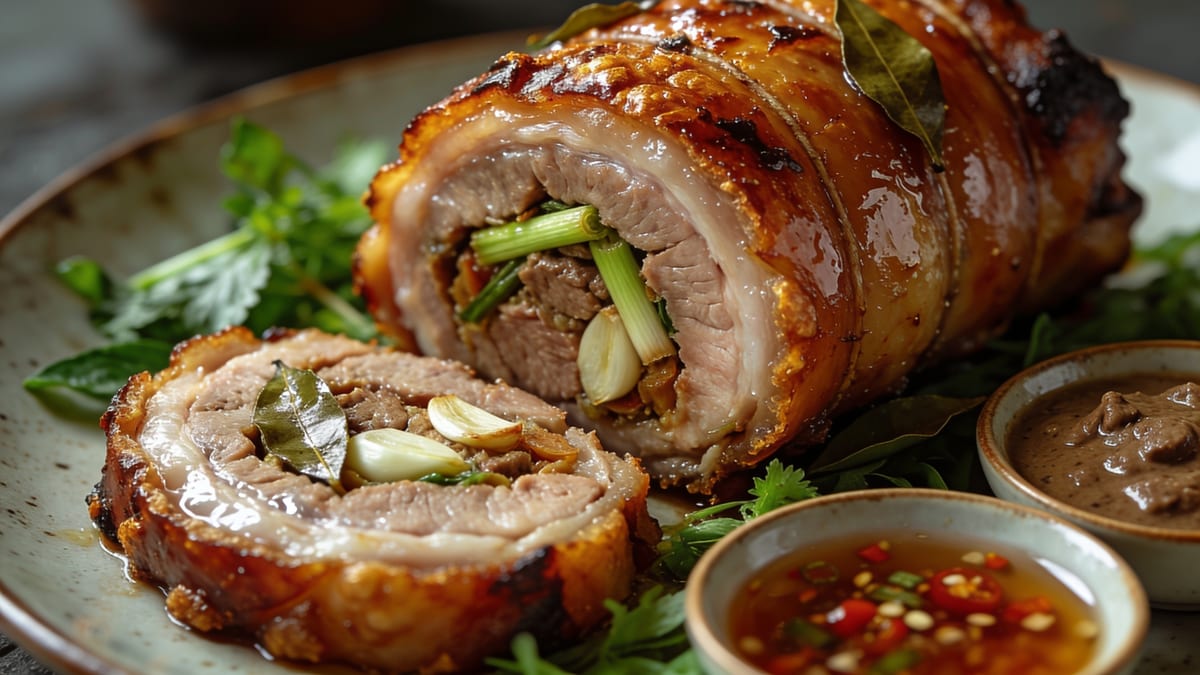
Score and salt the skin of a slab of pork belly and air-dry it uncovered in the fridge, ideally overnight, so it crisps when roasted. Season the meat side with garlic, lemongrass, bay, onion, salt and pepper, then roll it up (skin out) and tie it. Roast low at first so the meat turns tender, then crank the heat (or grill) at the end until the skin blisters all over into crackling. Rest, then carve into pieces with shards of crisp skin and serve with lechon sauce or spiced vinegar.
- Dry, salted, scored skin is everything — air-dry it uncovered (overnight) so it crackles, not toughens.
- Stuff the belly with lemongrass, garlic and bay, roll and tie it for juicy, fragrant meat.
- Roast low for tender meat, then high heat at the end to blister the skin into crackling.
Equipment
- Roasting rack & tray
- Kitchen string
- Fridge space (to air-dry)
Składniki
Pork
- 2 kg pork belly slab, skin on
- Salt (for the skin); white vinegar to wipe the skin
Stuffing/seasoning
- 1 head garlic, crushed; 3 stalks lemongrass, bruised
- Bay leaves; 1 onion, sliced; spring onion
- Salt, pepper (and optional fish sauce) for the meat side
To serve
- Lechon sauce (liver-based) or spiced vinegar (sukang sawsawan)
- Steamed rice
Przygotowanie
- KROK01
Pat the pork belly dry and score the skin in a fine crosshatch (don't cut into the meat). Wipe the skin with vinegar, rub all over with salt, and air-dry it uncovered on a rack in the fridge, ideally overnight — dry skin is the secret to crackling.
- KROK02
Season the meat side generously with the crushed garlic, bruised lemongrass, bay, onion, spring onion, salt and pepper. Roll the belly up tightly with the skin on the outside and tie firmly with string at intervals.
- KROK03
Roast on a rack at 160°C/325°F until the meat is tender and cooked through, about 1.5–2 hours.
- KROK04
Raise the oven to its highest heat (or use the grill/broiler), and roast until the skin blisters and crackles all over into deep golden, glassy crackling — watch closely so it doesn't burn, turning as needed, 20–30 minutes.
- KROK05
Rest the lechon 15–20 minutes. Carve into thick pieces, each with a shard of crisp skin, and serve with lechon sauce or spiced vinegar and plenty of steamed rice.
Make ahead
The overnight air-drying of the skin is itself an essential make-ahead step — start a day before. You can season and roll the belly ahead too. Roast to serve, as the crackling fades. And leftover lechon famously becomes lechon paksiw the next day, so it's a gift that keeps giving.
Storage
The crackling is best the day it's roasted; leftover pork keeps 3 days refrigerated and is the start of the legendary 'lechon paksiw' (leftover lechon simmered in vinegar, soy and liver sauce) — arguably as loved as the lechon itself. Reheat the pork in a hot oven to re-crisp the skin where possible. Store the sauce separately.
Variations
Lechon kawali
A quicker stovetop version: pork belly boiled until tender, then deep-fried until the skin is crisp.
Lechon baboy
The whole spit-roasted pig — the grand fiesta centrepiece (for big celebrations and pros).
Cebu-style
Stuffed heavily with lemongrass and aromatics (Cebu lechon is famous enough to eat with no sauce).
Serve with
Nutrition per serving
Nutrition values are estimates based on the metric measurements. Adjust as needed.
Najczęstsze pytania
What is lechon?
Lechon is the Filipino festive roast pork, with its hallmark shatteringly crisp skin and juicy, aromatic meat. The grandest form, lechon baboy, is a whole pig spit-roasted over coals — the centrepiece of fiestas and big celebrations. Home and restaurant versions include lechon belly (rolled, stuffed, roasted pork belly) and lechon kawali (deep-fried pork belly). It's widely considered the national celebration dish.
How do I get the skin to crackle?
Dry skin is essential. Score it, rub it with salt (and wipe with vinegar), and air-dry it uncovered in the fridge — ideally overnight — to draw out surface moisture. Then roast the meat low and slow first, and finish with a blast of very high heat (or the grill) so the dry, salted skin puffs and blisters into glassy crackling. Moisture is the enemy of crackling.
What's the difference between lechon belly and lechon kawali?
Both use pork belly for crispy skin, but the method differs. Lechon belly is seasoned, rolled, tied and roasted (an oven version of whole lechon), giving a stuffed, sliceable roast. Lechon kawali is pork belly first boiled until tender, then deep-fried in a wok (kawali) until the skin crisps — a faster, smaller-batch approach. Both deliver crackling and juicy meat.
What sauce goes with lechon?
Two classics: lechon sauce, a sweet-savoury-tangy sauce traditionally thickened with liver (the bottled 'Mang Tomas' style is iconic), and a simple spiced vinegar dip (sukang sawsawan) with garlic, chilli and onion. Some famous lechon (like Cebu's) is so well-seasoned it's eaten with no sauce at all. Serve with lots of rice.
What do I do with leftover lechon?
Make lechon paksiw — leftover lechon simmered in vinegar, soy sauce, garlic, bay and (classically) lechon/liver sauce until rich and tangy. It's a beloved dish in its own right, and for many Filipinos the leftovers are as exciting as the original roast. It's the perfect way to use up the meat once the crackling's gone.
Cooked this? Rate it.
Real ratings from real cooks. We only show a score once enough of you have weighed in — no fabricated stars.