Rendang Daging — Minangkabau Slow-cooked Beef
West Sumatra's masterpiece: beef simmered for hours in coconut milk and a fragrant spice paste until the liquid evaporates and the meat caramelizes in its own toasted, intensely savory coating. Often called the world's most delicious dish.
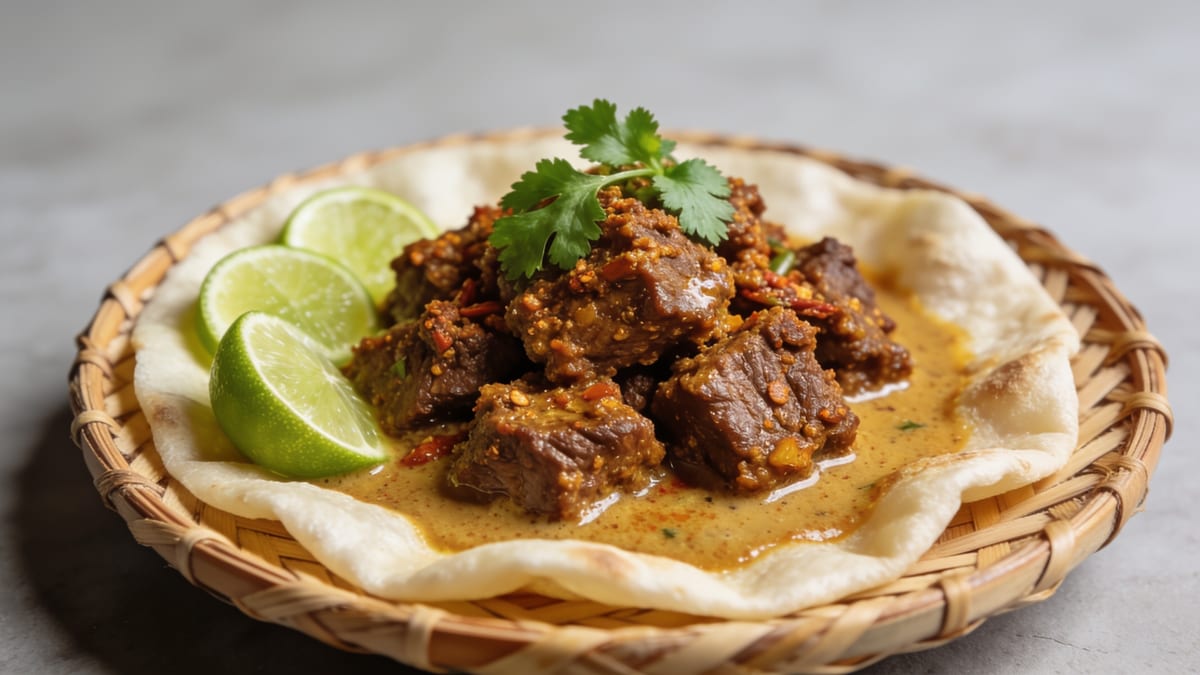
Blend a paste of shallot, garlic, ginger, galangal, lemongrass, and dried chili. Fry the paste, add beef, coconut milk, kaffir lime, turmeric leaf, and toasted coconut (kerisik). Simmer uncovered 3 hours, stirring more as it reduces, until the liquid is gone and the beef is dark, dry, and caramelized in its spice coating.
- Low and slow, uncovered — rendang is 'dry-cooked'; the magic is in the long reduction.
- Kerisik (toasted ground coconut) deepens the flavor and helps the sauce cling. Don't skip it.
- It's done when the oil from the coconut re-fries the meat and it turns dark brown, not when it's still saucy (that's kalio, the halfway stage).
Equipment
- Wide heavy pot or wok
- Blender or food processor
- Dry pan (for the kerisik)
Składniki
Spice paste (bumbu)
- 10 shallots, peeled
- 6 garlic cloves
- 8 dried red chilies, soaked (or 3 tbsp chili paste)
- 30 g fresh ginger
- 30 g galangal
- 3 candlenuts (or macadamia)
Braise
- 1 kg beef chuck or shin, in 4 cm cubes
- 30 ml coconut or neutral oil
- 3 stalks lemongrass, bruised
- 5 kaffir lime leaves
- 1 turmeric leaf, knotted (optional)
- 800 ml coconut milk
- 50 g kerisik (toasted ground coconut)
- 5 g salt, to taste
- 10 g palm sugar
Przygotowanie
- KROK01
Blend the shallots, garlic, soaked chilies, ginger, galangal, and candlenuts into a smooth paste. Separately, toast desiccated coconut in a dry pan until deep golden, then grind to an oily paste — that's kerisik.
- KROK02
Heat the oil in a wide pot and fry the spice paste with the bruised lemongrass and lime leaves 5–8 minutes until fragrant and the raw smell is gone.
- KROK03
Add the beef and turn to coat. Pour in the coconut milk, add the turmeric leaf, salt, and palm sugar. Bring to a gentle simmer.
- KROK04
Simmer uncovered on low 2 hours, stirring occasionally. The coconut milk slowly reduces and the colour deepens. This is the 'kalio' stage — saucy and golden-brown.
- KROK05
Stir in the kerisik. Keep cooking, stirring more frequently now, another 45–60 minutes as the liquid disappears and the oil renders out and starts re-frying the meat.
- KROK06
Cook until the rendang is dark mahogany-brown, dry, and the spice paste clings to every glossy piece. Taste and adjust salt. Rest before serving — it's even better the next day.
Make ahead
Make it 1–2 days ahead on purpose. The long-cooked spices and beef round out and intensify with rest. Reheat gently with a splash of water if needed.
Storage
A traditional preserved dish — keeps 1 week refrigerated and freezes 3 months. The flavor deepens markedly over days; many insist day-three rendang is the best.
Variations
Kalio (the wet stage)
Stop at the saucy golden-brown stage for a milder, gravied version — common in everyday Indonesian home cooking.
Rendang ayam
Use chicken instead of beef; reduce the simmer to about 90 minutes.
Rendang jengkol / nangka
Vegetarian versions use young jackfruit (nangka) in place of beef.
Serve with
Nutrition per serving
Nutrition values are estimates based on the metric measurements. Adjust as needed.
Najczęstsze pytania
What's the difference between rendang and kalio?
They're the same dish at different stages. Kalio is the earlier, saucy, golden-brown stage; rendang is cooked further until the liquid evaporates and the meat is dark, dry, and caramelized. True rendang keeps for days because it's nearly dry.
What is kerisik?
Toasted desiccated coconut ground to an oily paste. It adds a deep, nutty flavor and helps the spices cling to the meat. It's a defining element of an authentic rendang — toast it well, until deep golden.
Why cook it uncovered for so long?
Rendang is 'dry-cooked' — the hours of uncovered simmering reduce the coconut milk until its oil renders out and re-fries the meat in the spice paste. That long reduction is what creates the signature dark colour and concentrated flavor.
Can I shortcut it?
Not really, without losing what makes it rendang. A pressure cooker can tenderize the beef faster, but you still need the long open reduction at the end to drive off the liquid and develop the colour and depth.
What beef should I use?
A tough, collagen-rich braising cut — chuck or shin — which becomes tender over the long cook. Lean cuts dry out and won't develop the right texture.
Cooked this? Rate it.
Real ratings from real cooks. We only show a score once enough of you have weighed in — no fabricated stars.