Tahdig — Persian Crispy Saffron Rice
The crown of the Persian table: parboiled basmati steamed under a lid until the bottom forms a golden, saffron-stained, shatteringly crisp crust. Flipped out like a cake, the prized tahdig is fought over at every Iranian meal.
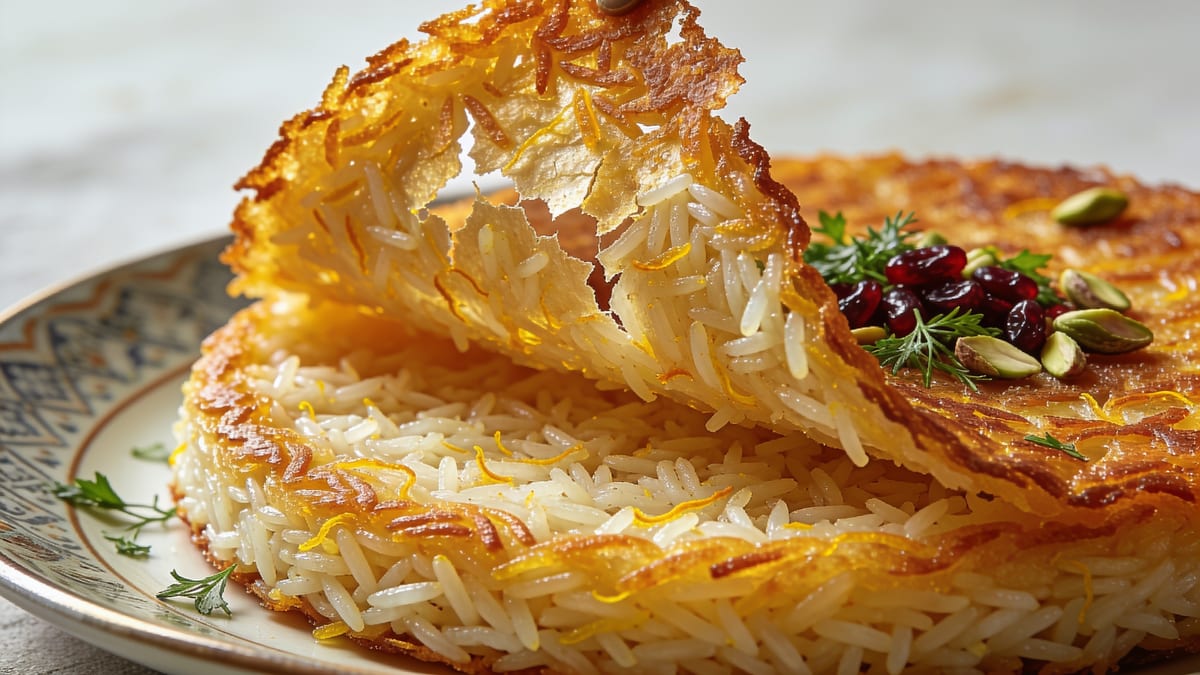
Soak and parboil basmati in heavily salted water until al dente, then drain. Layer a flavored base (oil/butter, sometimes yogurt and saffron, or thin potato/bread slices) in the pot, mound the rice on top in a pyramid, poke steam holes, wrap the lid in a towel, and steam on low 45–50 minutes (dam) until the bottom forms a deep-gold crust. Invert onto a plate to reveal the tahdig.
- Parboil, then steam (the two-stage 'chelow' method) — this is what makes the grains fluffy and the bottom crisp.
- Wrap the lid in a towel (or use a damkoni) to trap steam and keep condensation off the rice.
- Low, patient heat. Rushing burns the crust; too low and it never sets. Listen and smell — toasty, not acrid.
Equipment
- Non-stick pot with a tight lid (forgiving for the flip)
- Clean kitchen towel
- Fine sieve
- Plate larger than the pot
Składniki
Rice
- 400 g basmati rice
- 30 g salt, for the parboiling water
- 2.5 L water
Tahdig base & finish
- 60 ml neutral oil or melted butter
- 60 g plain yogurt, optional, for a richer crust
- 1 large pinch saffron threads, ground and steeped in 3 tbsp hot water
- 1 potato, thinly sliced (optional, for potato tahdig)
- 20 g butter, to finish
Przygotowanie
- KROK01
Rinse the basmati until the water runs clear, then soak in cold salted water at least 30 minutes (up to a few hours). This is key for long, separate grains.
- KROK02
Bring the 2.5 L water with the 2 tbsp salt to a rolling boil. Drain the rice and add it. Boil 6–8 minutes until the grains are soft on the outside but still firm in the center (al dente). Drain in a fine sieve and rinse briefly.
- KROK03
In a non-stick pot, heat the oil (and a spoon of the saffron water). If using, mix a cup of the parboiled rice with the yogurt and saffron and spread it on the bottom — or lay thin potato slices in a single layer. This layer becomes the crust.
- KROK04
Gently pile the rest of the rice on top in a pyramid (not packed down). Poke 4–5 holes through to the bottom with the handle of a spoon to let steam escape.
- KROK05
Drizzle over the remaining saffron water and dot with butter. Wrap the lid in a clean towel and cover tightly. Cook on medium 8–10 minutes to get the crust going, then reduce to low and steam 40–45 minutes. Don't lift the lid.
- KROK06
Rest the pot off the heat on a cool, damp towel 5 minutes (it helps release the crust). Run a knife around the edge, place a large plate over the pot, and invert confidently. The golden tahdig should sit on top like a cake. If it sticks, scrape pieces and arrange them — it tastes the same.
Make ahead
Soak the rice and steep the saffron ahead. The cooking is hands-off once it's steaming, but tahdig is a serve-immediately dish — the crisp crust waits for no one.
Storage
Best fresh — the crust softens with time. Leftover rice keeps 3 days; the crust won't re-crisp but is still good. Reheat gently with a splash of water.
Variations
Potato tahdig
Line the pot with a single layer of thin potato slices — the most forgiving, beloved version. The potatoes turn into golden crisp coins.
Bread tahdig (nan tahdig)
Line with flatbread (lavash) for a crisp, savory bread crust under the rice.
Yogurt-saffron tahdig
Mix the bottom layer of rice with yogurt and saffron for the richest, most golden crust — the celebratory version.
Serve with
Nutrition per serving
Nutrition values are estimates based on the metric measurements. Adjust as needed.
Najczęstsze pytania
What rice must I use?
Long-grain basmati, and good quality. Aged basmati gives the longest, most separate grains. Other rices won't give the right fluffy 'chelow' texture or reliable crust. Rinse and soak it — both steps matter.
Why parboil and then steam?
This two-stage method (chelow) is the heart of Persian rice. Parboiling in lots of salted water cooks the grains to al dente and seasons them; the steaming (dam) finishes them into fluffy, separate grains while forming the crisp tahdig on the bottom. One stage alone won't do it.
My crust stuck to the pot. What went wrong?
Usually not enough fat on the bottom, heat too high (it burned and gripped), or you flipped too soon. Use a non-stick pot while learning, enough oil, patient low heat, and rest the pot on a damp towel before flipping. Even if it breaks, scrape the pieces — it's just as delicious.
Why wrap the lid in a towel?
The towel (or a fitted damkoni lid) absorbs condensation so water doesn't drip back onto the rice and make it soggy. Trapping dry steam is what fluffs the upper rice while the bottom crisps.
How do I know the tahdig is ready?
Trust your nose and ears: you'll smell a toasty, popcorn-like aroma (not burning) and may hear gentle crackling after 40+ minutes. The crust should be deep gold. It's the trickiest part — it takes a few tries to read your own stove.
Cooked this? Rate it.
Real ratings from real cooks. We only show a score once enough of you have weighed in — no fabricated stars.