Tamales — Mexican Masa Steamed in Corn Husks
Mexico's ancient comfort food and fiesta staple: a light, fluffy masa dough whipped with lard, spread on softened corn husks, filled with a chile-braised meat (or cheese and chiles), folded and steamed until set. Making tamales is a communal labour of love — the famous tamalada gathering — and unwrapping a hot one, tender masa around a savoury heart, is one of the great pleasures of Mexican home cooking.
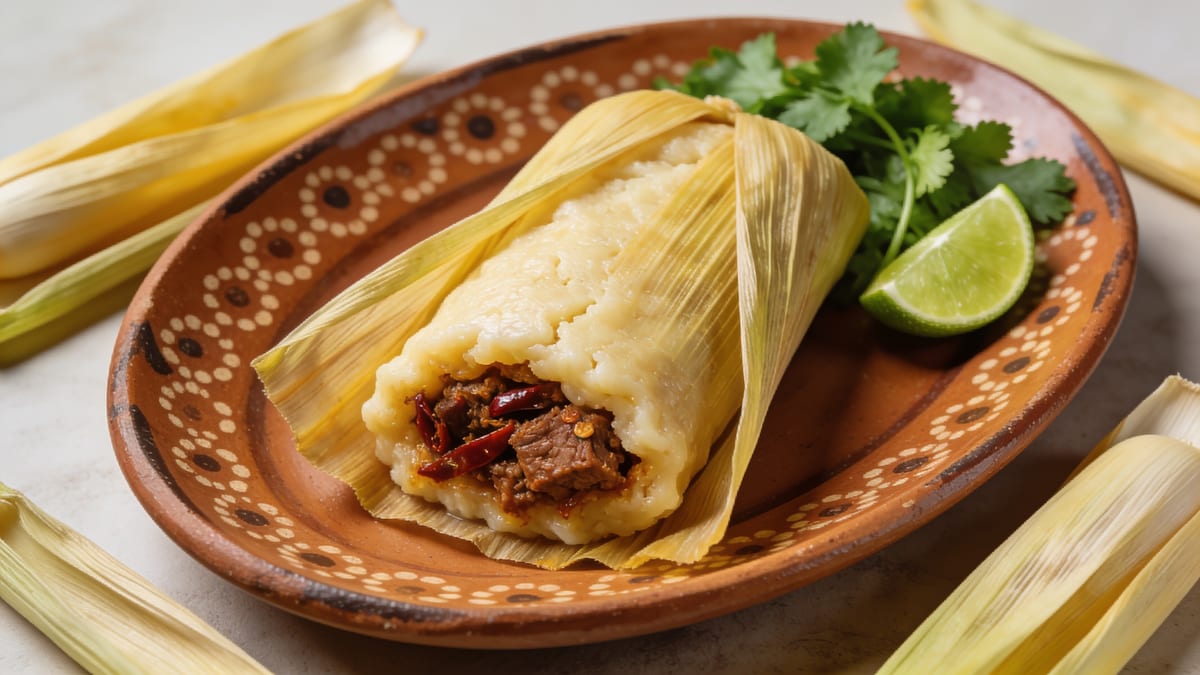
Soak dried corn husks until pliable. Make a filling — pork or chicken braised in a red chile sauce. Beat lard until fluffy, then beat in masa harina (or fresh masa), broth, salt and baking powder until the dough is light and spreadable (a test bit should float in water). Spread masa on each husk, add a spoon of filling down the centre, fold the husk around it, and stand them upright in a steamer. Steam for about 60–90 minutes until the masa is set and pulls cleanly from the husk. Rest a few minutes, then unwrap and eat.
- Beat the lard (and the masa) until really light — fluffy masa is the difference between tender and dense tamales.
- Soak the corn husks until soft and pliable so they fold without cracking.
- Don't overfill; fold and steam upright, and let them rest so the masa firms before unwrapping.
Equipment
- Large steamer / tamalera
- Stand mixer or bowl + whisk
- Spoon/spatula
Składniki
Wrappers & filling
- Dried corn husks (hojas), soaked
- 600 g pork or chicken, braised in red chile sauce and shredded
Masa dough
- 500 g masa harina (or 1 kg fresh masa)
- 200 g lard (or vegetable shortening)
- 600 ml warm broth (as needed)
- 1 tsp baking powder; 1½ tsp salt
Przygotowanie
- KROK01
Soak the dried corn husks in warm water until soft and pliable, at least 30 minutes. Have your chile-braised, shredded meat filling ready and cooled.
- KROK02
Beat the lard until light and fluffy. Mix the masa harina with the baking powder and salt, then beat it into the lard alternately with warm broth until you have a soft, spreadable, fluffy dough. Test: a small piece should float in cold water.
- KROK03
Pat a husk dry and spread a thin layer of masa over the wide end, leaving borders. Spoon a line of filling down the centre. Fold the long sides of the husk over so the masa encloses the filling, then fold up the narrow bottom. Don't overfill.
- KROK04
Stand the tamales upright, folded-side down/open-end up, packed in a steamer over simmering water (don't let water touch them). Cover and steam 60–90 minutes, topping up water, until the masa is set and peels cleanly away from the husk.
- KROK05
Let the tamales rest a few minutes off the heat to firm up, then unwrap and serve hot — with salsa, crema or alongside a bowl of beans.
Make ahead
The ultimate make-ahead and batch dish — that's the point of a tamalada. Make the filling and even assemble the tamales a day ahead, then steam to serve. Steamed tamales keep and freeze brilliantly; reheat by steaming. Making a big batch to freeze is traditional and practical.
Storage
Keep 4–5 days refrigerated in their husks and reheat beautifully (steam, or pan-crisp the unwrapped tamal). They freeze excellently — steam from frozen. Tamales were practically designed for making in big batches and keeping, which is part of why they're festive food.
Variations
Rajas con queso
A vegetarian filling of roasted poblano strips (rajas) and cheese.
Verdes / dulces
Green-sauce chicken tamales, or sweet tamales (dulces) tinted pink with raisins and cinnamon.
Oaxacan (banana leaf)
Larger tamales wrapped in banana leaves instead of corn husks, common in southern Mexico.
Serve with
Nutrition per serving
Nutrition values are estimates based on the metric measurements. Adjust as needed.
Najczęstsze pytania
What is masa, and can I use masa harina?
Masa is the nixtamalized corn dough at the heart of tamales. You can use fresh masa from a tortillería, or reconstitute masa harina (dried masa flour, like Maseca) with warm liquid — both work well. For tamales, the masa is beaten with fat and a little baking powder so it's light; plain cornmeal or polenta is not a substitute for nixtamalized masa.
Why are my tamales dense or gummy?
Usually the masa wasn't beaten light enough, or it was too wet/dry. Beat the lard until fluffy and beat the masa until airy — the classic test is that a small ball of dough floats in cold water. Don't overfill, steam them long enough for the masa to set, and let them rest before unwrapping so they firm up.
How do I know when tamales are done?
They're done when the masa is set and pulls cleanly away from the corn husk without sticking — usually after 60–90 minutes of steaming (larger ones take longer). If the masa still sticks to the husk and looks wet, they need more time. Let them rest a few minutes after steaming, which firms the masa further.
Can I make tamales ahead or freeze them?
Absolutely — they're made for it. You can assemble them a day ahead and steam to serve, and steamed tamales refrigerate for several days and freeze excellently. Reheat by steaming (from frozen is fine) or by crisping an unwrapped tamal in a pan. Big-batch cooking and freezing is part of the tradition.
What's a tamalada?
A tamalada is the communal gathering where family and friends come together to make tamales by the dozen — one person spreads masa, another fills, another folds. Because tamales are labour-intensive, making them is traditionally a social event, especially around Christmas and celebrations in Mexico. Many hands make the work (and the memories).
Cooked this? Rate it.
Real ratings from real cooks. We only show a score once enough of you have weighed in — no fabricated stars.