Ash reshteh — sopa persa de ervas, macarrão e leguminosas
Uma sopa persa espessa e nutritiva que é quase uma refeição completa: um caldo verde profundo carregado de ervas frescas, espinafre, três tipos de feijão e lentilhas, e reshteh (macarrão persa), finalizado com o kashk ácido (soro de leite fermentado), cebolas caramelizadas adocicadas e alho frito com hortelã. O ash reshteh é a sopa das reuniões, do Nowruz (Ano-Novo persa) e dos dias frios — reconfortante, herbácea e complexa, com o macarrão representando simbolicamente o desembaraçar dos caminhos da vida.
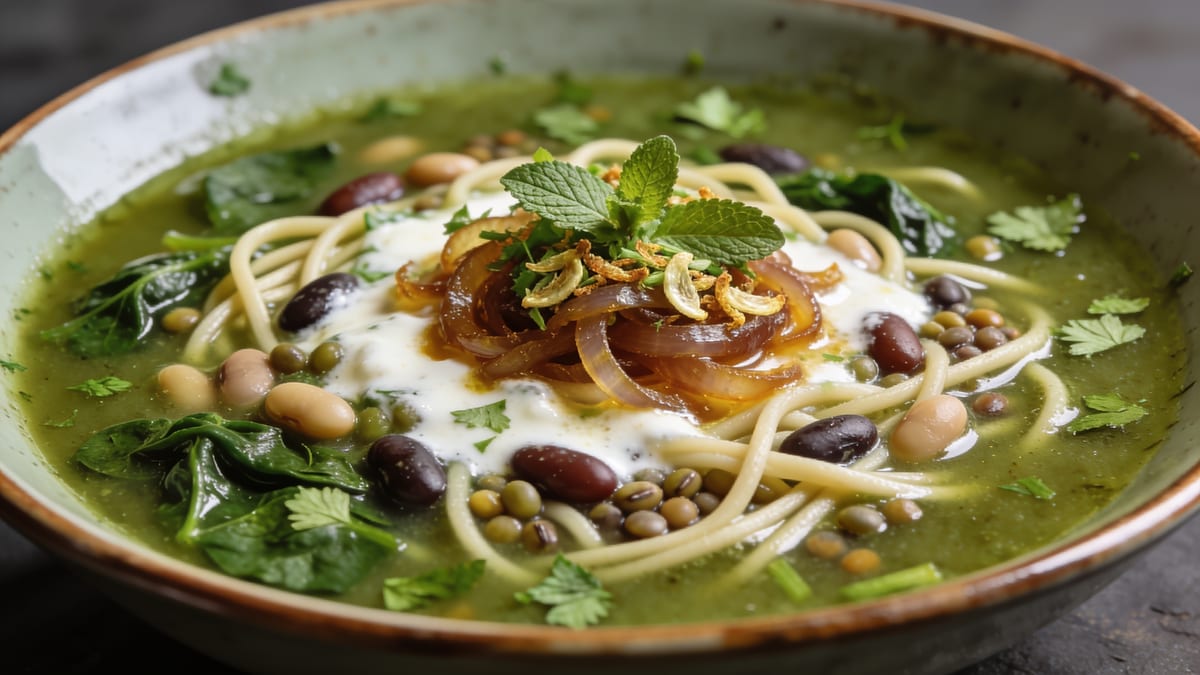
Cozinhe em fogo brando os feijões deixados de molho (grão-de-bico, feijão vermelho, feijão branco) e as lentilhas com cebola e cúrcuma até ficarem macios. Acrescente uma quantidade enorme de ervas frescas picadas — salsinha, coentro, endro, cebolinha — e espinafre, e cozinhe até tudo amolecer e a sopa ficar espessa e verde. Adicione o reshteh (macarrão persa) perto do final e cozinhe até ficar macio, mexendo para a sopa continuar espessa sem grudar. Ajuste o tempero e sirva cada tigela coberta com kashk (ou iogurte como substituto), cebolas fritas bem caramelizadas e alho frito crocante com hortelã seca (na'na dagh).
- Muitas ervas frescas e verduras dão ao ash reshteh sua cor verde profunda e seu sabor característicos.
- O reshteh (macarrão persa) entra perto do final; ele engrossa a sopa e não deve virar papa.
- As coberturas — kashk, cebolas fritas e alho frito com hortelã — são essenciais, não opcionais.
Equipment
- Panela grande
- Frigideira (para as coberturas)
Ingredientes
Base da sopa
- Feijões variados (grão-de-bico, feijão vermelho, feijão branco), deixados de molho
- 100 g lentilhas
- 1 cebola picada; 1 colher (chá) de cúrcuma; óleo; sal, pimenta-do-reino
Ervas e macarrão
- Maços grandes de salsinha, coentro, endro e cebolinha, picados
- Um punhado grande de espinafre picado
- 200 g reshteh (macarrão persa)
Coberturas
- Kashk (soro de leite fermentado) — ou iogurte espesso como substituto
- Cebolas fritas caramelizadas (piaz dagh)
- Alho frito + hortelã seca (na'na dagh)
Modo de preparo
- ETAPA01
Refogue a cebola picada com a cúrcuma no óleo em uma panela grande, então acrescente os feijões escorridos do molho e as lentilhas com bastante água e cozinhe em fogo brando até ficarem macios, cerca de 45–60 minutos.
- ETAPA02
Junte a grande quantidade de ervas frescas picadas e o espinafre. Cozinhe até tudo amolecer e a sopa ficar espessa e de um verde profundo, 20–30 minutos, acrescentando água conforme necessário.
- ETAPA03
Acrescente o reshteh (macarrão persa) e cozinhe até ficar macio, mexendo com frequência para a sopa espessa não grudar no fundo, cerca de 10 minutos. Tempere bem.
- ETAPA04
Frite cebolas fatiadas lentamente até ficarem bem douradas (piaz dagh). À parte, frite o alho e misture rapidamente a hortelã seca no óleo quente (na'na dagh) — sem deixar a hortelã queimar.
- ETAPA05
Sirva o ash em tigelas e finalize cada uma com um fio de kashk (ou iogurte), as cebolas caramelizadas e o alho frito com hortelã. Sirva quente — é uma refeição completa por si só.
Make ahead
Faça a base da sopa (feijões, ervas) com antecedência — ela melhora de um dia para o outro. Adicione o macarrão mais perto de servir para que não amoleça demais, ou aceite uma sopa mais espessa e macia no dia seguinte (solte com água). As cebolas fritas e o na'na dagh podem ser feitos antes e guardados. É comida naturalmente de panelão, para uma multidão ou para o Nowruz.
Storage
Dura 3 dias na geladeira e engrossa ainda mais (solte com água ao reaquecer); o sabor se aprofunda. O macarrão amolece com o tempo, então é melhor consumir em até uns dois dias. Congela razoavelmente bem. Faça as coberturas (cebolas fritas, alho com hortelã) na hora ou guarde-as separadas, e adicione o kashk em cada tigela na hora de servir.
Variations
Vegana
Dispense o kashk (ou use um iogurte vegano/creme de castanha-de-caju) para um ash totalmente vegano — a base da sopa já é vegetal.
Faça seu próprio reshteh
Use o macarrão persa reshteh se conseguir; linguine ou outro macarrão achatado servem de substituto (o reshteh tem um caráter um pouco diferente, às vezes salgado).
Outros ash
O Irã tem muitas sopas "ash"; esta, de ervas e macarrão, é a mais famosa, especialmente nas celebrações.
Serve with
Nutrition per serving
Nutrition values are estimates based on the metric measurements. Adjust as needed.
Perguntas frequentes
O que é reshteh?
Reshteh é o macarrão persa — tiras finas e achatadas de massa de trigo, tradicionalmente um pouco salgadas, feitas especialmente para o ash e outros pratos. Ele engrossa a sopa e carrega significado simbólico (os fios representam os caminhos da vida; "reshteh" também remete a tomar as rédeas dos próprios assuntos). Você o encontra em lojas persas e do Oriente Médio; massas achatadas como o linguine são um substituto razoável.
O que é kashk?
Kashk é um derivado ácido e saboroso de soro de leite fermentado, vendido como líquido espesso ou pasta, regado sobre o ash reshteh (e outros pratos persas) para acrescentar uma riqueza azeda e umami característica. É central para o sabor autêntico. Se não encontrar, iogurte espesso dessorado (ou creme azedo) levemente diluído é o substituto habitual, embora o sabor seja mais suave que o do kashk verdadeiro.
Por que tantas ervas?
A quantidade generosa de ervas frescas — salsinha, coentro, endro, cebolinha — mais o espinafre é o que dá ao ash reshteh sua cor verde profunda característica, seu aroma fresco e seu sabor complexo. É uma sopa protagonizada pelas ervas, não apenas uma sopa de feijão com um enfeite. Não tenha medo: maços grandes reduzem drasticamente ao cozinhar, formando a base espessa e verdejante.
Quais são as coberturas e preciso delas?
Três coberturas clássicas finalizam o ash reshteh e são essenciais para a experiência: kashk (soro ácido), piaz dagh (cebolas fritas bem caramelizadas) e na'na dagh (hortelã seca frita no óleo com alho). Elas acrescentam acidez, doçura, crocância e aroma, transformando a sopa. Servir o ash sem elas pareceria incompleto para qualquer iraniano — deixe-as à mesa para cada um misturar.
O ash reshteh é um prato de ocasião especial?
É ao mesmo tempo comida de conforto do dia a dia e prato de celebração. O ash reshteh é especialmente associado ao Nowruz (Ano-Novo persa) e às reuniões, e costuma ser feito em grandes quantidades para compartilhar (às vezes como caridade ou para marcar votos e desejos). Mas também é uma amada e substanciosa sopa de inverno em qualquer época. Seu simbolismo — desembaraçar os "fios" da vida — reforça seu papel festivo.
Cooked this? Rate it.
Real ratings from real cooks. We only show a score once enough of you have weighed in — no fabricated stars.