Idli — bolinhos de arroz no vapor do sul da Índia
O bolinho no vapor macio como nuvem com que o sul da Índia acorda: uma massa fermentada de arroz e urad dal (feijão-preto indiano sem casca), moída, deixada borbulhar e crescer de um dia para o outro e então cozida no vapor em pequenas formas redondas até ficar leve e fofa. O idli está entre os cafés da manhã mais saudáveis — cozido no vapor, não frito, e naturalmente probiótico graças à fermentação — servido quente com chutney de coco e sambar para mergulhar. Suave, fofinho e infinitamente reconfortante, é um clássico de Tamil Nadu a Karnataka e uma introdução gentil à magia da fermentação do sul da Índia.
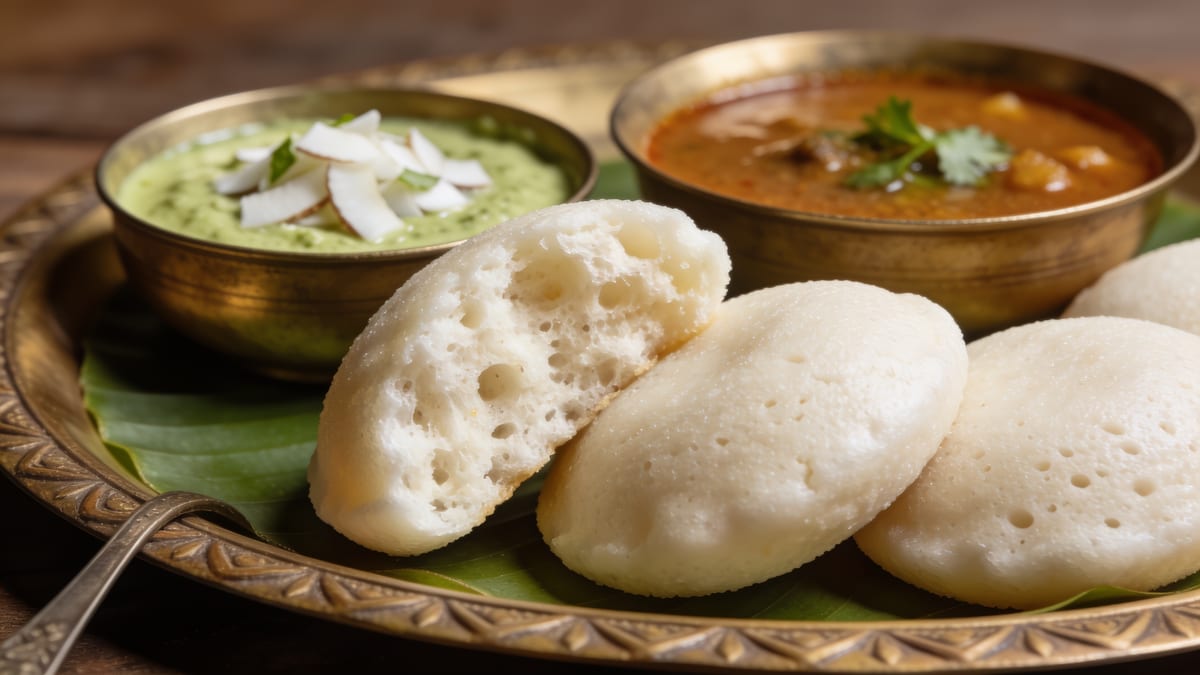
Deixe de molho, separadamente e por várias horas, o arroz para idli (ou arroz parboilizado) e o urad dal sem casca, com um pouco de feno-grego. Moa até obter uma massa lisa e grossa — o urad dal, em especial, deve ficar fofo e aerado — usando um pouco da água do molho, e então misture tudo com sal. Deixe a massa fermentar em lugar morno de um dia para o outro (8–12 horas), até dobrar de volume, borbulhar e ter um cheiro agradavelmente azedinho; esse crescimento é o que torna o idli macio. Distribua a massa nas forminhas de idli untadas e cozinhe no vapor por cerca de 10–12 minutos, até um palito sair limpo e eles estarem estufados e esponjosos. Sirva quente com chutney de coco e sambar.
- Moa o urad dal até ficar leve e aerado — é ele que prende o ar e deixa o idli fofinho.
- Fermente em local morno até a massa dobrar e borbulhar (8–12 horas) — a fermentação é essencial.
- Cozinhe no vapor sem passar do ponto e sirva quente e fresquinho com chutney de coco e sambar.
Equipment
- Moedor úmido (wet grinder) ou liquidificador
- Forminhas de idli / panela a vapor
- Tigela grande (para fermentar)
Ingredientes
Massa
- 300 g arroz para idli ou arroz parboilizado
- 150 g urad dal sem casca (feijão-preto indiano partido)
- ½ colher de chá de sementes de feno-grego; sal
Para servir
- Chutney de coco
- Sambar (ensopado de lentilhas e legumes)
Modo de preparo
- ETAPA01
Lave e deixe de molho o arroz numa tigela e o urad dal com o feno-grego em outra, cada um em bastante água, por 4–6 horas.
- ETAPA02
Moa o urad dal até virar uma pasta lisa, bem fofa e aerada, acrescentando um pouco da água do molho conforme necessário. Moa o arroz até obter uma massa lisa com leve granulação. Junte os dois numa tigela grande com sal, misturando bem com a mão. A massa deve ficar grossa, mas ainda escorrer.
- ETAPA03
Cubra e deixe a massa em lugar morno para fermentar por 8–12 horas (de um dia para o outro), até dobrar de volume, ficar cheia de bolhas e ter um cheiro agradavelmente azedinho. É esse crescimento que dá ao idli sua textura macia e esponjosa.
- ETAPA04
Mexa delicadamente a massa crescida. Unte as forminhas de idli e distribua a massa. Cozinhe no vapor, sobre água fervente, por cerca de 10–12 minutos, até estufarem e um palito espetado sair limpo. Não deixe tempo demais no vapor, ou eles ressecam.
- ETAPA05
Deixe os idlis descansarem um ou dois minutos, depois passe uma colher molhada ao redor de cada um para desenformar. Sirva quente com chutney de coco e uma tigela de sambar para mergulhar.
Make ahead
O idli é feito sob medida para o preparo antecipado: a massa precisa fermentar de um dia para o outro e depois dura vários dias na geladeira, então você pode moer uma quantidade grande e cozinhar idlis fresquinhos no vapor por várias manhãs. Leve ao vapor na hora de servir para o resultado mais macio. O chutney e o sambar também podem ser feitos com antecedência. Essa massa que espera é justamente o que faz do idli um café da manhã tão prático para o dia a dia.
Storage
A massa fermentada de idli dura 4–5 dias na geladeira (a fermentação desacelera no frio) — deixe voltar à temperatura ambiente antes de levar ao vapor e não mexa demais. Os idlis prontos são melhores frescos e quentes, mas duram um dia na geladeira; passe-os de novo pelo vapor para amaciá-los. Idlis que sobraram ficam ótimos fritos, como “idli fry”, ou picados num refogado rápido de temperos. Não deixe a massa fermentada tempo demais em temperatura ambiente, ou ela azeda demais.
Variations
Rava idli
Uma versão mais rápida, feita com semolina (rava) e iogurte, sem necessidade de fermentação.
Idli masala / recheado
Acrescente temperos refogados, legumes ou um recheio à massa para idlis saborizados.
Idli com sobras
Frite idlis do dia anterior com sementes de mostarda, folhas de curry e pimenta para fazer idli fry / podi idli.
Serve with
Nutrition per serving
Nutrition values are estimates based on the metric measurements. Adjust as needed.
Perguntas frequentes
O que é idli?
O idli é um bolinho macio e fofo cozido no vapor, originário do sul da Índia, feito de uma massa fermentada de arroz e urad dal sem casca (feijão-preto indiano). A massa é moída, deixada fermentar de um dia para o outro e depois cozida no vapor em pequenas formas redondas. O idli é um café da manhã imensamente popular em todo o sul da Índia e no Sri Lanka, servido quente com chutney de coco e sambar. Por ser cozido no vapor e fermentado (não frito), é leve, de fácil digestão e considerado um dos cafés da manhã mais saudáveis — suave, fofinho e reconfortante.
Por que meus idlis não crescem / por que ficam duros?
Idlis macios dependem de duas coisas: uma massa de urad dal bem moída e aerada (que prende o ar) e uma fermentação adequada de um dia para o outro (que a faz crescer). Se seus idlis estão densos ou duros, provavelmente a massa não fermentou o suficiente — ela precisa de um lugar morno e de 8–12 horas até dobrar e borbulhar —, ou o urad dal não foi moído fofo o bastante, ou você mexeu demais na massa crescida e expulsou o ar. O frio retarda a fermentação, então procure um lugar morno (como o forno com a luz acesa).
Que arroz e que dal devo usar?
A combinação clássica é arroz para idli (um arroz parboilizado de grão curto) ou arroz parboilizado comum, com urad dal partido e sem casca (feijão-preto indiano). Uma proporção comum fica em torno de 2 a 3 partes de arroz para 1 de urad dal, mais um pouco de feno-grego, que ajuda na fermentação e no sabor. É o urad dal que dá leveza ao idli, então não economize nele nem deixe de moê-lo até ficar aerado. Algumas pessoas acrescentam um punhado de poha (arroz achatado) ou usam idli rava (semolina para idli) na parte do arroz.
Preciso de uma panela especial para idli?
As forminhas de idli (bandejas empilhadas com cavidades rasas) colocadas numa panela a vapor dão o formato clássico e um cozimento uniforme, e custam pouco. Mas não são estritamente necessárias — você pode cozinhar a massa no vapor em qualquer xícara pequena untada, ramequim ou travessa rasa dentro de uma panela tampada ou vaporeira sobre água fervente, ajustando o tempo. O segredo é vapor suave e não passar do ponto. Uma panela de pressão sem o peso, ou um suporte de idli dentro dela, também funciona.
Idli é saudável? É vegano?
O idli é amplamente considerado um dos cafés da manhã mais saudáveis: é cozido no vapor em vez de frito, tem pouca gordura, e a fermentação de um dia para o outro o torna mais fácil de digerir e acrescenta probióticos benéficos, além de melhorar a disponibilidade dos nutrientes. É naturalmente vegano e sem glúten, feito apenas de arroz, urad dal e sal. Servido com sambar (lentilhas e legumes) e chutney, é uma refeição equilibrada, leve e nutritiva, que cai bem no estômago.
Cooked this? Rate it.
Real ratings from real cooks. We only show a score once enough of you have weighed in — no fabricated stars.