Rajma masala — curry de feijão vermelho do norte da Índia
A comida caseira definitiva do norte da Índia: feijão vermelho cozido até ficar cremoso em um molho rico e condimentado de cebola e tomate, com gengibre, alho e o calor do garam masala. O rajma masala — quase sempre comido com arroz branco como "rajma chawal" — é o amado almoço de domingo dos lares punjabi: farto, caseiro e profundamente satisfatório. O segredo é cozinhar o feijão até ficar realmente macio e deixar o molho apurar até engrossar e envolver cada grão.
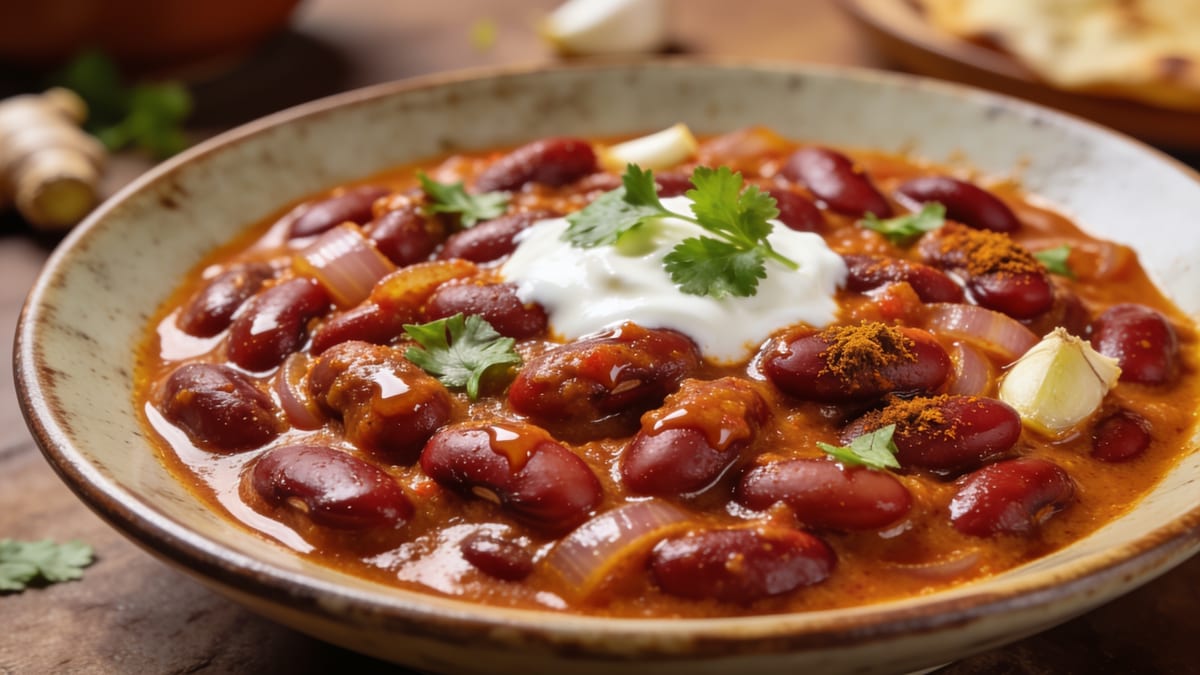
Deixe o feijão vermelho seco de molho de um dia para o outro e cozinhe até ficar completamente macio (a panela de pressão é ideal). Prepare a base: frite o cominho, depois a cebola até dourar bem, junte a pasta de gengibre e alho, então um purê liso de tomate e as especiarias moídas (cúrcuma, coentro, pimenta, garam masala) e cozinhe até o óleo se separar e o masala ficar bem apurado. Adicione o feijão cozido com parte da água do cozimento, amasse alguns grãos para engrossar e cozinhe até o molho ficar espesso, cremoso e agarrado ao feijão. Finalize com garam masala e coentro fresco, e sirva bem quente sobre arroz branco.
- Cozinhe o feijão até ficar realmente macio e cremoso — feijão vermelho malcozido rende um rajma ruim (e ele precisa ferver forte por segurança).
- Doure bem a cebola e cozinhe o masala de tomate até o óleo se separar, para um molho rico.
- Amasse alguns grãos no molho para engrossá-lo e fazê-lo envolver o feijão, e sirva com arroz como rajma chawal.
Equipment
- Panela de pressão ou panela grande
- Frigideira ou kadai
Ingredientes
Feijão
- 200 g feijão vermelho seco (rajma), deixado de molho de um dia para o outro
- Sal; água (reserve o líquido do cozimento)
Masala
- 1 colher (chá) de sementes de cominho; 2 cebolas bem picadas
- 1 colher (sopa) de pasta de gengibre e alho; 1 pimenta verde
- 3 tomates batidos em purê (ou 2 colheres (sopa) de extrato + tomates)
- ½ colher (chá) de cúrcuma; 1 colher (chá) de coentro em pó; ½ colher (chá) de pimenta em pó; 1½ colher (chá) de garam masala
Para finalizar
- Coentro fresco picado; garam masala extra
- Óleo/ghee; arroz branco, para servir
Modo de preparo
- ETAPA01
Escorra o feijão que ficou de molho durante a noite e cozinhe em água nova com sal até ficar completamente macio e cremoso — a panela de pressão (cerca de 15–20 minutos sob pressão) é o caminho mais fácil; em panela comum leva de 1 a 1,5 hora. Ele precisa estar bem cozido. Reserve o líquido do cozimento.
- ETAPA02
Aqueça o óleo/ghee e deixe as sementes de cominho estalarem. Junte a cebola bem picada e frite até ficar profundamente dourada, então adicione a pasta de gengibre e alho e a pimenta verde por um minuto.
- ETAPA03
Adicione o purê de tomate e as especiarias moídas (cúrcuma, coentro em pó, pimenta em pó) com sal, e cozinhe até engrossar e o óleo se separar do masala — essa base rica é a chave.
- ETAPA04
Adicione o feijão cozido com parte do líquido do cozimento. Amasse alguns grãos contra a lateral da panela para engrossar o molho e cozinhe até ele ficar espesso, cremoso e agarrado ao feijão, por 15–20 minutos. Acrescente água se engrossar demais.
- ETAPA05
Misture o garam masala e a maior parte do coentro. Sirva bem quente sobre arroz branco (rajma chawal), com o restante do coentro por cima.
Make ahead
Ótimo prato para preparar com antecedência — o rajma realmente fica mais gostoso no dia seguinte, quando os sabores se fundem, então cozinhe antes e reaqueça. Você pode cozinhar o feijão com antecedência (ou usar feijão em lata para pular o molho e a fervura), e o molho reaquece e congela bem. Só faça arroz fresco na hora de servir. É ideal para cozinhar em grandes quantidades e para marmitas.
Storage
Dura 3–4 dias na geladeira e o sabor se aprofunda visivelmente — o rajma é um clássico prato que fica "melhor no dia seguinte". Reaqueça em fogo brando com um pouco de água, pois ele engrossa. Congela muito bem. Muitas famílias punjabi fazem quantidade extra de propósito. Cozinhe arroz fresco para acompanhar.
Variations
Com feijão em lata
Use feijão vermelho em lata para pular a etapa de deixar de molho e cozinhar — adicione ao masala com um pouco de água e deixe apurar (um ótimo atalho para o dia a dia).
Rajma chawal
A dupla clássica — sirva sobre arroz basmati branco, do jeito que é comido em todo o norte da Índia.
Mais cremoso ou mais picante
Adicione um pouco de manteiga ou creme de leite para um molho mais rico, ou mais pimenta/garam masala para mais ardência, a gosto.
Serve with
Nutrition per serving
Nutrition values are estimates based on the metric measurements. Adjust as needed.
Perguntas frequentes
Preciso deixar o feijão vermelho de molho e fervê-lo?
Para o rajma seco, sim — deixe de molho de um dia para o outro (o que encurta o cozimento e melhora a digestibilidade) e depois cozinhe até ficar completamente macio. Importante: o feijão vermelho seco precisa ferver vigorosamente para ser seguro de comer (ele contém uma toxina que uma boa fervura forte destrói), então não o cozinhe apenas em fogo baixo direto do cru. A panela de pressão resolve de uma vez a rapidez e o cozimento completo. O feijão em lata já vem cozido e é um ótimo atalho.
Por que meu molho de rajma ficou ralo ou aguado?
Ou o feijão não ficou macio o bastante para soltar seu amido, ou o masala/molho não apurou o suficiente. Cozinhe o feijão até ficar realmente cremoso, amasse um punhado de grãos no molho para engrossá-lo naturalmente e deixe o masala cozinhar até o óleo se separar e o molho reduzir a uma consistência espessa, que envolva o feijão. O rajma deve ser rico e cremoso, não uma sopa.
O que é rajma chawal?
Rajma chawal é simplesmente o rajma (o curry de feijão vermelho) servido com chawal (arroz branco) — a combinação icônica e amada em todo o norte da Índia, especialmente como almoço de domingo ou comida de conforto. O feijão cremoso e condimentado sobre arroz branco é o jeito clássico de comer rajma. É uma comida caseira farta, equilibrada (feijão + arroz formam uma proteína completa) e profundamente satisfatória.
Rajma é vegano?
Sim, facilmente — o rajma é naturalmente vegetal quando feito com óleo (em vez de ghee), preparado só com feijão, cebola, tomate e especiarias. É um pilar da cozinha caseira vegetariana e vegana indiana, e também não contém glúten. Para uma versão mais rica, alguns adicionam manteiga, creme de leite ou ghee, mas o rajma clássico do dia a dia é vegano e tira sua riqueza do masala de cebola e tomate bem apurado e da cremosidade do próprio feijão.
Posso usar feijão vermelho em lata?
Com certeza — o feijão vermelho em lata já vem cozido, então dispensa o molho da véspera e a fervura longa, transformando o rajma em um prato rápido de dia de semana. Basta escorrer e enxaguar, adicionar ao masala pronto com um pouco de água, amassar alguns grãos para engrossar e deixar apurar para que absorva os sabores. O resultado tem sabor um pouco menos profundo que o do feijão seco feito do zero, mas ainda é delicioso.
Cooked this? Rate it.
Real ratings from real cooks. We only show a score once enough of you have weighed in — no fabricated stars.