Pozole rojo — sopa mexicana de milho hominy e porco
A grande sopa de festa do México: um caldo de porco vermelho-profundo, rico em chiles, repleto de grãos graúdos de milho hominy, cozido lentamente por horas e trazido à vida na mesa com uma farra de guarnições crocantes — repolho fatiado, rabanete, cebola, limão, orégano e tostadas crocantes. O pozole rojo é comida de fiesta, servido em aniversários, feriados e no Dia da Independência do México, onde montar a própria tigela é metade da alegria.
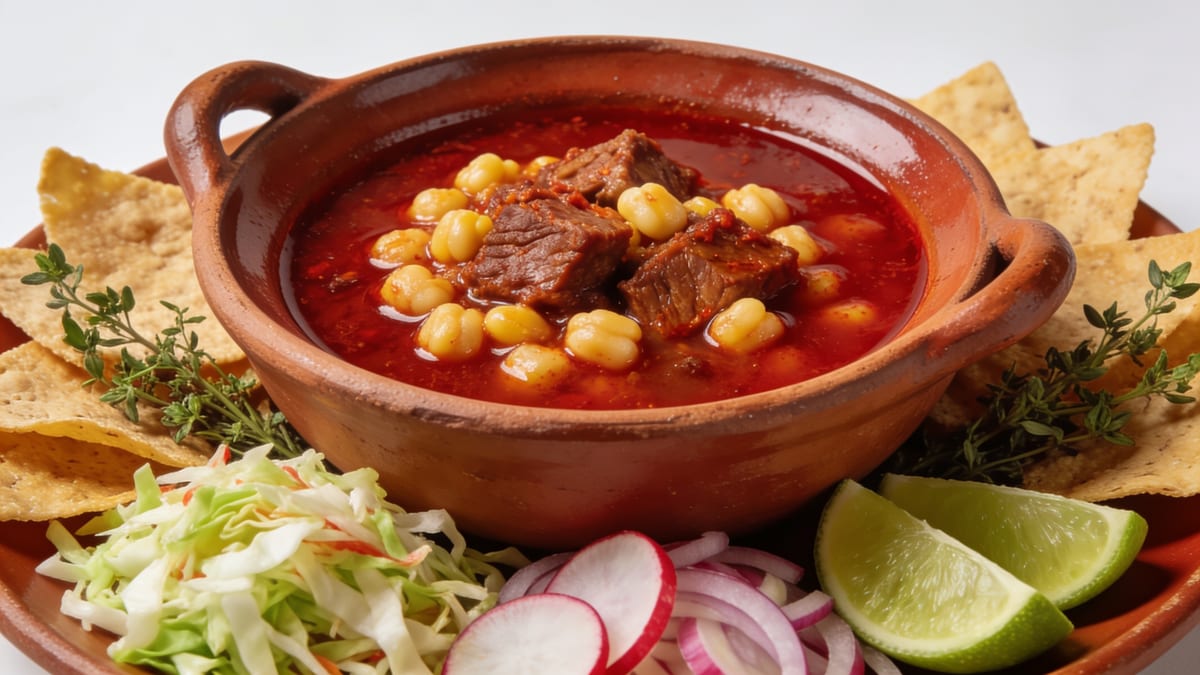
Cozinhe a carne de porco (paleta e um pouco com osso) com cebola, alho e louro em fogo brando até ficar macia, formando um caldo rico. Enquanto isso, toste chiles guajillo e ancho secos, hidrate-os até amolecer e bata no liquidificador com alho e um pouco do caldo até virar um molho vermelho liso; passe-o pela peneira direto na panela. Acrescente o milho hominy cozido ou em lata e a carne desfiada, e deixe apurar para os sabores se casarem. Sirva em tigelas com uma mesa farta de guarnições — repolho ou alface fatiados, rabanete, cebola, orégano, limão e tostadas — para cada um se servir.
- O vermelho vem dos chiles secos (guajillo + ancho) tostados, hidratados e batidos num molho peneirado — não de pimenta em pó.
- O milho hominy (milho nixtamalizado) é essencial para a textura característica, com mordida — a versão em lata é um ótimo atalho.
- As guarnições não são opcionais — repolho, rabanete, cebola, orégano, limão e tostadas fazem a tigela.
Equipment
- Panela grande
- Liquidificador
- Peneira
Ingredientes
Caldo e carne de porco
- 1 kg paleta de porco (mais um pouco com osso)
- ½ cebola, 1 cabeça de alho, folhas de louro, sal
- 2 cans milho hominy branco, escorrido (ou seco, já cozido)
Molho vermelho de chiles
- 4 chiles guajillo, sem talo e sem sementes
- 2 chiles ancho, sem talo e sem sementes
- 2 dentes de alho; uma pitada de cominho e de orégano
Guarnições
- Repolho ou alface fatiados fininho; rabanete em rodelas
- Cebola picada; orégano seco; gomos de limão
- Tostadas; chile fatiado; abacate (opcional)
Modo de preparo
- ETAPA01
Cozinhe a carne de porco com a cebola, o alho, o louro e o sal em bastante água, em fogo brando, até ficar bem macia, 1,5 a 2 horas, retirando a espuma. Retire a carne, desfie e reserve o caldo.
- ETAPA02
Toste os chiles secos numa frigideira seca até perfumarem (sem queimar), depois deixe de molho em água quente até amolecer. Bata no liquidificador com o alho, o cominho, o orégano e um pouco do caldo até ficar bem liso.
- ETAPA03
Passe o molho de chiles batido pela peneira direto no caldo de porco, pressionando para extrair todo o molho liso e deixar as peles para trás. É isso que dá um caldo vermelho e sedoso.
- ETAPA04
Junte o milho hominy e a carne desfiada ao caldo vermelho. Deixe apurar em fogo brando por 20–30 minutos, para os sabores se casarem e o milho absorver o caldo. Tempere bem.
- ETAPA05
Sirva em tigelas com uma concha e leve as guarnições à mesa — repolho fatiado, rabanete, cebola, orégano, limão e tostadas — para cada um montar a própria tigela.
Make ahead
Ideal para fazer com antecedência — o caldo e os sabores dos chiles se aprofundam de um dia para o outro. Prepare a base do pozole um ou dois dias antes e reaqueça para servir, deixando as guarnições frescas para a hora de comer. É perfeito para alimentar uma multidão numa festa.
Storage
Dura 3–4 dias na geladeira e, como a maioria dos ensopados ricos em chile, fica ainda melhor no dia seguinte. Reaqueça em fogo brando. Congela bem (guarde o caldo com o milho separado das guarnições, que são sempre frescas). Mantenha as guarnições à parte e acrescente só na hora de servir.
Variations
Pozole verde
Uma versão verde construída sobre tomatillos, pimentas verdes e ervas em vez de chiles vermelhos, muitas vezes com frango.
Pozole blanco
A versão branca, sem molho de chile no caldo — a ardência vem inteiramente das guarnições.
Pozole de frango
Use frango no lugar do porco para uma tigela mais leve (e mais rápida).
Serve with
Nutrition per serving
Nutrition values are estimates based on the metric measurements. Adjust as needed.
Perguntas frequentes
O que é hominy?
Hominy são grãos de milho seco que passaram por nixtamalização — um tratamento com solução alcalina (cal hidratada) que os incha, solta as cascas e confere textura e aroma característicos, com mordida. É o ingrediente que define o pozole. Você pode cozinhar o hominy seco (molho longo e cozimento demorado) ou usar o de lata, um atalho ótimo e prático.
Quais chiles deixam o pozole rojo vermelho?
Chiles vermelhos secos — os mais comuns são o guajillo (vibrante, suave) e o ancho (escuro, frutado), às vezes com um mais picante, como o de árbol. Eles são tostados, hidratados, batidos com alho e especiarias e peneirados no caldo. É isso que dá a cor vermelha profunda e o sabor complexo; pimenta em pó não substitui os chiles secos inteiros aqui.
Qual é a diferença entre pozole rojo, verde e blanco?
Os três compartilham a mesma base de porco com hominy, mas diferem no molho: o rojo (vermelho) usa chiles vermelhos secos; o verde usa tomatillos, pimentas verdes e ervas (muitas vezes com frango); e o blanco (branco) não leva molho de chile algum no caldo, com a ardência vindo só das guarnições. Os três são queridinhos regionais.
Por que as guarnições são tão importantes?
O pozole é servido para cada um montar a própria tigela, e as guarnições dão o contraste que faz o prato cantar: repolho ou alface e rabanete crocantes, cebola crua marcante, uma pitada de orégano, uma boa espremida de limão, chile fatiado para quem gosta de ardência e tostadas crocantes ao lado. Elas trazem frescor, crocância e vivacidade ao caldo rico.
Posso fazer pozole com antecedência para uma festa?
Com certeza — é a clássica comida de fiesta feita para multidões, e o caldo ganha profundidade de sabor de um dia para o outro, então prepará-lo um ou dois dias antes é o ideal. Reaqueça o pozole em fogo brando e disponha todas as guarnições frescas em tigelinhas para os convidados personalizarem a sua. É farto, festivo e rende para muita gente.
Cooked this? Rate it.
Real ratings from real cooks. We only show a score once enough of you have weighed in — no fabricated stars.