Bibim Guksu — Korean Spicy Cold Noodles
Korea's quick, addictive cold noodle fix: thin wheat somyeon noodles boiled, rinsed icy-cold and tossed in a punchy sweet-sour-spicy sauce of gochujang, gochugaru, vinegar, sugar, sesame and garlic, then topped with crunchy cucumber, kimchi and a halved boiled egg. Bibim guksu (literally 'mixed noodles') is the dish of hot summer days and a beloved snack — bright, refreshing and ready in minutes once the sauce is mixed. The contrast of cold springy noodles and bold, tangy sauce is irresistible.
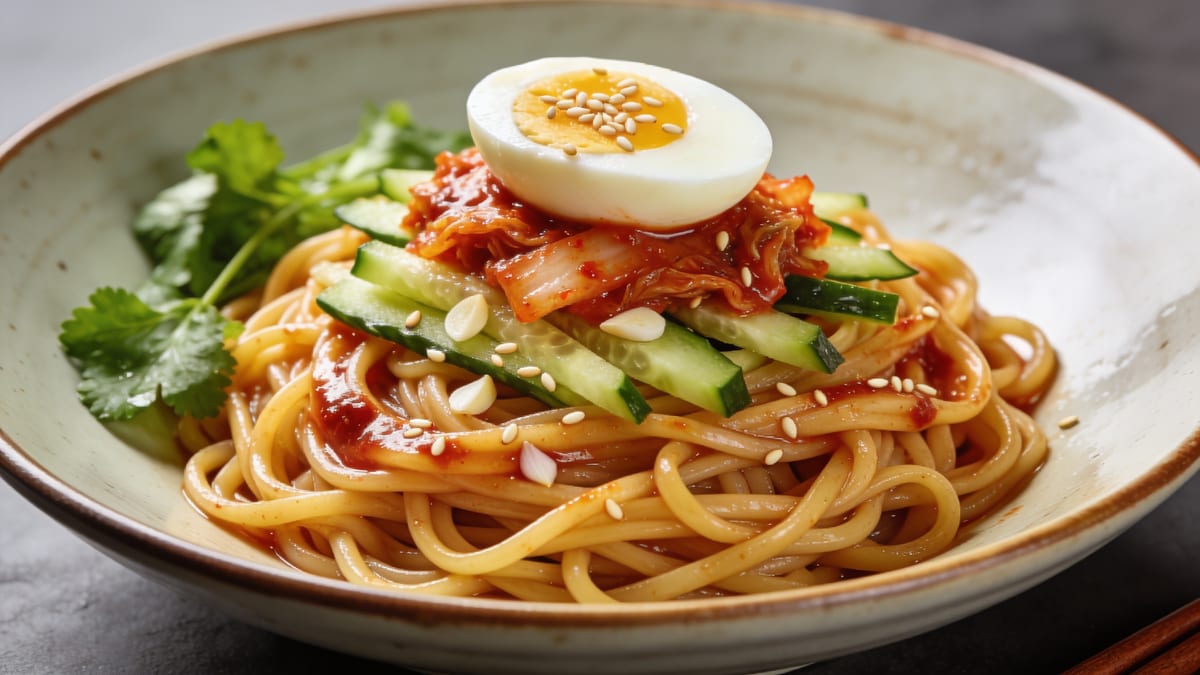
Mix a sauce of gochujang and gochugaru with vinegar, sugar (or a little syrup), soy sauce, sesame oil, toasted sesame seeds and grated garlic — it should be sweet, sour, spicy and savoury all at once. Boil thin somyeon (wheat) noodles briefly until just done, then rinse them thoroughly under cold running water, scrubbing off the starch until cold and springy, and drain well. Toss the cold noodles with the sauce until evenly coated, and top with julienned cucumber, kimchi, and a halved boiled egg. Mix and eat right away.
- Rinse the boiled somyeon under cold water, scrubbing off the starch, until icy and springy — that texture is key.
- Balance the sauce sweet-sour-spicy-savoury (gochujang + gochugaru + vinegar + sugar); make it punchy, as cold mutes flavour.
- Top with crunchy cucumber, kimchi and a boiled egg, and toss thoroughly just before eating.
Equipment
- Pot (for noodles)
- Colander/sieve
- Bowl
Ingredientes
Sauce
- 2 tbsp gochujang
- 1 tbsp gochugaru (Korean chilli flakes)
- 2 tbsp vinegar; 1 tbsp sugar (or syrup); 1 tbsp soy sauce
- 1 tbsp sesame oil; toasted sesame seeds; 1 garlic clove, grated
Noodles & toppings
- 2 portions somyeon (thin wheat noodles)
- Cucumber, julienned; kimchi, chopped
- 2 eggs, boiled and halved; extra sesame seeds
Preparação
- PASSO01
Mix the gochujang, gochugaru, vinegar, sugar, soy sauce, sesame oil, sesame seeds and grated garlic into a smooth, punchy sauce. Taste and balance — it should be sweet, sour, spicy and savoury. Let it sit while you cook the noodles.
- PASSO02
Cook the somyeon in boiling water until just done — they're thin and cook fast, only 2–3 minutes. Don't overcook (and watch for boil-overs).
- PASSO03
Drain and rinse the noodles thoroughly under cold running water, scrubbing them with your hands to wash off the surface starch until they're cold and springy. Drain very well.
- PASSO04
Put the cold drained noodles in a bowl, add the sauce, and toss/mix thoroughly until every strand is evenly coated and red.
- PASSO05
Top with julienned cucumber, chopped kimchi, a halved boiled egg and a sprinkle of sesame seeds. Serve immediately — and mix it all together again as you eat.
Make ahead
Make the sauce ahead — it keeps for about a week and the flavours meld, so you can have spicy cold noodles in minutes anytime: just boil and rinse fresh somyeon and toss. Prep the toppings (julienne cucumber, boil eggs) ahead too. The noodles themselves must be cooked and dressed fresh to stay springy.
Storage
Best made and eaten immediately, while the noodles are cold and springy and the sauce bright — dressed noodles soften and clump quickly. The sauce keeps a week refrigerated (it's handy to have ready), so make it ahead and boil noodles fresh to order. Store any extra sauce separately. Prep the cucumber and boil the eggs ahead.
Variations
With protein
Add shredded poached chicken, ham, or extra egg to make it more of a meal.
Different noodles
Usually made with somyeon, but you can use other thin wheat noodles.
Janchi guksu (non-spicy)
For a warm, mild alternative, serve the same somyeon in a light anchovy broth (janchi guksu) instead.
Serve with
Nutrition per serving
Nutrition values are estimates based on the metric measurements. Adjust as needed.
Perguntas frequentes
What noodles are used for bibim guksu?
Somyeon — thin, delicate wheat noodles (similar to thin Japanese sōmen) — are the classic choice for bibim guksu. They cook in just a couple of minutes and have a light, springy texture that suits the cold, sauced preparation. You can use other thin wheat noodles if needed, but somyeon is traditional and widely available at Korean and Asian groceries.
Why rinse the noodles in cold water?
Rinsing and scrubbing the boiled noodles under cold running water washes off the surface starch (which would make them gummy and sticky) and chills them, giving the clean, cold, springy, slippery texture that defines bibim guksu. It also stops them cooking. Rinse until the water runs clear and the noodles feel cold and bouncy, then drain very well so the sauce isn't watered down.
How do I balance the spicy sauce?
The sauce should hit sweet, sour, spicy and savoury all at once — gochujang and gochugaru for heat and body, vinegar for tang, sugar (or syrup) for sweetness, soy for savouriness, plus sesame oil, seeds and garlic. Taste and adjust: more vinegar for tang, more sugar to round it, more gochujang/gochugaru for heat. Make it a touch bolder than you think, since the cold noodles mute the flavour.
What's the difference between bibim guksu and naengmyeon?
Both are cold Korean noodle dishes, but they differ. Bibim guksu uses thin wheat somyeon tossed in a thick, spicy gochujang sauce (no broth). Naengmyeon uses chewy buckwheat noodles, and comes either in an icy tangy broth (mul naengmyeon) or tossed in a spicy sauce (bibim naengmyeon). So bibim guksu is the quick, everyday wheat-noodle version; naengmyeon is the buckwheat one, often eaten after Korean BBQ.
Can I make bibim guksu vegetarian?
Yes — the sauce is plant-based (gochujang, gochugaru, vinegar, sugar, sesame, garlic; use soy sauce), and you can simply leave off or swap the egg and use vegan kimchi (some kimchi contains fish sauce or salted shrimp). Topped with cucumber, kimchi and sesame, it's a satisfying vegetarian or vegan cold noodle dish. Add tofu or extra vegetables to make it more filling.
Cooked this? Rate it.
Real ratings from real cooks. We only show a score once enough of you have weighed in — no fabricated stars.