Sundubu-jjigae — Korean Soft Tofu Stew
The bubbling Korean comfort classic: silky uncurdled tofu in a fiery red broth built on a gochugaru chilli oil, with clams or pork, kimchi and a raw egg cracked in at the table. It arrives spitting hot in a stone ttukbaegi and cooks the egg as you serve it — a fast, soul-warming one-pot meal with rice.
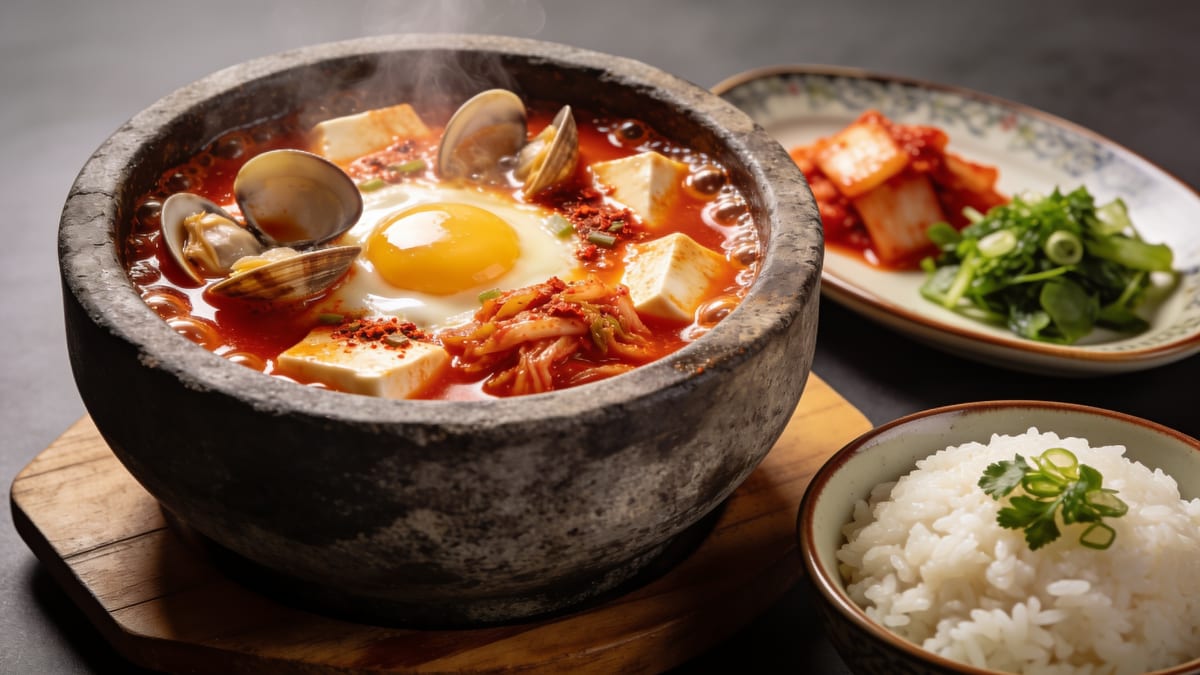
Make a chilli oil base by frying gochugaru (Korean chilli flakes) with garlic, a little pork and aromatics in oil until red and fragrant. Add stock (or anchovy-kelp broth), kimchi and clams, then slide in soft silken tofu in big spoonfuls. Simmer briefly, season with soy and a little fish sauce, and crack an egg into the bubbling stew. Serve immediately with rice.
- Bloom the gochugaru in oil first — that red, fragrant chilli base is the flavour foundation.
- Use the softest silken (sundubu) tofu and barely stir, so it stays in soft clouds.
- Crack the egg in at the very end and serve while it's still bubbling so it gently cooks.
Equipment
- Stone pot (ttukbaegi) or small heavy pot
Ingredientes
Chilli base
- 20 g gochugaru (Korean chilli flakes)
- 30 ml neutral oil
- 80 g pork belly or shoulder, diced
- 3 garlic cloves, minced
- 2 spring onions, sliced
Stew
- 350 g soft silken tofu (sundubu)
- 400 ml anchovy-kelp stock or water
- 80 g kimchi, chopped
- 150 g clams or mixed seafood, optional
- 10 ml soy sauce
- 1 tsp fish sauce or saeujeot (salted shrimp)
- 1 egg
Preparação
- PASSO01
Heat the oil in a stone pot or small pot and fry the diced pork until it renders. Add the garlic and gochugaru and stir over low heat until the oil turns deep red and fragrant — don't burn the chilli.
- PASSO02
Add the chopped kimchi and fry 1 minute, then pour in the stock. Bring to a simmer and add the clams (if using), cooking until they open.
- PASSO03
Spoon in the soft tofu in large chunks. Simmer gently 5 minutes, breaking it up only a little so it stays in soft clouds.
- PASSO04
Season with the soy sauce and fish sauce (or salted shrimp), and taste — it should be spicy, savoury and deep. Scatter in most of the spring onion.
- PASSO05
Crack the egg into the bubbling stew, scatter with the rest of the spring onion, and bring to the table at once — still boiling — so the egg cooks as you eat. Serve with steamed rice.
Make ahead
Make the gochugaru chilli base and an anchovy-kelp stock ahead. Then dinner is a 10-minute job: heat the base, add stock, tofu and seafood, and finish with the egg.
Storage
Best made fresh and eaten immediately — the soft tofu and egg don't keep well. The chilli-pork base can be made ahead and refrigerated 3 days; finish with fresh tofu, stock and egg to serve.
Variations
Seafood (haemul)
Use clams, mussels, prawns and squid instead of pork for a seafood sundubu.
Vegetarian
Skip the pork and seafood, use a kelp-mushroom broth, and season with soy and a little doenjang.
Extra rich
Stir a spoonful of gochujang into the base alongside the gochugaru for a deeper, slightly sweeter broth.
Serve with
Nutrition per serving
Nutrition values are estimates based on the metric measurements. Adjust as needed.
Perguntas frequentes
What is sundubu?
Sundubu (soondubu) is extra-soft, uncurdled Korean tofu — even silkier than silken tofu, almost custard-like. It's sold in tubes or tubs and gives the stew its signature soft, spoonable clouds. If you can't find it, the softest silken tofu is the closest substitute.
How spicy is sundubu-jjigae and can I tone it down?
It's typically quite spicy from the gochugaru chilli base, but you control it. Use less gochugaru for a milder, milder-coloured stew, or more for a fierce one. The dish should taste deep and savoury, not just hot — season well with soy and fish sauce.
Do I have to use a stone pot (ttukbaegi)?
No, but it's traditional and helps: the ttukbaegi holds fierce heat and arrives at the table still bubbling, which is what gently cooks the egg. Any small heavy pot works — just serve it as hot as possible.
When do I add the egg?
Right at the end — crack it into the bubbling stew just before serving, and don't stir it in fully. The residual heat poaches it softly as you eat. Some like it barely set with a runny yolk; leave it a little longer if you prefer it firmer.
What stock should I use?
A Korean anchovy-and-kelp broth (myeolchi-dasima) is traditional and gives great depth, and takes 15 minutes. Water works in a pinch, especially with kimchi and seafood adding flavour, but the anchovy-kelp stock makes a noticeably better stew.
Cooked this? Rate it.
Real ratings from real cooks. We only show a score once enough of you have weighed in — no fabricated stars.