Dolmades — Greek Stuffed Grape Leaves
The dainty, savoury parcels of the Greek table: tender grape (vine) leaves rolled around a fragrant filling of rice, herbs, onion and pine nuts, simmered gently in olive oil and lemon until silky. Dolmades (dolmadakia) are a labour of love made by the trayful — served warm or, in the meatless 'yalantzi' style, cool with a squeeze of lemon as part of a meze spread. Bright, lemony and herby, they're addictive little bites.
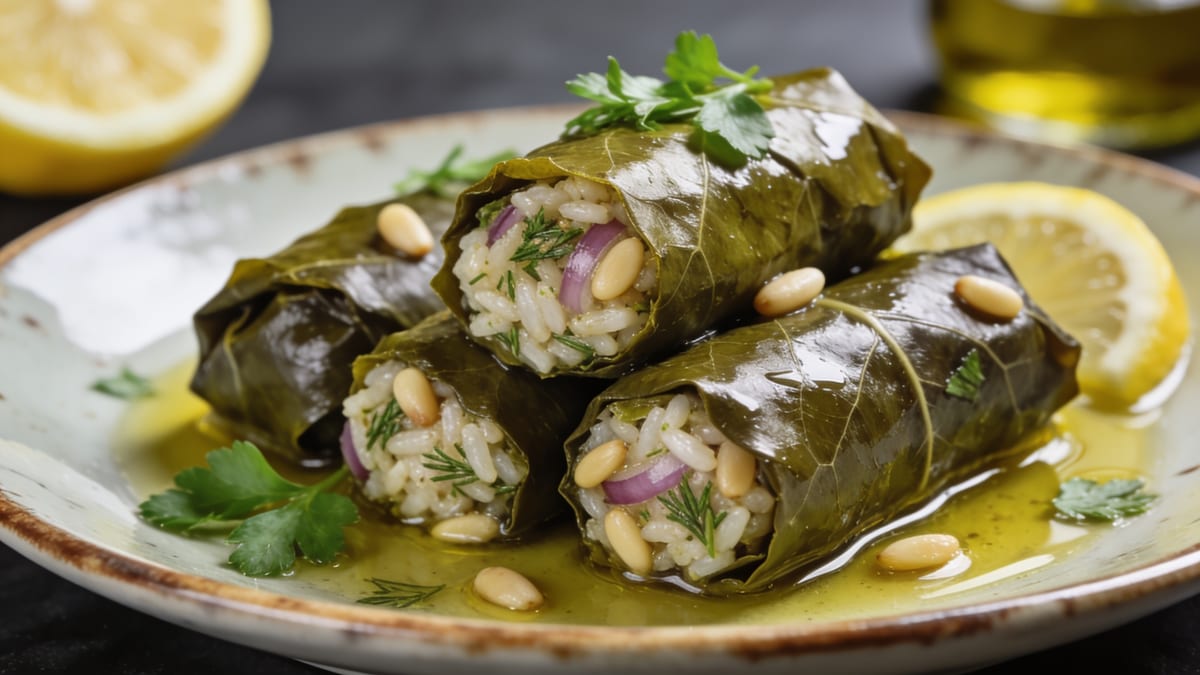
Blanch grape leaves (or rinse brined ones). Make a filling of short-grain rice mixed with lots of sautéed onion and spring onion, fresh dill and mint, pine nuts, olive oil, lemon and seasoning (the rice goes in partly raw — it finishes cooking inside). Place a little filling on each leaf, fold the sides in and roll up snugly into neat cigars. Pack them seam-down and tight in a pot lined with leaves, weigh them down with a plate, add olive oil, lemon juice and water/broth to just cover, and simmer gently until the rice is tender. Cool a little and serve with lemon.
- Roll them snug but not too tight — the rice swells as it cooks and would burst an overfilled leaf.
- Lots of fresh herbs (dill and mint) and lemon are what make dolmades taste bright and Greek.
- Pack them tightly and weigh them down with a plate so they hold their shape as they simmer.
Equipment
- Large pot
- A small plate (to weigh down)
- Bowl
Ingredientes
Leaves & filling
- Grape (vine) leaves — fresh blanched or brined, rinsed (about 40)
- 250 g short/medium-grain rice
- 2 onions + 3 spring onions, finely chopped and sautéed
- Big handful each dill and mint, chopped; 3 tbsp pine nuts
To cook & dress
- 100 ml olive oil
- Juice of 1–2 lemons; salt, pepper
- Water or vegetable broth, to cover
Preparação
- PASSO01
If using fresh leaves, blanch them briefly until pliable; if brined, rinse well and pat dry. Snip off any tough stems. Set aside torn or small leaves to line the pot.
- PASSO02
Sauté the onion and spring onion in olive oil until soft, then mix with the rice, chopped dill and mint, pine nuts, a little lemon, salt and pepper. (The rice is mostly raw — it cooks inside the dolmades.)
- PASSO03
Lay a leaf shiny-side down, put a small spoon of filling near the stem end, fold the sides in over it and roll up snugly into a neat little cigar — not too tight, as the rice will swell. Repeat.
- PASSO04
Line the pot base with spare leaves. Pack the dolmades seam-down in tight layers. Put a small heatproof plate on top to weigh them down so they don't unroll.
- PASSO05
Drizzle over the olive oil and lemon juice, add water or broth to just cover, and bring to a gentle simmer. Cover and cook on low until the rice is tender and the liquid mostly absorbed, 40–45 minutes. Let them cool a little, then serve warm or at room temperature with lemon wedges (and yogurt, if not vegan).
Make ahead
Ideal make-ahead and batch food — dolmades are usually made by the tray and keep for days, tasting even better the next day as the herbs and lemon settle in. Make them a day ahead and serve cold or gently warmed. The rolling is the time-consuming part, so a big batch is efficient.
Storage
Keep 4–5 days refrigerated and are excellent cold or at room temperature — the meatless 'yalantzi' style is often served chilled, and the flavour deepens. They're great make-ahead meze and travel well. Drizzle with a little fresh lemon and olive oil before serving. They freeze acceptably too.
Variations
Yalantzi (vegan)
The meatless, olive-oil version (this one) — herby, lemony, served cool. 'Yalantzi' means 'pretend' (no meat).
With meat (me kima)
Add minced lamb or beef to the rice filling and serve warm, often with avgolemono (egg-lemon) sauce.
Avgolemono sauce
Top warm dolmades with a silky egg-lemon sauce (not vegan).
Serve with
Nutrition per serving
Nutrition values are estimates based on the metric measurements. Adjust as needed.
Perguntas frequentes
What are dolmades made of?
Dolmades are grape (vine) leaves wrapped around a filling — most classically a vegan 'yalantzi' mix of short-grain rice, sautéed onion, fresh herbs (especially dill and mint), pine nuts, olive oil and lemon. A meat version adds minced lamb or beef to the rice. They're simmered gently in olive oil, lemon and water until the rice is tender and the leaves silky.
Where do I get grape leaves?
Brined grape (vine) leaves in jars are sold at Greek, Middle Eastern and many supermarkets, and just need rinsing well to remove excess salt. If you have a grapevine, you can use fresh young leaves, blanched briefly to soften them. Either works; brined are the convenient, year-round option.
How do I stop dolmades from unrolling or bursting?
Roll them snugly but don't overfill — the rice swells as it cooks, and an overstuffed, too-tight roll will split. Pack them seam-down in tight layers in the pot and weigh them down with a small plate so they can't unravel while simmering. A gentle simmer (not a hard boil) also keeps them intact.
Are dolmades served hot or cold?
Both, depending on the version. The vegan, olive-oil 'yalantzi' dolmades (rice and herbs) are traditionally served cool or at room temperature, often as part of a meze spread with lemon. Meat-filled dolmades are usually served warm, frequently with an avgolemono (egg-lemon) sauce. Either way, a squeeze of fresh lemon is essential.
What does 'yalantzi' mean?
Yalantzi (γιαλαντζί) means 'false' or 'pretend' in Greek — it's used for the meatless dolmades, as if they're 'lying' about being the real (meat) thing. These vegan, herb-and-rice, olive-oil dolmades are a staple of Greek meze and Lenten cooking, and many people consider them the definitive version. They're naturally vegan and gluten-free.
Cooked this? Rate it.
Real ratings from real cooks. We only show a score once enough of you have weighed in — no fabricated stars.