Sisig — Filipino Sizzling Chopped Pork
The undisputed king of Filipino bar food (pulutan): pork — traditionally pig's head and ears, plus liver — boiled, grilled and then finely chopped, sizzled on a screaming-hot cast-iron plate with onions and chilli, brightened with calamansi and sometimes bound with a touch of mayonnaise or a cracked egg on top. The result is a riot of textures — crisp, chewy, tender — and flavours — savoury, sour, spicy, rich. Born in Pampanga, the country's culinary capital, sisig arrives still spitting and sizzling, made to be eaten hot with cold beer and a mound of rice. It's loud, addictive and utterly Filipino.
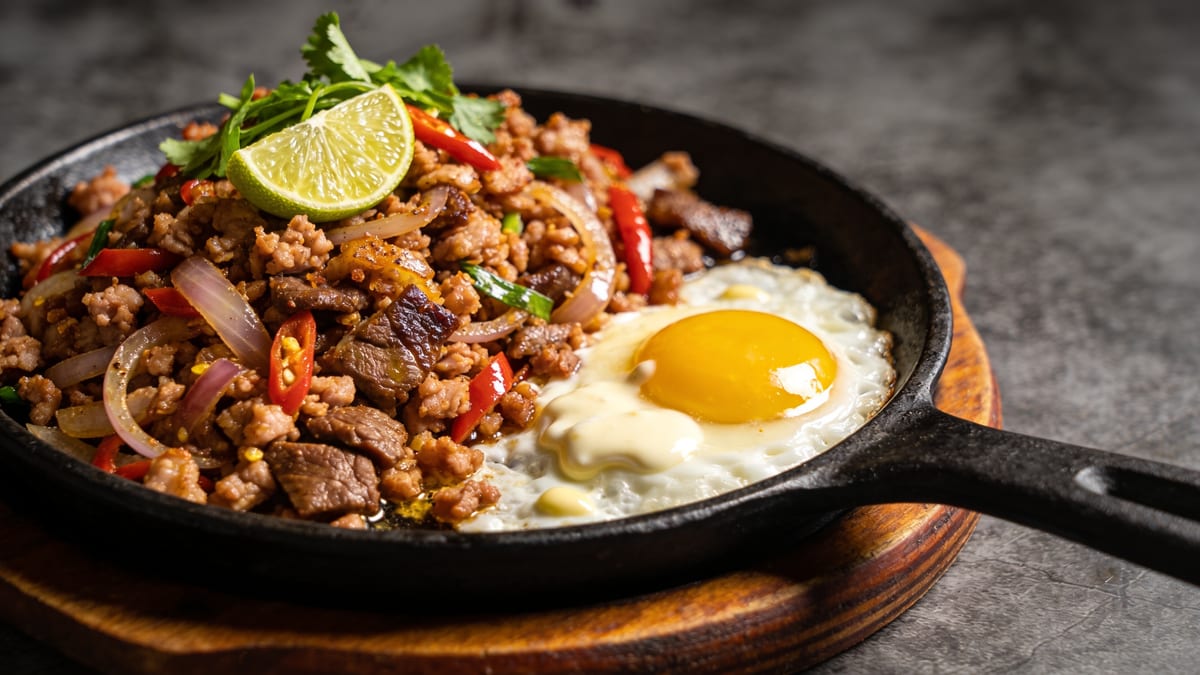
Boil pork (a mix of belly and ears/face, plus a piece of liver) with aromatics until tender, then grill or broil it until the edges char and crisp — this two-step cook is what gives sisig its signature crisp-chewy texture. Chop everything finely. Sizzle chopped onion and chilli on a very hot pan or cast-iron plate, add the chopped pork, and season with soy sauce, calamansi (or lime) juice, salt and pepper, tossing until hot and the edges crisp again. Off the heat, stir through a little mayonnaise (modern style) for creaminess, or skip it. Serve immediately on a sizzling plate, topped with a raw or fried egg and more chilli and calamansi, with plenty of hot rice.
- Boil then grill the pork before chopping — that double cook gives the crucial mix of crisp, chewy and tender.
- Serve it sizzling hot on a hot plate, finished with calamansi and onions for that sour-savoury punch.
- An egg (raw stirred in, or fried on top) and a little mayo make it rich; calamansi and chilli keep it bright.
Equipment
- Pot (to boil)
- Grill or broiler
- Cast-iron sizzling plate or heavy pan
Ingredientes
Pork
- 700 g pork (belly + ears/face), plus a piece of pork liver
- Onion, garlic, bay, peppercorns (to boil)
To finish
- 1 onion, finely chopped; chillies, chopped
- Soy sauce; calamansi (or lime) juice; salt, pepper
- Mayonnaise (optional); 1 egg; butter/oil
Preparação
- PASSO01
Simmer the pork pieces with onion, garlic, bay and peppercorns until tender, about 45 minutes. Add the liver for the last few minutes just to cook through. Drain and cool.
- PASSO02
Grill, broil or pan-sear the boiled pork until the edges char and crisp up — this second cook gives sisig its essential crisp-and-chewy texture, not just soft meat.
- PASSO03
Finely chop all the pork and the liver into small, even pieces. The mix of crisp edges and tender bits is what you want.
- PASSO04
Heat a little butter or oil on a very hot cast-iron plate or pan, sauté the chopped onion and chilli briefly, then add the chopped pork. Season with soy sauce, calamansi juice, salt and pepper, tossing over high heat until sizzling and the edges crisp again. Stir through a little mayonnaise off the heat if you like it creamy.
- PASSO05
Serve immediately on the hot sizzling plate, topped with a raw egg (to stir through the hot pork) or a fried egg, extra chopped chilli and a wedge of calamansi to squeeze over. Eat hot with lots of steamed rice — and cold beer.
Make ahead
The time-consuming part — boiling and grilling the pork — can be done ahead: cook, chop and refrigerate it (a day or two), so finishing sisig is just a fast sizzle-and-season on a hot plate. This makes it practical for entertaining. Add the calamansi, egg and final seasoning fresh, right before serving, so it arrives hot, bright and sizzling. Prep the chopped onion, chilli and calamansi ahead too.
Storage
Sisig is made to be eaten immediately, sizzling hot off the plate — its appeal is the just-crisped, hot-and-spitting texture, which fades fast. The boiled-and-grilled pork can be cooked and chopped ahead and kept 2 days refrigerated, then sizzled and seasoned fresh to order in minutes. Leftover seasoned sisig keeps a day and reheats in a hot pan (re-crisp it), and is great fried into rice (sisig rice) or as a taco/nacho topping. Don't add the egg until serving.
Variations
Lighter cuts
Use pork belly and shoulder (no face/ears or liver) for an easier, more approachable sisig.
Chicken / bangus / tofu
Chicken sisig, milkfish (bangus) sisig, or a vegetarian tofu sisig (sizzling tofu) are popular spin-offs.
With egg and mayo
The modern 'Aling Lucing' to Marquez-style evolution adds an egg and a little mayo for creaminess.
Serve with
Nutrition per serving
Nutrition values are estimates based on the metric measurements. Adjust as needed.
Perguntas frequentes
What is sisig?
Sisig is a Filipino dish of chopped pork — traditionally from the pig's head (face and ears) plus liver — that's boiled, grilled, then finely chopped and sizzled on a hot cast-iron plate with onions, chilli and calamansi. It's savoury, sour, spicy and rich, with a signature mix of crisp and tender textures, and is the most famous Filipino pulutan (bar food/beer snack). It comes from Pampanga, the Philippines' culinary capital. Modern versions often add an egg and a touch of mayonnaise. It's served sizzling hot with rice and cold beer.
Do I have to use pig's face and liver?
Traditionally, yes — pork face (maskara), ears and liver give authentic sisig its distinctive textures and flavour, with the cartilage and skin providing chew and the liver adding richness. But you absolutely can make a delicious, more approachable sisig with just pork belly and shoulder, skipping the face and liver. Many home and restaurant versions do. The key technique — boil, then grill/char, then chop and sizzle — matters more than the exact cuts for getting that crisp-chewy result.
Why boil and then grill the pork?
This two-step cooking is the secret to sisig's texture. Boiling first makes the tougher cuts (face, ears) tender and renders some fat; grilling or broiling afterwards chars and crisps the edges. Then chopping mixes crisp, chewy and tender bits together. If you only boiled it, the sisig would be soft and one-note; the grill step is what gives those addictive crispy edges. A final sizzle on the hot plate crisps it up once more just before serving.
What is calamansi and what can I substitute?
Calamansi is a small, round Filipino citrus, fragrant and sour with a hint of sweetness, used to brighten sisig (and countless Filipino dishes). Its tartness cuts the richness of the pork. If you can't find calamansi (fresh, frozen or bottled at Filipino groceries), substitute a mix of lime and a little lemon, or just lime juice — squeeze it over at the end. The sour citrus hit is essential to balance the fatty, savoury pork, so don't skip the acidity even if you have to improvise.
Can I make sisig without a sizzling plate?
Yes — the cast-iron sizzling plate is iconic (and keeps it hot and dramatic at the table), but you can make sisig in any heavy skillet or wok over high heat; just get it very hot so the pork crisps and 'sizzles'. Serve it straight from the pan. If you do have a cast-iron plate or skillet, preheat it until smoking and bring it to the table for the full sizzling effect and the best crisp edges. The flavour is the same either way.
Cooked this? Rate it.
Real ratings from real cooks. We only show a score once enough of you have weighed in — no fabricated stars.