Spaghetti all'Assassina
Spaghetti all'assassina is Bari's famously "burnt" pasta: raw spaghetti seared directly in a garlicky, chili-laced tomato base, then fed ladles of hot tomato broth like a risotto. Because the noodles never see a pot of boiling water, their starch toasts and caramelizes against the skillet, giving you strands that are chewy in the middle and crackling, smoky, and mahogany-charred at the edges. It is fiery, a little dramatic, and unlike any other tomato pasta you have made.
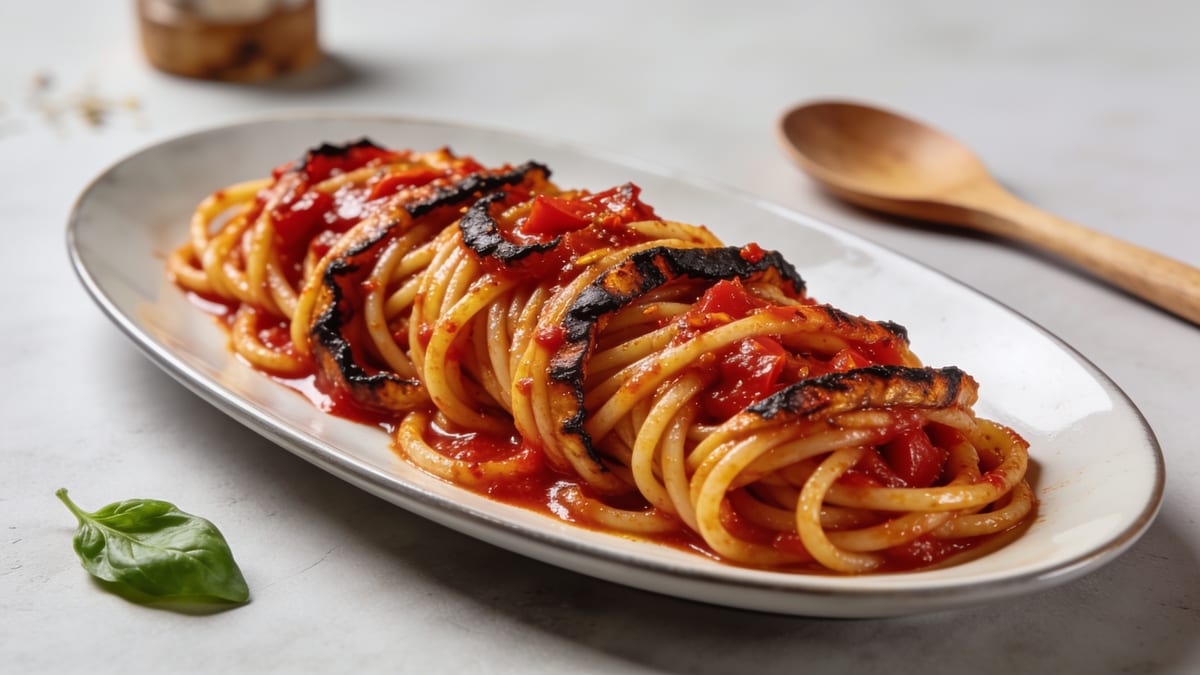
Simmer a quick tomato broth (400 ml passata, 700 ml water, salt) and keep it hot. In a 30 cm cast-iron skillet, warm 80 ml olive oil with crushed garlic and sliced chilies over medium heat until golden, add 200 ml passata, and cook it down until it sputters and darkens. Fan 320 g raw spaghetti flat into the pan and leave it alone until the undersides char to deep mahogany, then add hot broth two ladles at a time around the edges, flipping the pasta in sections and letting the pan go nearly dry between additions so new crusts keep forming. After 25-30 minutes the spaghetti is al dente, glossy with concentrated sauce, and crackly-charred in patches; rest 2 minutes and serve straight from the skillet.
- Never pre-boil the spaghetti — the dry noodles must toast in the sauce to build the signature charred crust.
- Keep the broth barely simmering and add it in small doses only when the pan is almost dry; too much liquid at once steams the pasta and kills the crunch.
- Resist stirring. Flip flat sections with a wide spatula instead, so the crust sets, releases, and reforms.
Equipment
- 30 cm (12-inch) cast-iron or carbon-steel skillet
- Medium saucepan
- Ladle
- Wide flat spatula
- Tongs
- Chef's knife
- Cutting board
Ingredientes
Tomato broth
- 400 ml tomato passata
- 700 ml water
- 8 g fine sea salt
- 4 g sugar, optional, to soften the passata's acidity
For the skillet
- 320 g spaghetti, a sturdy bronze-die brand holds up best; do not break or pre-boil
- 80 ml extra-virgin olive oil
- garlic cloves, peeled and lightly crushed
- fresh red chilies, thinly sliced; or 1 tsp crushed red pepper flakes, to taste
- 200 ml tomato passata
Preparação
- PASSO01
In a medium saucepan, whisk together the passata, water, salt, and sugar (if using). Bring to a boil, then drop to the barest simmer and park it on a back burner with a ladle nearby. It must stay hot the whole time — cold broth added to the skillet stalls the cooking and prevents charring.
- PASSO02
Set a 30 cm (12-inch) cast-iron or carbon-steel skillet over medium heat and add the olive oil, crushed garlic, and sliced chilies. Cook until the garlic is golden and fragrant, about 2 minutes, then fish out the garlic if you prefer a gentler flavor (traditionalists leave it in).
- PASSO03
Pour the 200 ml of passata into the skillet and spread it across the surface. Let it sizzle, reduce, and darken at the edges without stirring much — you want it thick and beginning to caramelize, since this concentrated layer is what the pasta will fry against.
- PASSO04
Fan the dry spaghetti into the skillet in a single flat layer, pressing it gently into the sauce. Do not stir. Let it toast until the undersides pick up deep mahogany, spotty char — peek by lifting an edge with your spatula. Spoon a little hot broth over the exposed tops so they begin to soften.
- PASSO05
Working with a wide spatula, flip the pasta one section at a time so the charred side faces up. Add two ladles of hot broth around the edges of the pan and let it bubble away completely before adding more. Repeat this rhythm — flip, ladle, let it go nearly dry, char — keeping the heat at a lively medium so each new underside crisps.
- PASSO06
Keep adding broth in small doses just until the spaghetti is al dente with a glossy, clingy sauce and plenty of crackly burnt patches, tasting a strand as you go. You may not need every drop of broth; stop when the texture is right rather than using it all. Kill the heat while the pan still sounds like it is frying, not steaming.
- PASSO07
Let the skillet stand off the heat so the bottom crust sets and releases. Serve immediately, straight from the pan, making sure every plate gets both tender strands and shards of the charred crust.
Make ahead
The tomato broth can be made up to 3 days ahead and refrigerated; bring it back to a full simmer before you start cooking, since hot broth is essential to the method. You can also slice the chilies and crush the garlic a day in advance. The pasta itself cannot be made ahead — the char-and-ladle process has to happen right before serving.
Storage
Spaghetti all'assassina is at its peak the moment it leaves the skillet — the charred edges soften as they sit. Leftovers keep in an airtight container in the refrigerator for up to 2 days; revive them in a lightly oiled, very hot skillet for 3-4 minutes without stirring so the crust re-crisps. Avoid the microwave, which turns the crunch to chew. Do not freeze.
Variations
Gluten-free assassina
Swap in a corn-and-rice blend gluten-free spaghetti. It releases more starch and softens faster, so use about 100 ml less broth, keep the heat slightly lower, and flip more gently — the payoff is the same smoky crust with no gluten.
'Nduja assassina
Melt 40 g (about 3 tbsp) of 'nduja into the oil along with the garlic and reduce the fresh chilies to one. The spicy Calabrian pork paste adds a deep, funky heat and a silkier sauce. Note this version is no longer vegetarian.
Burrata-crowned
For a Bari-restaurant flourish, top each serving with half a small burrata or a spoonful of stracciatella. The cool, milky cheese against the hot, fiery, crunchy pasta is a spectacular contrast — just know it adds dairy and takes the dish out of vegan territory.
Serve with
Nutrition per serving
Nutrition values are estimates based on the metric measurements. Adjust as needed.
Perguntas frequentes
Why is it called spaghetti all'assassina?
The name means "assassin's spaghetti" and comes from Bari, in Puglia, where the dish emerged in trattorias in the late 1960s. The most repeated story is that a customer, walloped by the scorching chili heat and aggressive char, called the cook an assassin — and the insult stuck as a badge of honor. There is even a dedicated society in Bari, the Accademia dello Spaghetto all'Assassina, that guards the technique.
Do I really put raw, uncooked spaghetti straight into the pan?
Yes — that is the entire point of spaghetti all'assassina. The dry noodles fry and toast in the concentrated tomato base before they hydrate, which caramelizes their surface starch. Ladling in hot tomato broth gradually, risotto-style, then cooks them through while new crusts keep forming underneath. If you boil the pasta first you will just get saucy spaghetti with no char.
Can I make it without a cast-iron skillet?
Cast iron or carbon steel is traditional because it holds fierce, even heat and shrugs off scorching. A heavy stainless-steel sauté pan works if you accept some stuck bits (they scrape up as delicious crust). A good nonstick pan is the easiest fallback for beginners — you will get gentler browning rather than true char, but the method still works. Avoid thin, lightweight pans, which develop hot spots and burn the sauce acrid.
How burnt is too burnt?
You are aiming for deep mahogany to dark-brown patches with a few genuinely blackened edges — that reads as smoky and bittersweet, like the crust on a wood-fired pizza. If large areas turn matte black and the kitchen smells sharp and acrid rather than toasty, the heat is too high or the pan went dry for too long. Lower the flame slightly and add the next ladle of broth a little sooner.
Can I double the recipe for a crowd?
Not in one pan. Spaghetti all'assassina only works when the pasta sits in a shallow layer with maximum contact against the hot skillet; piling in more noodles makes them steam instead of char. For more than 3 servings, run two skillets side by side or cook back-to-back batches — the broth recipe scales up easily and can sit simmering between rounds.
Cooked this? Rate it.
Real ratings from real cooks. We only show a score once enough of you have weighed in — no fabricated stars.