Kake Udon — Japanese Udon Noodle Soup
The soul-soothing simplicity of Japanese noodle soup: thick, chewy, slippery udon noodles in a clear, light, savoury dashi broth seasoned with soy and mirin, topped with little more than sliced spring onion. Kake udon is comfort distilled — the broth and the bouncy noodles are everything, so the quality of the dashi matters. It's quick, warming and endlessly customisable, the base for countless toppings from tempura to a soft poached egg.
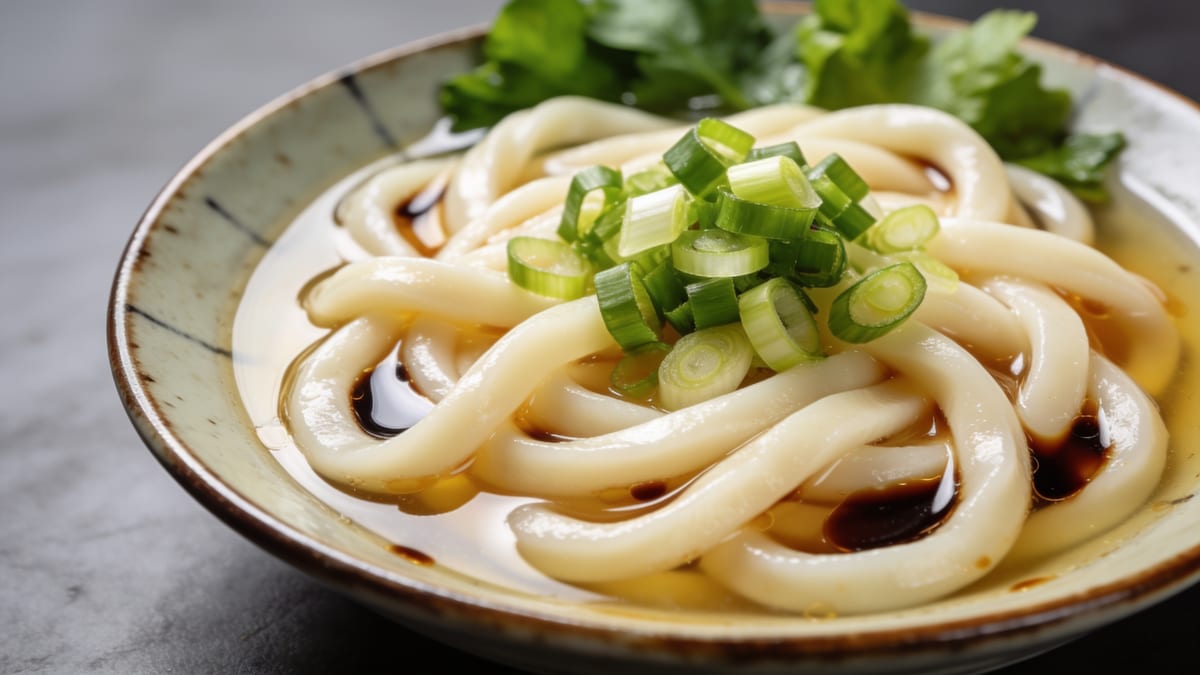
Make a light kake broth (kakejiru): warm dashi (from kombu and bonito, or a quick dashi) and season it gently with light soy sauce, mirin and a little salt — it should be clear and delicately savoury, not dark or heavy. Cook udon noodles (fresh, frozen or dried) per the packet until tender and bouncy, then drain. Put the noodles in bowls, pour over the hot broth, and top simply with sliced spring onion (and a shake of shichimi). That's the base — add tempura, abura-age, or a poached egg if you like.
- Good dashi is everything in such a simple soup — make it fresh, or use a quality instant dashi.
- Season the broth lightly with light (usukuchi) soy and mirin so it stays clear and delicate, not dark.
- Cook the udon until tender and bouncy, drain, then combine with the hot broth just before serving.
Equipment
- Pot (for noodles)
- Saucepan (for broth)
Ingredientes
Broth (kakejiru)
- 700 ml dashi
- 2 tbsp light (usukuchi) soy sauce
- 2 tbsp mirin
- Pinch salt (to taste)
Noodles & topping
- 2 portions udon noodles (fresh, frozen or dried)
- Spring onion, thinly sliced
- Optional: shichimi togarashi, tempura, abura-age, egg
Preparação
- PASSO01
Gently heat the dashi and season it with the light soy sauce, mirin and a pinch of salt. Taste — it should be light, clear and delicately savoury. Keep it hot but don't boil hard.
- PASSO02
Cook the udon noodles in plenty of boiling water per the packet (fresh and frozen are quick; dried take longer) until tender and bouncy. Drain (and rinse briefly if the packet advises, then reheat in hot water).
- PASSO03
Divide the hot noodles between bowls and pour over the hot broth.
- PASSO04
Scatter with sliced spring onion and a shake of shichimi togarashi. Add any extras — tempura (tempura udon), seasoned fried tofu (kitsune udon), or a poached/soft egg (tsukimi) — on top.
- PASSO05
Serve immediately, while the noodles are hot and the broth fragrant. Slurping is encouraged.
Make ahead
Make the dashi and the seasoned broth ahead — it keeps and freezes well, which is the time-consuming part. Then a bowl of udon is just a few minutes away: cook the noodles fresh and pour the hot broth over. Prepare any toppings (fry tempura, simmer abura-age) ahead as well.
Storage
Best assembled and eaten fresh — the noodles soften in the broth over time. The dashi broth keeps 3 days refrigerated (and freezes), so make it ahead and cook noodles fresh to order. Store noodles and broth separately if keeping. Cooked udon clumps once cold, so refresh briefly in hot water before serving.
Variations
Kitsune udon
Topped with sweet seasoned fried tofu pouches (abura-age) — a beloved classic.
Tempura udon
Topped with crisp prawn or vegetable tempura.
Tsukimi / curry / nabeyaki
Add a raw or soft egg (tsukimi, 'moon-viewing'), serve with Japanese curry broth, or make a hot-pot nabeyaki udon.
Serve with
Nutrition per serving
Nutrition values are estimates based on the metric measurements. Adjust as needed.
Perguntas frequentes
What is dashi and can I use instant?
Dashi is the foundational Japanese stock — most commonly made from kombu (kelp) and katsuobushi (bonito flakes) — that gives udon broth its savoury, umami depth. Since kake udon is so simple, the dashi really matters. You can make it fresh (it's quick), or use a good-quality instant dashi powder, which is widely used even in Japanese homes. For vegetarian dashi, use kombu and dried shiitake.
What's the difference between udon and ramen or soba?
Udon are thick, white, chewy wheat noodles in a light, clear dashi-based broth — mild and comforting. Ramen are thinner wheat noodles (with alkaline kansui) in a richer, often meat- or miso-based broth. Soba are thin buckwheat noodles, served hot or cold. They're distinct noodle traditions; udon is the thick, bouncy, gentle one.
Why is the broth so light coloured?
Kake udon broth (kakejiru), especially Kansai-style, uses light (usukuchi) soy sauce and relies on good dashi, giving a clear, pale, delicately savoury broth that lets the udon shine — quite different from the dark, soy-heavy broths of eastern Japan or from ramen. The point is subtlety: the broth should taste of dashi, lightly seasoned, not be dark and salty. Adjust soy and salt to taste.
Fresh, frozen or dried udon?
All work. Frozen udon is excellent and very convenient — it cooks in a couple of minutes and has a great chewy texture, and many people consider it the best easy option. Fresh (vacuum-packed or just-made) udon is also lovely. Dried udon keeps well and just needs longer boiling. Whichever you use, cook them until tender and bouncy and serve right away.
What toppings can I add?
Kake udon is the simple base, but it's a canvas: add crisp tempura (tempura udon), sweet fried tofu pouches (kitsune udon), a raw or soft egg (tsukimi udon), sliced fish cake (kamaboko), wilted greens, or grated ginger. A shake of shichimi togarashi adds gentle heat. Start with just spring onion to appreciate the broth, then build from there.
Cooked this? Rate it.
Real ratings from real cooks. We only show a score once enough of you have weighed in — no fabricated stars.