Miso Soup — Japanese Dashi & Miso Soup
The soul of the Japanese table: a clear dashi broth whisked with miso paste and dotted with silken tofu, wakame seaweed and spring onion. Ready in 10 minutes, it's the everyday soup served with almost every Japanese meal — and the golden rule is to never boil it once the miso goes in, so the aroma and gut-friendly cultures stay alive.
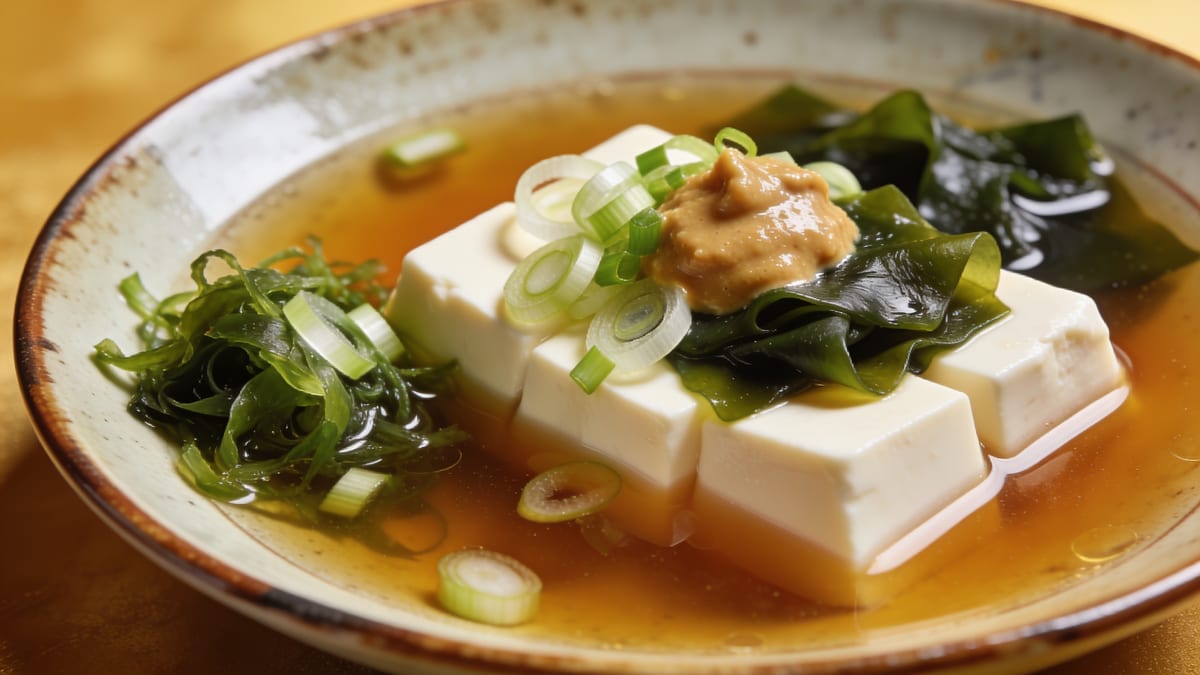
Make (or reconstitute) dashi — the Japanese kombu-and-bonito stock. Bring it to a gentle simmer, add cubes of silken tofu and rehydrated wakame, and warm through. Take the pot off a hard boil, then whisk the miso paste into a ladle of the warm broth until smooth and stir it back in. Heat gently but do not let it boil. Finish with sliced spring onion and serve immediately.
- Real dashi (kombu + bonito) is the foundation — it gives miso soup its savoury depth.
- Never boil the soup after adding miso; boiling dulls its aroma and kills the live cultures.
- Dissolve the miso in a little warm broth first so it disperses smoothly without clumps.
Equipment
- Saucepan
- Small whisk or strainer ladle
Ingredientes
Dashi
- 1 L water
- 10 g kombu (dried kelp)
- 10 g katsuobushi (bonito flakes), omit for vegetarian
Soup
- 60 g miso paste, to taste
- 200 g silken tofu, cubed
- 5 g dried wakame, rehydrated
- 2 spring onions, sliced
Preparação
- PASSO01
Soak the kombu in the water 20 minutes if you can, then heat slowly to just below a boil and remove the kombu. Add the bonito flakes, turn off the heat, let them steep 2–3 minutes, then strain. (Or use instant dashi.)
- PASSO02
Return the dashi to the pan, bring to a gentle simmer, and add the cubed tofu and rehydrated wakame. Warm through for a minute — don't boil hard.
- PASSO03
Take the pan off the heat (or keep it very low). Put the miso in a ladle, dip it into the broth, and whisk until the miso dissolves smoothly, then stir it through the soup.
- PASSO04
Warm the soup back to steaming but do not let it boil — boiling spoils the miso's aroma and kills its live cultures.
- PASSO05
Scatter with sliced spring onion and serve immediately in bowls, with rice and a Japanese meal.
Make ahead
Make the dashi ahead and refrigerate or freeze it — then miso soup is a 5-minute job. Add the miso only when serving, and never boil it, for the freshest flavour.
Storage
Best fresh, as the tofu and miso aroma fade. Leftovers keep 2 days refrigerated; reheat gently without boiling. Make dashi ahead and keep it refrigerated (3 days) or frozen for instant miso soup any time.
Variations
Vegetarian/vegan
Use a kombu-and-shiitake dashi (no bonito) for a fully plant-based miso soup.
Red vs white miso
White (shiro) miso is mellow and sweet; red (aka) miso is deeper and saltier. Use one or a blend (awase) to taste.
With extras
Add clams, enoki mushrooms, daikon, or fried tofu (aburaage) for a heartier soup.
Serve with
Nutrition per serving
Nutrition values are estimates based on the metric measurements. Adjust as needed.
Perguntas frequentes
Why shouldn't I boil miso soup?
Boiling after the miso is added drives off its delicate aroma, can make it taste flat or harsh, and kills the beneficial live cultures in unpasteurised miso. Dissolve the miso into the warm broth off the boil and heat only to steaming — never a rolling boil.
What is dashi and do I need it?
Dashi is the Japanese stock — most commonly made from kombu (kelp) and katsuobushi (bonito flakes) — and it's the savoury backbone of miso soup. You can make it fresh in minutes or use instant dashi granules. Plain water makes a noticeably flatter soup.
What kind of miso should I use?
White (shiro) miso is mild, sweet and a good all-rounder; red (aka) miso is stronger, saltier and deeper. A blend (awase) is common. Start with about a tablespoon per cup of dashi and adjust to taste — different misos vary in saltiness.
How do I make it vegetarian or vegan?
Skip the bonito and make the dashi from kombu plus dried shiitake mushrooms, which give a savoury, umami-rich plant-based stock. Check your miso is free of bonito (some contain dashi). Tofu and wakame are already plant-based.
Why dissolve the miso separately?
Miso paste clumps if dropped straight into hot liquid. Whisking it into a ladle of warm broth first lets it disperse smoothly, so the soup is even and silky rather than lumpy. A small whisk or a fine strainer ladle makes this easy.
Cooked this? Rate it.
Real ratings from real cooks. We only show a score once enough of you have weighed in — no fabricated stars.