Bibimbap — Korean Rice Bowl
Korea's iconic mixed rice bowl: warm rice crowned with a rainbow of individually seasoned vegetables (namul), a little marinated beef, a fried egg, and a spoonful of gochujang sauce — all stirred together at the table into one glorious, savory-spicy mess.
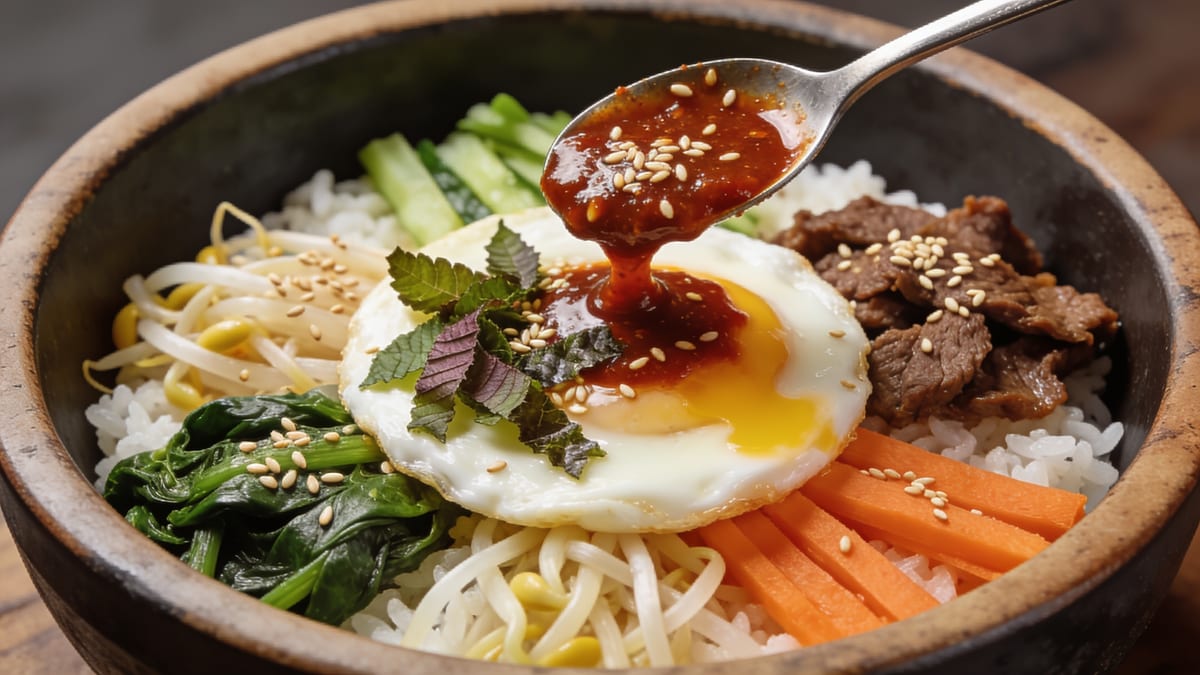
Season each vegetable separately (namul): blanched spinach with sesame, sautéed carrot, mushrooms, bean sprouts, etc. Quickly marinate and sear thin beef. Make a bibimbap sauce of gochujang, sesame oil, sugar, and vinegar. Arrange everything over warm rice with a fried egg, and mix it all together before eating.
- Each vegetable is seasoned on its own — that variety of distinct flavors is the whole point of bibimbap.
- A runny-yolk fried egg and a good spoon of gochujang sauce tie it all together.
- For dolsot bibimbap, serve in a sizzling hot stone bowl so the bottom layer of rice crisps.
Equipment
- Several small bowls (for the namul)
- Frying pan
- Bowls (or dolsot stone bowls)
Ингредиенты
Bowl base
- 400 g cooked short-grain rice, warm
- 2 eggs, fried
Namul (seasoned vegetables)
- 150 g spinach, blanched, squeezed, tossed with sesame oil, garlic, salt
- 1 carrot, julienned and lightly sautéed
- 100 g bean sprouts, blanched and seasoned
- 100 g shiitake mushrooms, sliced and sautéed in soy
- ½ cucumber or zucchini, julienned and quick-sautéed
Beef & sauce
- 150 g beef sirloin, thinly sliced
- 15 ml soy sauce
- 5 ml sesame oil
- 5 g sugar
- 1 garlic clove, minced
- 45 g gochujang
- 10 ml sesame oil (for sauce)
- 10 ml rice vinegar
- 10 g sugar (for sauce)
- Toasted sesame seeds, to finish
Приготовление
- ШАГ01
Season each vegetable separately: blanch and squeeze the spinach and toss with sesame oil, garlic, and salt; sauté the carrot, mushrooms, and cucumber each on their own with a little salt; blanch and season the bean sprouts. Keep them in separate piles — distinct flavors are the point.
- ШАГ02
Toss the sliced beef with soy, sesame oil, sugar, and garlic. Sear hard in a hot pan 2 minutes until just cooked and a little caramelized.
- ШАГ03
Stir the gochujang with the sesame oil, vinegar, and sugar (and a splash of water) into a glossy, spoonable sauce.
- ШАГ04
Fry the eggs sunny-side up, keeping the yolks runny — they'll enrich the whole bowl when mixed.
- ШАГ05
Mound warm rice in each bowl. Arrange the namul and beef in separate sections on top, like spokes of a wheel. Set the fried egg in the center and add a spoonful of gochujang sauce. Sprinkle sesame seeds.
- ШАГ06
At the table, mix everything together thoroughly with a spoon — rice, vegetables, beef, egg, and sauce — until evenly combined and saucy. That mixing (bibim) is the dish. Eat immediately.
Make ahead
The namul can all be made ahead and refrigerated (they double as Korean side dishes). With them ready, bibimbap assembles in minutes — cook rice, sear beef, fry egg, build.
Storage
Store components separately up to 3 days — the seasoned vegetables keep well as banchan. Assemble fresh with hot rice and a just-fried egg.
Variations
Dolsot bibimbap
Serve in a screaming-hot stone bowl rubbed with sesame oil so the bottom layer of rice crisps into golden nurungji as you mix.
Vegetarian/vegan
Skip the beef (add more mushrooms or seasoned tofu) and the egg for vegan. The namul carry the bowl.
Hoe-deopbap
A coastal version topped with fresh raw fish instead of beef.
Serve with
Nutrition per serving
Nutrition values are estimates based on the metric measurements. Adjust as needed.
Частые вопросы
Why season each vegetable separately?
That's the essence of bibimbap — each namul has its own distinct seasoning (spinach with sesame and garlic, mushrooms with soy, sprouts lightly salted), so every forkful before you mix tastes different. Seasoning them all the same way loses the point.
What is the sauce made of?
Bibimbap sauce (yangnyeom) is gochujang loosened with sesame oil, a little rice vinegar, sugar, and sometimes garlic and water — spoonable, sweet-spicy, and glossy. Adjust the amount to your heat preference; it's stirred through everything at the end.
What's dolsot bibimbap?
A version served in a sizzling-hot stone bowl (dolsot) brushed with sesame oil. As you mix, the rice against the hot stone crisps into a chewy, golden crust (nurungji) — the best part. You need an actual stone bowl; a cast-iron pan approximates it.
Do I have to use beef?
No — bibimbap is wonderfully flexible and often vegetable-forward. Skip the beef and add seasoned tofu or extra mushrooms; skip the egg too for vegan. The variety of namul is what carries it.
Can I prep it ahead?
Yes — the namul are essentially banchan (Korean side dishes) and keep several days refrigerated. Make them ahead, then bibimbap comes together as fast as you can fry an egg and warm the rice.
Cooked this? Rate it.
Real ratings from real cooks. We only show a score once enough of you have weighed in — no fabricated stars.