Jjajangmyeon — Korean Black Bean Noodles
Korea's ultimate comfort takeout: chewy wheat noodles smothered in a glossy, savoury-sweet black sauce of fried chunjang (Korean black soybean paste), pork and diced vegetables, topped with slivers of fresh cucumber. A Korean-Chinese classic born in the port of Incheon, jjajangmyeon is the dish of moving days, celebrations and lazy nights in — rich, salty-sweet and deeply satisfying. The secret is frying the chunjang first to mellow its bitterness into deep umami.
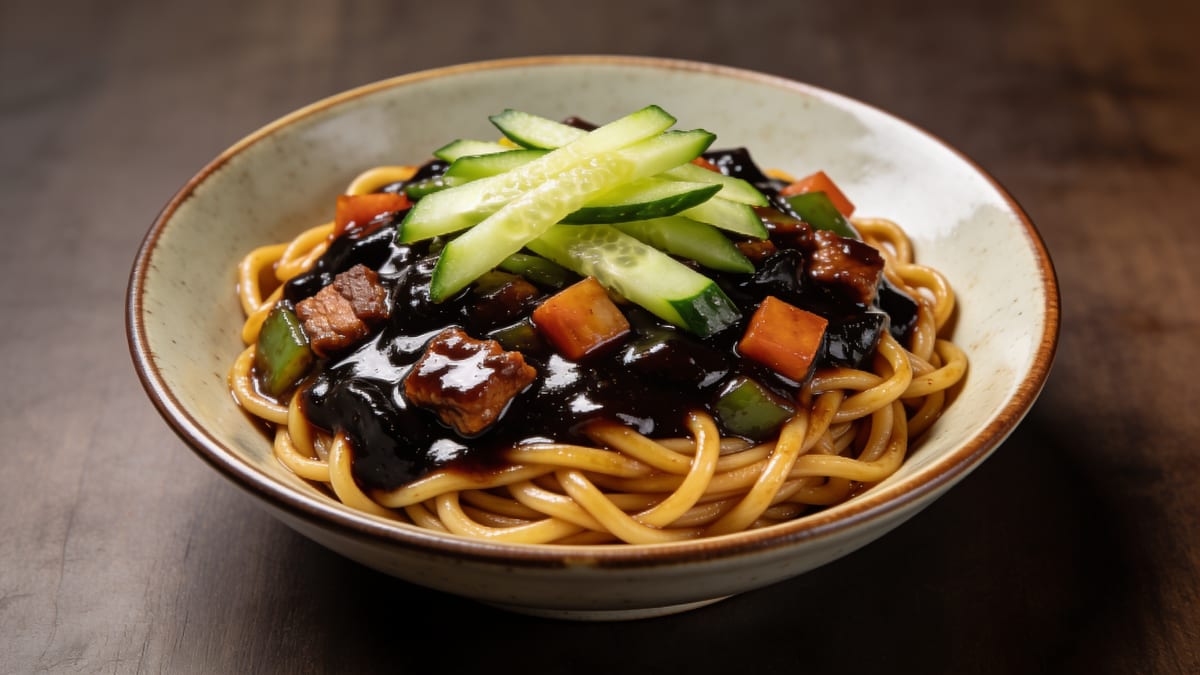
Fry the chunjang (Korean black soybean paste) in plenty of oil for a couple of minutes to mellow its raw bitterness and deepen its flavour — this is the key step. Stir-fry diced pork with onion, zucchini, potato and cabbage until softened, then add the fried chunjang, a little sugar and stock, and simmer. Thicken with a cornstarch slurry into a glossy, thick black sauce. Cook thick wheat noodles, drain, and top with the sauce and slivered raw cucumber. Mix it all together at the table and eat.
- Fry the chunjang paste in oil first — this removes its bitterness and is the make-or-break step.
- Lots of diced onion (and a little sugar) brings the savoury-sweet balance; thicken the sauce to glossy.
- Serve over chewy wheat noodles with fresh cucumber slivers, and mix thoroughly before eating.
Equipment
- Wok or large pan
- Pot (for noodles)
Ингредиенты
Sauce
- 4 tbsp chunjang (Korean black soybean paste)
- 200 g pork (belly or shoulder), diced
- 1 large onion, 1 zucchini, 1 potato, some cabbage — diced
- 1 tbsp sugar; 250 ml stock or water; oil
Thicken & serve
- 2 tbsp cornstarch mixed with water (slurry)
- 3 portions thick wheat noodles (jjajang noodles or udon-style)
- Cucumber, cut into fine slivers
Приготовление
- ШАГ01
Heat a good amount of oil in a wok and fry the chunjang paste over medium heat for 2–3 minutes, stirring, until it's glossy and smells deep and nutty rather than raw and bitter. Scoop it out and set aside. (This step is essential.)
- ШАГ02
In the same wok, stir-fry the diced pork until cooked, then add the diced onion, zucchini, potato and cabbage and cook until softened and the onion is sweet.
- ШАГ03
Add the fried chunjang back in with the sugar and the stock, stir to coat everything, and simmer a few minutes until the potato is tender and the flavours meld.
- ШАГ04
Stir the cornstarch slurry and drizzle it in, stirring, until the sauce thickens to a glossy, thick, pourable consistency that coats the back of a spoon.
- ШАГ05
Cook the thick wheat noodles per the packet until chewy, drain (and rinse briefly for bounce). Put the noodles in bowls, ladle the black sauce on top, and finish with slivered raw cucumber. Mix everything together thoroughly before eating.
Make ahead
The jjajang sauce is great made ahead — it keeps and freezes well, and the flavour deepens, so a batch means fast jjajangmyeon anytime (just cook fresh noodles). Frying the chunjang and making the sauce is the main work; do it in advance, then reheat and serve over freshly cooked noodles with cucumber.
Storage
The black sauce keeps 3 days refrigerated and reheats well (loosen with a little water) — many make extra. Noodles are best cooked fresh, as they clump and soften once dressed. Store the sauce and noodles separately. The sauce also freezes well. Slice the cucumber fresh to serve.
Variations
Jjajangbap
Serve the same black sauce over steamed rice instead of noodles for jjajangbap.
Gan-jjajang
A 'dry' version where the sauce is stir-fried (not thickened with slurry) and served separately.
Seafood (samseon)
Samseon jjajangmyeon adds seafood (squid, shrimp) to the sauce.
Serve with
Nutrition per serving
Nutrition values are estimates based on the metric measurements. Adjust as needed.
Частые вопросы
What is chunjang?
Chunjang is Korean black soybean paste — a thick, dark, salty fermented paste (a Korean-Chinese adaptation of Chinese tianmianjiang) that's the heart of jjajangmyeon's sauce. It's sold in tubs at Korean groceries, sometimes labelled 'black bean paste' or 'jjajang'. It must be fried in oil before use to mellow its bitterness. Don't confuse it with Chinese fermented black beans (douchi), which are different.
Why do I need to fry the chunjang?
Raw chunjang is quite bitter and harsh. Frying it in plenty of oil for a couple of minutes before adding it to the dish mellows that bitterness and develops a deep, rich, savoury-sweet umami — it's the single most important step for good jjajangmyeon. Some chunjang is sold pre-fried ('jjajang'), but if yours is raw paste, frying it first is essential.
What noodles should I use?
Thick, chewy, fresh wheat noodles are traditional for jjajangmyeon — they're springy and stand up to the heavy sauce. Look for fresh jjajang noodles at a Korean grocer if you can; otherwise thick udon-style wheat noodles or even thick spaghetti are reasonable substitutes. Cook them until chewy (al dente), drain well, and serve the sauce on top to mix in.
Is jjajangmyeon Korean or Chinese?
It's Korean-Chinese — a dish created by Chinese immigrants in the Korean port city of Incheon, adapting Chinese zhajiangmian to Korean tastes with the sweeter, milder black chunjang. It's now a hugely popular and beloved Korean comfort food and takeout staple, quite different from the saltier Chinese original. It's especially associated with moving day and casual celebrations in Korea.
What's the difference between jjajangmyeon and jjamppong?
They're the two iconic Korean-Chinese noodle dishes, often ordered together (and the source of the classic 'which to choose?' dilemma). Jjajangmyeon is noodles in the thick, savoury-sweet black bean sauce. Jjamppong is noodles in a fiery red, spicy seafood broth. One is rich and dark and mild; the other is hot, brothy and spicy. Many restaurants serve both, and you can even get a half-and-half (jjamjjamyeon).
Cooked this? Rate it.
Real ratings from real cooks. We only show a score once enough of you have weighed in — no fabricated stars.