Kunafa — Middle Eastern Cheese & Syrup Pastry
The queen of Levantine desserts: a layer of melting, mild white cheese sandwiched between shredded or semolina kataifi pastry, baked or fried in butter until deep gold and crisp, then drenched in fragrant orange-blossom or rose syrup and showered with crushed pistachios. The famous Nabulsi style (knafeh Nabulsiyeh) is served in glowing orange slabs, warm so the cheese stretches in long pulls. Sweet, salty, crunchy and gooey all at once, kunafa is celebration food across Palestine, Lebanon, Syria and beyond — best eaten hot, fresh and shared.
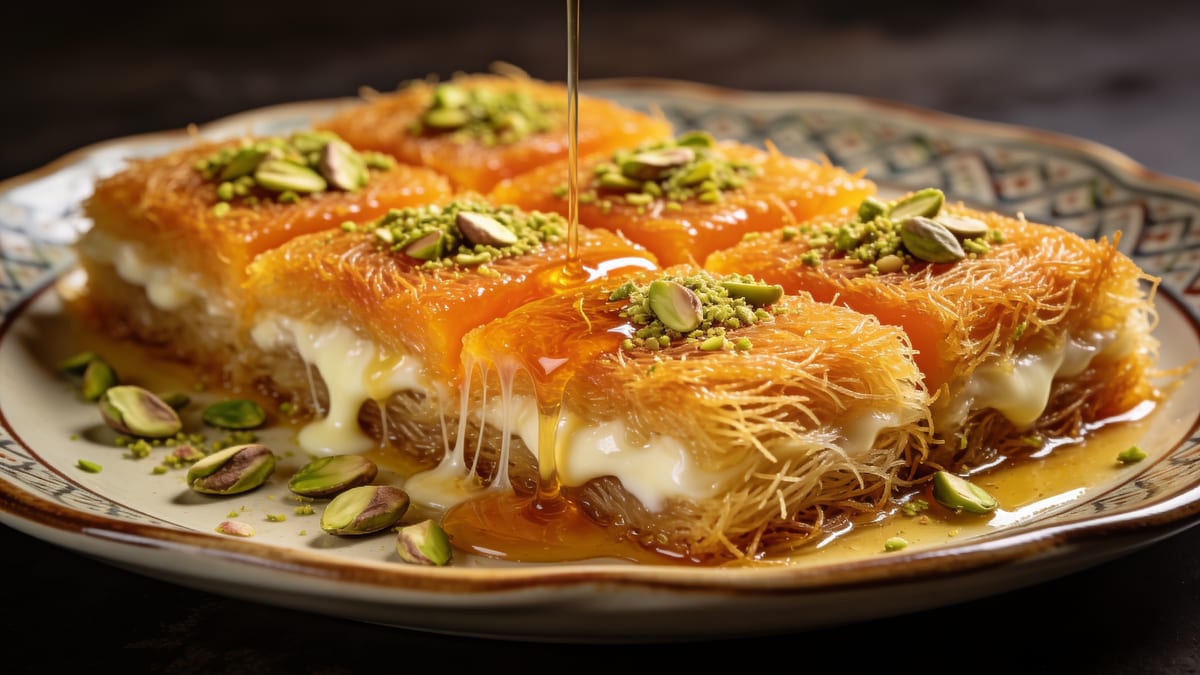
First make a syrup (ater) by simmering sugar and water with a squeeze of lemon and orange-blossom or rose water, then let it cool — cold syrup on hot kunafa is the rule for crispness. Toss shredded kataifi pastry (or fine semolina dough) thoroughly with lots of melted butter or ghee, so every strand is coated; a little orange food colour is traditional for the Nabulsi look. Press half the buttered pastry into a baking tin, spread over a layer of soft, mild melting cheese (a desalted Nabulsi or a mix of mozzarella and ricotta/akkawi), top with the rest of the pastry and press down. Bake (or cook on the stovetop) until deep golden and crisp. Immediately flip it out and pour the cooled syrup all over while hot, then scatter with crushed pistachios. Serve at once, warm, so the cheese pulls.
- Pour cooled syrup over hot kunafa (never hot-on-hot) — this keeps the pastry crisp instead of soggy.
- Coat the kataifi pastry thoroughly in butter/ghee and press it firmly so it bakes crisp and golden.
- Use a soft, mild melting cheese (desalted if salty), and serve immediately while warm so the cheese stretches.
Equipment
- Round baking tin or oven pan
- Saucepan (for syrup)
- Pastry brush
Ингредиенты
Syrup (ater)
- 300 g sugar
- 200 ml water; squeeze of lemon
- 1 tsp orange-blossom or rose water
Kunafa
- 400 g kataifi (shredded) pastry
- 150 g melted butter or ghee
- 400 g mild melting cheese (Nabulsi/akkawi, or mozzarella + ricotta)
- Crushed pistachios; orange food colour (optional)
Приготовление
- ШАГ01
Simmer the sugar and water with a squeeze of lemon until slightly syrupy, stir in the orange-blossom or rose water, and let it cool completely. Cold syrup poured over hot kunafa is the key to keeping it crisp.
- ШАГ02
If using a salty cheese like Nabulsi or akkawi, soak/desalt it and slice; or mix low-moisture mozzarella with a little ricotta for a mild, stretchy melt. Pull the kataifi pastry apart and toss it very thoroughly with the melted butter (and a touch of orange colour, if you like) so every strand is coated.
- ШАГ03
Press half the buttered pastry firmly into a buttered baking tin to make an even base. Spread the cheese over it in an even layer, leaving a small border, then cover with the remaining pastry and press down firmly.
- ШАГ04
Bake at 200°C (or cook over medium heat on the stovetop, rotating) until the kunafa is deep golden and crisp, about 30–35 minutes. The bottom (which becomes the top) should be richly coloured.
- ШАГ05
As soon as it's out, run a knife around the edge and flip the kunafa onto a serving plate. Immediately pour the cooled syrup evenly all over the hot pastry, then scatter generously with crushed pistachios. Serve at once, warm, cut into pieces so the cheese pulls in long strands.
Make ahead
Make the syrup well ahead — it keeps for weeks refrigerated and needs to be cool when used. You can also butter the pastry and prep the cheese in advance, and even assemble the kunafa ready to bake. But bake it, syrup it and serve it as close to eating as possible, because kunafa's magic — crisp pastry and stretchy warm cheese — fades quickly once it sits. It's best made to order for a gathering and served hot.
Storage
Kunafa is at its absolute best fresh, hot and just-syruped, when the pastry is crisp and the cheese stretches — it's really meant to be eaten right away. Leftovers keep 2 days refrigerated but the pastry softens and the cheese firms up; reheat gently in the oven or a pan to re-crisp the pastry and re-melt the cheese, which revives it well (the microwave makes it soft and rubbery). It doesn't freeze well once assembled. Make the syrup ahead; it keeps for weeks.
Variations
Khishneh vs na'ameh
Made with coarse shredded kataifi (khishneh) for a crunchy top, or fine semolina dough (na'ameh) for a smoother texture — or a mix.
Knafeh Nabulsiyeh
The famous Nablus style with desalted Nabulsi cheese and orange colour, served in big round slabs.
Cream or nut filling
Some versions use ashta (clotted cream) or nuts instead of, or with, the cheese.
Serve with
Nutrition per serving
Nutrition values are estimates based on the metric measurements. Adjust as needed.
Частые вопросы
What is kunafa?
Kunafa (also spelled knafeh or kanafeh) is a classic Middle Eastern dessert of mild melting cheese layered with kataifi (shredded) or fine semolina pastry, baked or fried in butter until golden and crisp, then soaked in fragrant sugar syrup (with orange blossom or rose) and topped with crushed pistachios. It's sweet, a touch salty from the cheese, crunchy and gooey all at once. The Nabulsi style from Nablus is the most famous. Kunafa is beloved celebration food across Palestine, Lebanon, Syria, Jordan, Turkey and beyond, best eaten warm so the cheese pulls.
What cheese is used for kunafa?
Traditionally a fresh, soft, mild white cheese that melts and stretches — Nabulsi or akkawi cheese is classic, but these are salty and must be soaked in water to desalt them first. A very common and accessible substitute is low-moisture mozzarella, often mixed with a little ricotta or sweet cheese for a milder, creamier, stretchier melt. The cheese should be mild (not sharp) and stringy when hot. Some versions use ashta (clotted cream) instead. Whatever you use, the goal is that warm, gooey, pulling cheese centre.
Why pour cooled syrup over hot kunafa?
The golden rule for kunafa (and many syrup pastries) is a temperature contrast: cold syrup over hot pastry, or hot pastry into warm-but-not-boiling syrup. Pouring cool syrup onto the just-baked, hot, crisp kunafa lets it soak in and sweeten the pastry without making it soggy — the crisp texture survives. If both are hot, the pastry goes limp and greasy. So make the syrup ahead and let it cool while the kunafa bakes, then drench the hot pastry the moment it comes out.
What is kataifi pastry?
Kataifi (or kunafa) pastry is a fine, shredded pastry that looks like thin vermicelli strands — essentially filo dough spun into threads. It's used for the crunchy layers of kunafa and many other Middle Eastern sweets. You'll find it frozen or fresh at Middle Eastern and Mediterranean groceries (sometimes labelled 'kataifi' or 'kadayif'). Pull the strands apart and coat them well in melted butter before baking so they crisp and turn golden. There's also a smoother semolina-dough style of kunafa (na'ameh) used in some regions.
Can I make kunafa on the stovetop instead of the oven?
Yes — a traditional method cooks kunafa on the stovetop in a buttered pan over medium heat, rotating the pan for even colouring, until the base is deep golden and crisp, then it's flipped out so the crisp side is up. This is how many shops make individual or round kunafa. The oven is easier for an even bake of a large tray. Either way, the technique is the same: butter the pastry well, press firmly, cook until richly golden and crisp, then flip out and drench with cooled syrup straight away.
Cooked this? Rate it.
Real ratings from real cooks. We only show a score once enough of you have weighed in — no fabricated stars.