Pastitsio — Greek Baked Pasta with Béchamel
Greece's grand baked pasta — sometimes called Greek lasagna: long tubes of pasta layered with a cinnamon- and clove-scented beef-and-tomato ragù, blanketed in a thick, creamy béchamel and baked until the top is golden and set into neat, sliceable squares. Pastitsio is a centrepiece of Sunday lunches, feasts and tavernas, beloved for its comforting layers and the warm, sweet-spiced aroma that sets it apart from Italian bakes. It takes a little time to build its three layers, but the reward is a generous, golden tray that slices like a dream and feeds a crowd.
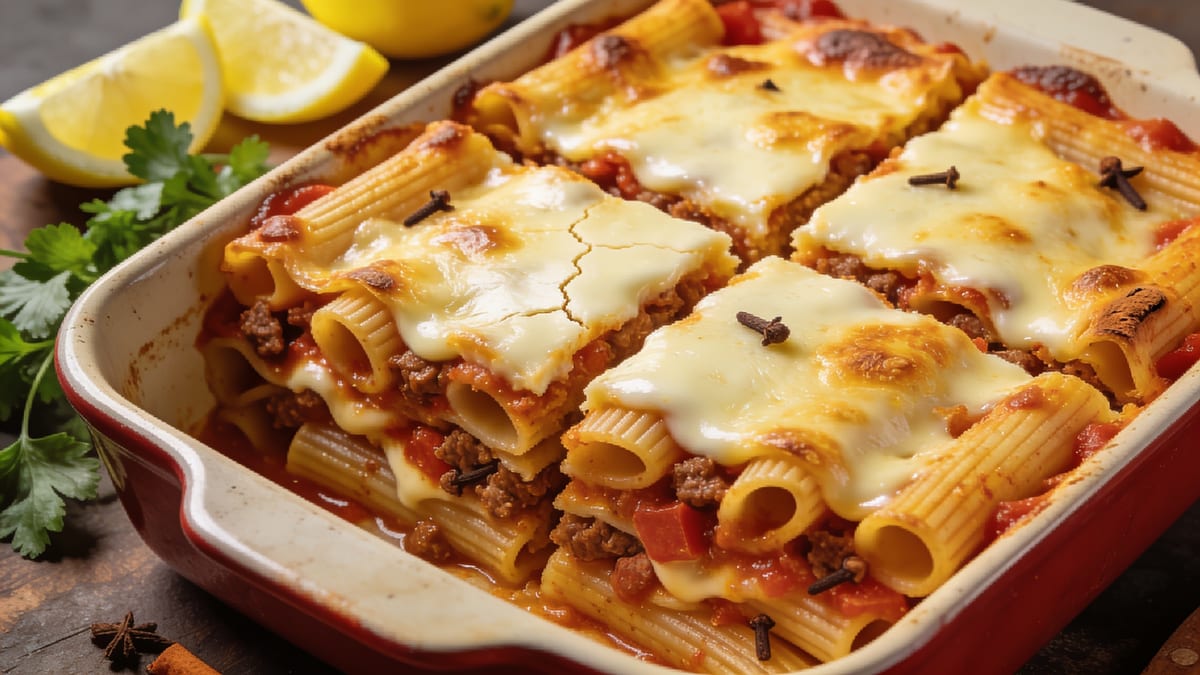
Make a Greek-spiced meat sauce: brown minced beef with onion and garlic, add tomato, a little wine, and the signature warm spices — cinnamon and clove (and often allspice) — and simmer until rich and thick. Boil thick, long tubular pasta (pastitsio pasta or bucatini) until just done, drain, and toss with a little of the sauce, egg and grated cheese so it sets. Make a thick béchamel and enrich it with egg yolks and cheese. Layer it up in a deep dish: half the pasta, all the meat sauce, the rest of the pasta, then the béchamel poured over the top in a thick, smooth blanket. Bake until the top is golden and set. Crucially, let it rest 20–30 minutes before cutting so it firms into clean squares.
- Spice the meat sauce with cinnamon and clove — that warm aroma is what makes it taste Greek, not Italian.
- Toss the cooked pasta with egg and cheese so the bottom layer sets firm and slices neatly.
- Let the baked pastitsio rest 20–30 minutes before cutting, or the layers slide apart.
Equipment
- Deep baking dish
- Large pot
- Saucepan (for béchamel)
Ингредиенты
Meat sauce
- 600 g minced beef
- 1 onion, chopped; 2 garlic cloves
- 400g chopped tomatoes; splash of red wine
- 1 cinnamon stick, ¼ tsp clove, allspice; salt
Pasta
- 500 g thick tubular pasta (pastitsio no.2 or bucatini)
- 1 egg; grated kefalotyri/parmesan
Béchamel
- 100 g butter; 100g flour
- 1 L warm milk
- 2 egg yolks; nutmeg; grated cheese
Приготовление
- ШАГ01
Brown the minced beef with the onion and garlic, then add the tomatoes, wine, cinnamon stick, clove and allspice, and a little water. Simmer until thick and rich and most of the liquid has cooked off, 30–40 minutes. Season well and discard the cinnamon stick.
- ШАГ02
Boil the tubular pasta until just done, drain, and toss while warm with a beaten egg and grated cheese (and a ladle of the meat sauce), which helps the layer set firm when baked.
- ШАГ03
Melt the butter, stir in the flour and cook briefly, then whisk in the warm milk gradually to a thick, smooth sauce. Off the heat, beat in the egg yolks, grated cheese and a little nutmeg. It should be thick and pourable.
- ШАГ04
Spread half the pasta in a deep buttered dish, top with all the meat sauce, then the rest of the pasta. Pour the béchamel over the top in an even, thick blanket and smooth it. Dust with extra cheese.
- ШАГ05
Bake at 180°C until the top is golden and set, about 40–45 minutes. Then — essential — let the pastitsio rest 20–30 minutes before cutting, so it firms up and slices into clean squares rather than sliding apart.
Make ahead
Pastitsio is an excellent make-ahead dish. You can assemble it fully and refrigerate (or freeze) it unbaked, then bake when needed (adding time if cold). Or bake it ahead — it reheats and even slices better the next day once set. The components (meat sauce, béchamel) also keep well separately. Since it needs a 20–30 minute rest after baking regardless, making it ahead for a party takes the pressure off entirely.
Storage
Pastitsio keeps 3–4 days refrigerated and, like most baked pasta, slices and reheats even better the next day once fully set — many think it's tastier reheated. Reheat portions in the oven (or microwave) until hot through. It freezes very well, baked or unbaked: freeze in portions and reheat from frozen, or thaw and bake. Because it must rest before cutting anyway, it's a natural make-ahead dish for feeding a crowd.
Variations
Pastitsada / vegetarian
A meatless version uses lentils or vegetables in place of beef; some regions vary the spicing.
Different pasta
Traditional 'pastitsio no.2' tubes are ideal, but bucatini or thick ziti/penne work well.
Extra cheese
Add a layer of grated cheese between the pasta and béchamel for extra richness.
Serve with
Nutrition per serving
Nutrition values are estimates based on the metric measurements. Adjust as needed.
Частые вопросы
What is pastitsio?
Pastitsio is a classic Greek baked pasta dish — layers of thick tubular pasta and a cinnamon-and-clove-spiced beef-and-tomato meat sauce, topped with a thick, creamy béchamel and baked until golden, then cut into squares. It's often described as 'Greek lasagna', though its warm-spiced sauce and pasta-tube layers make it quite distinct. A staple of Sunday lunches, celebrations and tavernas, it's hearty, comforting and made to feed a crowd, served in generous slices that hold their neat layers.
What spices make pastitsio taste Greek?
The defining flavour is warm sweet spice in the meat sauce — most importantly cinnamon and clove, and often allspice. This gentle, aromatic warmth is exactly what distinguishes pastitsio (and Greek moussaka) from Italian baked pastas, which lean on herbs like basil and oregano instead. A cinnamon stick simmered in the sauce, plus a pinch of ground clove, gives that characteristic Greek aroma. Don't overdo it — it should be a warm background note, not overpowering.
Why does my pastitsio fall apart when I cut it?
Almost always because it was cut too soon. Pastitsio needs to rest 20–30 minutes (even longer) after baking so the béchamel and layers firm up and set; cut straight from the oven, it slides apart into a delicious mess. Tossing the cooked pasta with egg and cheese before layering also helps the base set firm, and using a thick (not runny) béchamel matters. Be patient with the rest and you'll get clean, architectural squares.
What pasta should I use for pastitsio?
Traditionally a specific thick, long, hollow Greek pasta sold as 'pastitsio' or 'macaroni no.2' — like fat bucatini — which holds the layers and lets the béchamel seep into the tubes. If you can't find it, bucatini is the closest substitute, or use thick ziti, penne or long macaroni. You want a sturdy tubular shape that won't go mushy and that gives structure to the dish. Cook it just to al dente, since it bakes further in the oven.
Can I make pastitsio ahead or freeze it?
Yes — it's ideal for both. You can assemble it completely and refrigerate or freeze it unbaked, then bake it off when you need it (adding extra time if it's cold or frozen). Or bake it ahead and reheat — pastitsio arguably slices and tastes even better the next day once fully set. It freezes very well in portions, baked or unbaked. Since it has to rest before slicing anyway, making it in advance is the stress-free way to serve it at a gathering.
Cooked this? Rate it.
Real ratings from real cooks. We only show a score once enough of you have weighed in — no fabricated stars.